
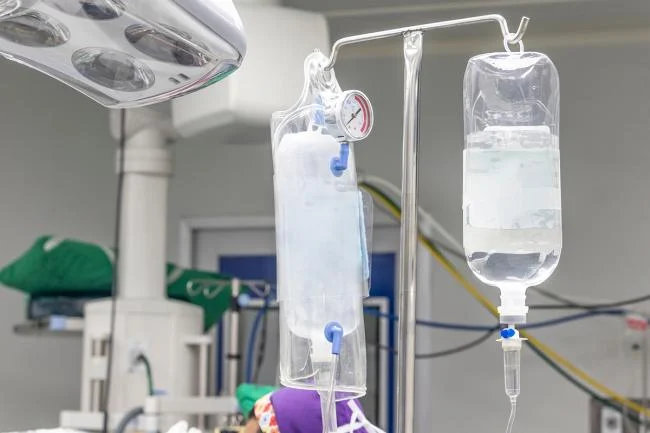
A large clinical trial supported by the National Institutes of Health (NIH) has found no significant difference in key outcomes between two common intravenous (IV) fluids used to treat pediatric septic shock. The study enrolled more than 9,000 children across five countries and compared balanced crystalloid fluid, which mimics human plasma electrolytes, with 0.9% saline solution.
The participants, ranging in age from 2 months to 17 years, were randomly assigned to receive one of the two fluids for 24 to 48 hours after presenting with suspected septic shock, a life-threatening condition caused by severe infection. The trial assessed outcomes including mortality, persistent kidney dysfunction, and the need for renal-replacement therapy, a form of temporary dialysis.
Results showed no significant differences in death rates or kidney-related complications between groups. Both groups had a median of 23 hospital-free days in the 28 days following enrollment, indicating similar recovery times. Although children receiving saline had higher levels of chloride and sodium in their blood and those receiving balanced fluids showed slightly increased lactate levels, these biochemical differences did not translate into differences in clinical outcomes or safety profiles.
Study limitations and population
Researchers noted that the study focused on children with community-acquired sepsis treated in high-resource emergency medical settings. The findings may not apply to children in low-resource environments or those with hospital-acquired septic shock. Treatment initiation was based on clinical signs rather than laboratory confirmation, raising the possibility that certain subgroups of children—such as those who are severely ill or require large fluid volumes—might benefit preferentially from one fluid type.
Why it matters
This trial, the largest of its kind in pediatric septic shock, provides emergency physicians with evidence to confidently use either balanced crystalloid fluid or 0.9% saline for intravenous resuscitation. It resolves a longstanding debate about the optimal fluid choice for children with this critical condition and supports current clinical practices by demonstrating comparable efficacy and safety.
Background
Septic shock in children demands immediate fluid resuscitation to support blood circulation and organ function. Intravenous fluids vary in electrolyte composition; balanced crystalloids have closer electrolyte profiles to plasma, while 0.9% saline is a more traditional isotonic solution. Prior smaller studies had suggested potential benefits or harms linked to each fluid type, but this trial’s scale enabled a more definitive comparison.
The research was conducted by the Pediatric Emergency Care Applied Research Network (PECARN), supported by NIH’s Eunice Kennedy Shriver National Institute of Child Health and Human Development and the Health Resources and Services Administration’s Emergency Medical Services for Children program, in partnership with institutions from Canada, Australia, New Zealand, and Costa Rica.
For more information about pediatric sepsis and fluid treatment, visit the NIH website.
Sources
This article is based on reporting and publicly available information from the following source:
Read more Health & Public Health stories on Goka World News.