
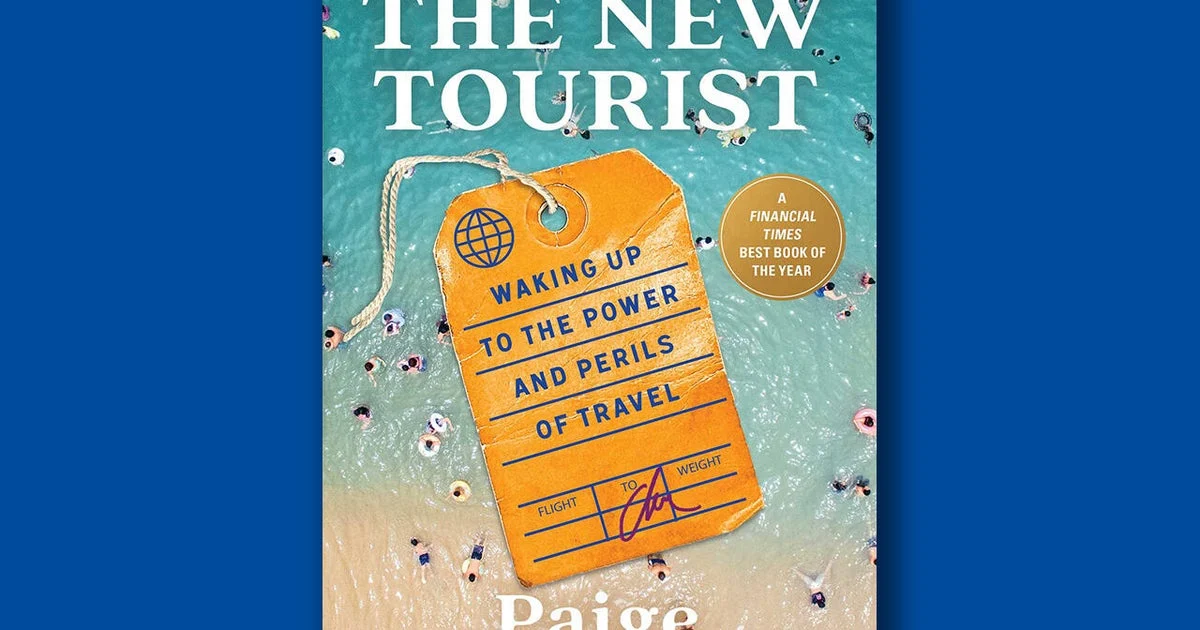
In her book “The New Tourist: Waking Up to the Power and Perils of Travel,” journalist Paige McClanahan explores the complex effects of tourism on societies, economies, and the environment, arguing for a renewed understanding of the term “tourist” in an increasingly interconnected world.
McClanahan recounts her personal experience moving to a valley in the Alps, where a historic abbey has undergone transformations from a monastic site to an industrial hub and later a hotel, reflecting shifts in local economies driven by tourism. Today, tourism remains integral to the valley’s survival, supporting jobs and vibrant community life. Yet, McClanahan observes firsthand the challenges of managing seasonal tourist influxes, including crowded public spaces and increased traffic.
Tourism’s Global Economic Significance
Tourism’s scale is staggering. In 2019, it contributed over 10 percent of global economic output, surpassing the global agriculture sector, and accounted for roughly one in ten jobs worldwide. International visitors spent $1.9 trillion, more than twice the U.S. federal defense budget that year. The industry’s economic value is projected to grow annually by 5.8 percent through 2032, outpacing overall global economic growth forecasts.
Beyond economics, tourism influences cultural exchange and environmental conservation. It serves as a major funding source for wildlife protection while contributing about 8 percent of global greenhouse gas emissions. The movement of roughly one billion international tourists each year has become a primary way cultures interact and understand one another.
Redefining “Tourist” and Tourism’s Cultural Role
McClanahan challenges the stigma often attached to the word “tourist,” advocating for a broader and more nuanced definition that respects all travelers as participants in a shared cultural phenomenon. She contrasts two archetypes: the “old tourist,” characterized by superficial, consumptive travel behaviors, and the “new tourist,” who approaches travel with humility and openness, recognizing the deep historical and human contexts of places visited.
According to McClanahan, the “new tourist” acknowledges their impact and fosters empathy and deeper connections when traveling, even if they still enjoy familiar comforts such as popular café chains. She emphasizes that embracing this evolved perspective can help tourists contribute positively to destinations economically, culturally, and environmentally.
Why it matters
With tourism expected to continue growing globally, understanding its multifaceted effects is critical for sustainable development. McClanahan’s work highlights the responsibility of governments, businesses, and tourists to balance economic benefits with cultural integrity and environmental preservation. Her call to redefine tourism encourages more thoughtful travel practices that benefit both visitors and host communities.
Background
The United Nations World Tourism Organization defines tourism as a social, cultural, and economic phenomenon involving the movement of people outside their usual environment for limited periods. McClanahan’s broader interpretation emphasizes tourism’s temporal nature and its role as a catalyst for global cultural exchange and economic activity, while acknowledging its environmental footprint and social complexities.
Sources
This article is based on reporting and publicly available information from the following source:
Read more Business stories on Goka World News.