
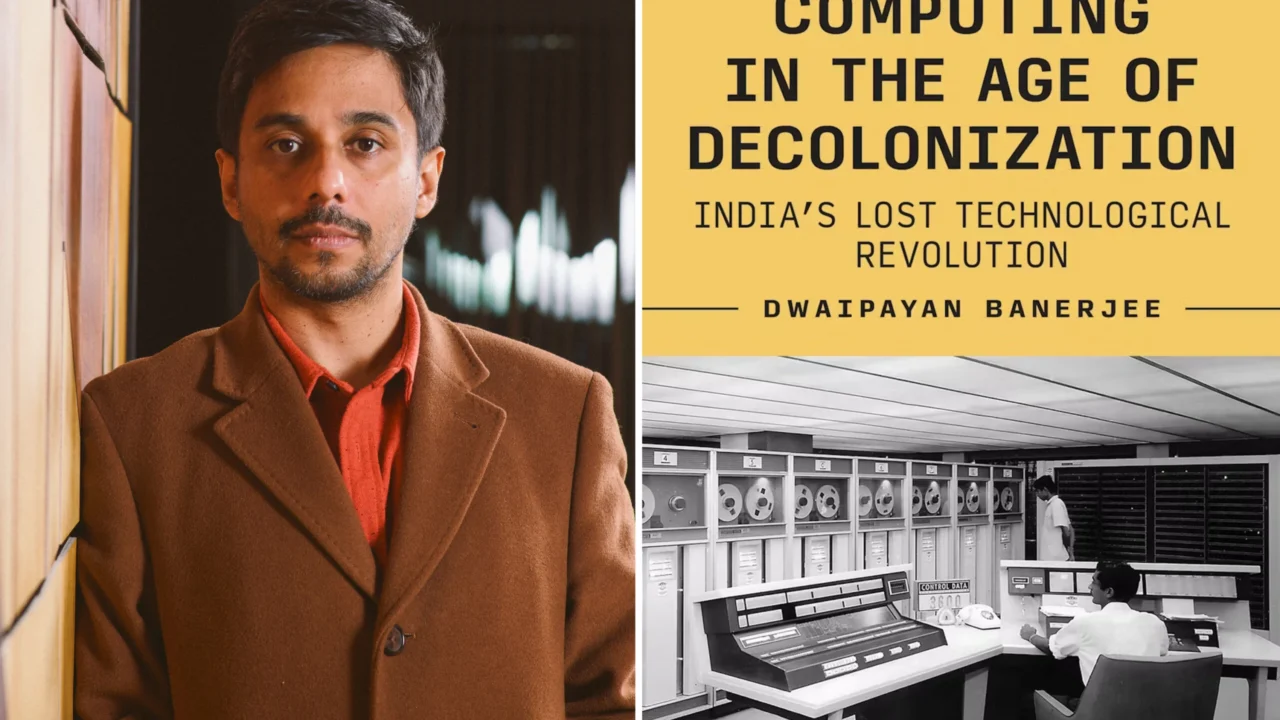
In 1960, engineers at India’s Tata Institute of Fundamental Research (TIFR) successfully built the country’s first working computer, the TIFRAC, using limited resources and ferrite-core memory technology similar to that of leading IBM machines. Though considered a major technological achievement, the project was never replicated or mass-produced, marking a pivotal moment in India’s technology trajectory.
The TIFRAC was designed to expand in capacity and compete globally, but geopolitical and economic factors curtailed its development. Following the release of IBM’s FORTRAN programming language in 1957—requiring significantly more memory—the TIFRAC’s limited memory became a bottleneck. Additionally, a severe foreign exchange crisis in 1958 and conditions imposed by a U.S.-led creditor consortium made importing critical components unaffordable, effectively halting further growth of India’s computer manufacturing efforts.
Geopolitical Barriers and Cold War Constraints
India’s aspiration for technological self-sufficiency emerged amid Cold War tensions that restricted knowledge transfer from the United States, particularly in defense-related technology areas such as computing. Despite initial hopes for international cooperation, India’s foreign policy and lack of alignment with Western interests limited access to key blueprints and hardware.
Dwai Banerjee, associate professor of science, technology, and society, highlights that these external geopolitical constraints were decisive, rather than any technical failings of Indian engineers. The global politics of knowledge meant India’s pioneering computer project could not evolve as intended.
The Shift from Manufacturing to Services
Although India banned IBM in 1978, a move that could have fostered domestic computer manufacturing, the country’s technology sector shifted focus toward private software services and outsourcing. By the 1980s, the prospects of quicker profits through software contrasted sharply with the longer-term investments required for manufacturing and research.
This transition led India to become a global leader in IT services and talent exports, diverging from earlier ambitions of becoming a manufacturing powerhouse in computing equipment. Many qualified engineers emigrated to technology hubs abroad, further consolidating India’s role in the global tech services industry.
Historical Lessons on Technological Development
Banerjee’s book, Computing in the Age of Decolonization: India’s Lost Technological Revolution (Princeton University Press), traces these developments to reveal the broader influence of Cold War geopolitics and global capital on technology trajectories. His research challenges dominant narratives that credit individual ingenuity alone, underscoring the critical role of institutions and international power dynamics in shaping a nation’s technological future.
Scholars like Princeton’s Matthew L. Jones commend Banerjee’s work for reframing global computing history through the lens of postcolonial aspirations and constraints. The story of India’s early computing efforts exemplifies how countries newly independent in the mid-20th century faced persistent structural barriers despite political sovereignty.
Why it matters
Understanding India’s missed opportunity to build a domestic computing manufacturing sector offers insight into current global inequalities in technology production and innovation. The historical forces that shaped India’s tech evolution—political alignment, economic conditions, and foreign policy—continue to influence global technology power distribution today. This case also highlights the challenges many developing countries face in moving beyond service-based participation in the global tech economy.
Background
During the mid-20th century, India’s leadership viewed technology-driven industrialization as key to overcoming colonial-era economic underdevelopment. Institutions like TIFR, founded with figures such as physicist Homi J. Bhabha, spearheaded scientific advancement. However, the Cold War imposed significant access barriers to cutting-edge technology from the West, limiting India’s ambitions to develop a homegrown computing industry.
Sources
This article is based on reporting and publicly available information from the following source:
Read more Science & Technology stories on Goka World News.