
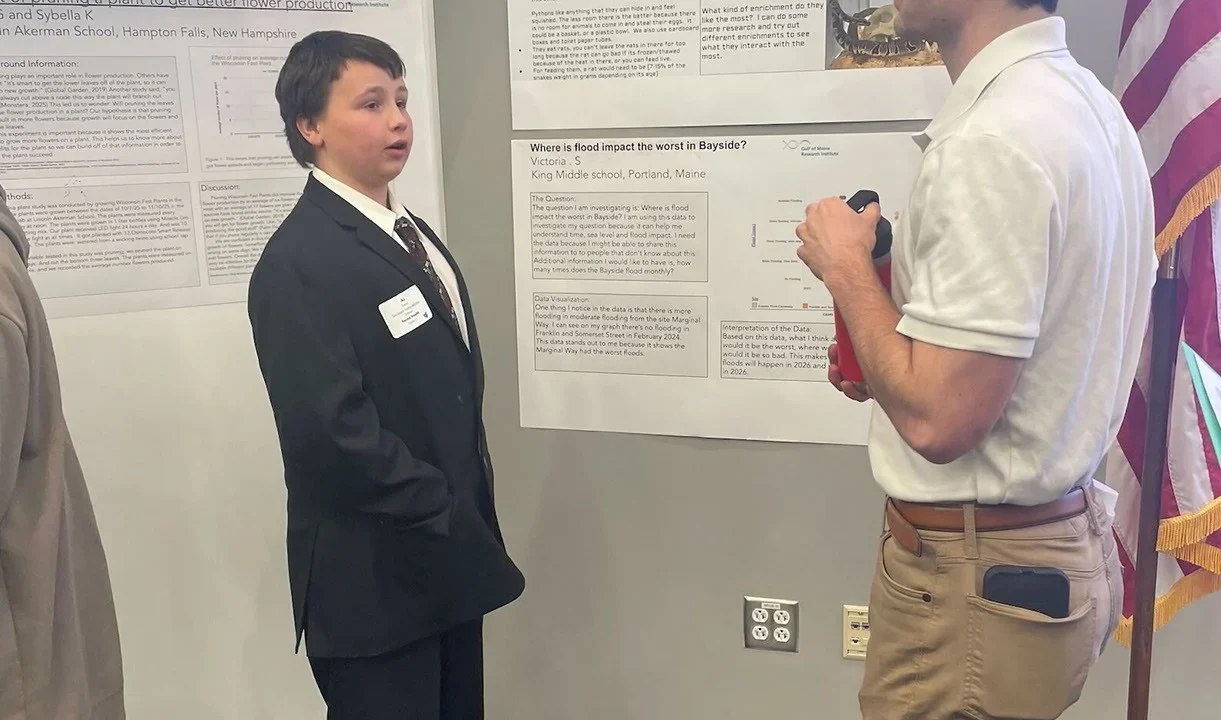
On March 30, 2026, the Gulf of Maine Research Institute (GMRI) and NASA’s Learning Ecosystems Northeast project held the third annual Findings from the Field Student Research Symposium, an event designed to position students as scientific experts and reduce traditional barriers in science communication.
The symposium gathered 106 students in grades four through eight, along with 29 educators and 15 subject matter experts (SMEs). Participants showcased 68 research posters, delivered 14 lightning talks, and engaged in five group discussion sessions focused on student-led scientific inquiry.
Innovative Approaches to Youth Engagement
This year introduced new formats encouraging students to interact with data creatively and confidently. Inspired by the Data Vandals art group, students actively marked up visual data, treating it as a dynamic conversation rather than fixed information. The event also rearranged discussion group seating to place students at the center, literally positioning them at the main table while adults and experts sat behind, emphasizing the young scientists’ professional roles.
A keynote by Dr. Dave Reidmiller, Chief Impact Officer at GMRI, underscored the collaborative nature of science with the theme “Science is a team sport.” This message was reinforced in group discussions where students discovered they were colleagues working on shared challenges. For example, students studying invasive pests exchanged knowledge directly, bridging differences between field observations and research.
Building Scientific Confidence and Community
Facilitators guided conversations with questions such as “What happened? How do we know? Why does it matter?” to foster shared understanding among youth and adults, linking local research to broader community concerns. Undergraduate mentors participated more prominently this year, providing relatable role models and demystifying career paths in science.
The symposium’s defining moment came when a student confidently answered a technical question directed to a subject matter expert, demonstrating the event’s success in empowering youth as knowledgeable contributors.
Due to growing participation, the event expanded beyond GMRI’s facilities with support from corporate partner Unum, indicating increased community engagement and interest in future symposia.
Why it matters
The Findings from the Field Symposium exemplifies inclusive science communication by placing youth at the center of research discussions, fostering scientific literacy, confidence, and collaboration among emerging researchers. This approach supports the development of future STEM professionals by providing early opportunities to communicate real data and engage with experts.
Background
The Learning Ecosystems Northeast (LENE) project, supported by NASA’s Science Activation Portfolio under award number NNX16AB94A, aims to connect NASA science expertise with community leaders and learners, promoting active, inclusive engagement with scientific content and real-world data. The symposium reflects this mission by creating a platform where young students share authentic research and assume expert roles.
Sources
This article is based on reporting and publicly available information from the following source:
Read more Science Discoveries stories on Goka World News.