
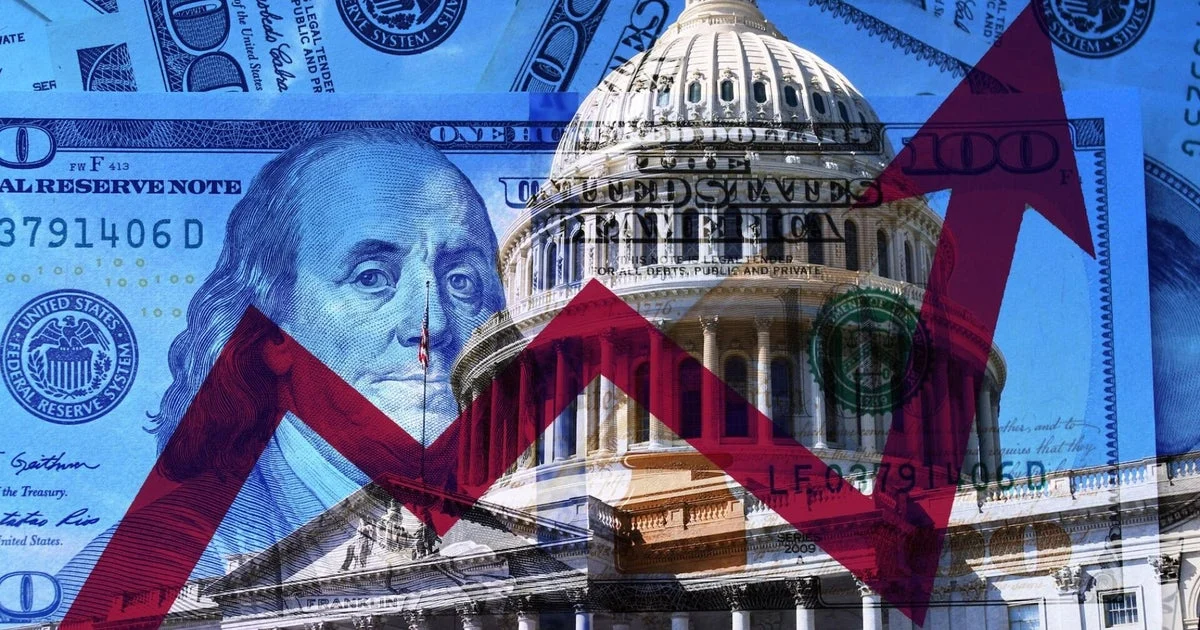
The total national debt of the United States has surpassed the country’s gross domestic product (GDP) for the first time since World War II, marking a significant milestone in the nation’s economic history.
This development signals that the government currently owes more money than the total annual economic output of the country, a situation not observed in nearly eight decades. While the exact figures were not detailed, the comparison between debt and GDP is a standard measure economists use to assess the scale of a country’s debt relative to its economic capacity.
The rise in the national debt relative to GDP reflects ongoing fiscal challenges, including increased government spending and various economic pressures over recent years.
Why it matters
A national debt exceeding GDP is often viewed by economists as a warning sign of potential risks for fiscal sustainability. It may affect government borrowing costs, influence U.S. credit ratings, and impose constraints on fiscal policies aimed at stimulating the economy or funding public programs.
This threshold also impacts public and investor confidence in the U.S. economy, given that the debt-to-GDP ratio is a key indicator used by financial markets and policymakers to evaluate economic stability.
Background
The national debt-to-GDP ratio reached similar elevated levels during and immediately after World War II, as the government significantly increased borrowing to finance the war effort. Since then, this ratio had declined steadily for decades until more recent increases driven by factors such as tax cuts, economic stimulus measures, and emergency spending related to crises like the COVID-19 pandemic.
Monitoring the debt-to-GDP ratio helps policymakers and analysts understand the evolving fiscal health of the nation and guide decisions on budgets, taxation, and spending priorities.
Sources
This article is based on reporting and publicly available information from the following source:
Read more Business stories on Goka World News.