
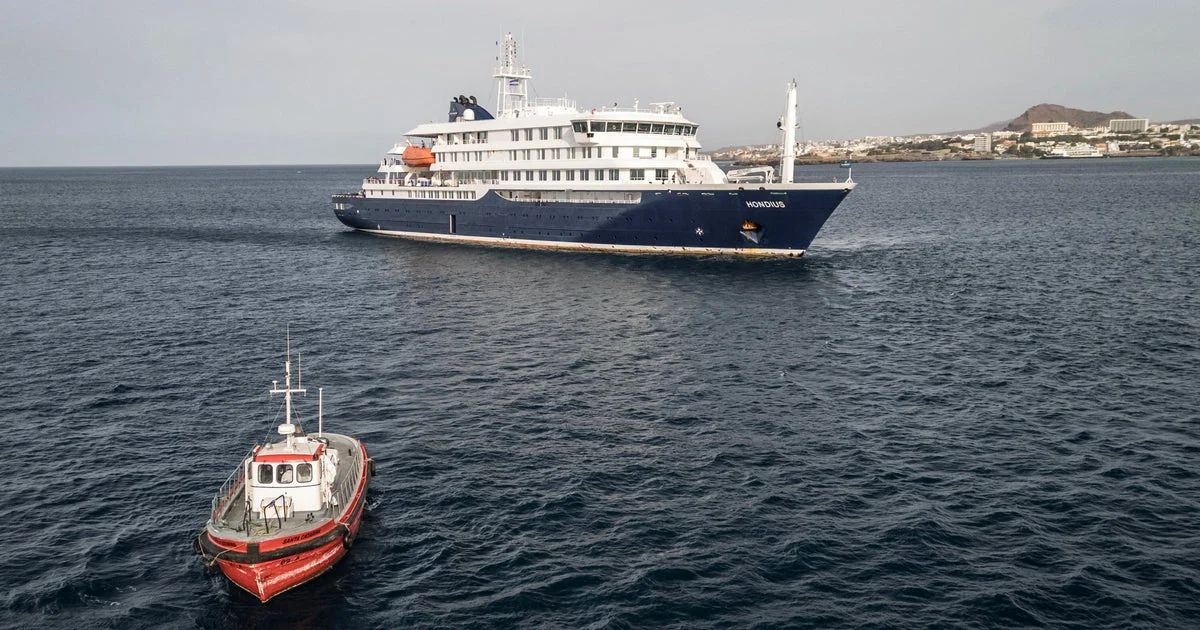
Health authorities in five U.S. states are monitoring passengers who disembarked from the MV Hondius cruise ship after it was confirmed to have cases of hantavirus, including a rare strain capable of human-to-human transmission. This follows the World Health Organization’s (WHO) confirmation of the Andes strain of hantavirus on the ship, which is currently off the west coast of Africa.
The five states—Georgia, Texas, Virginia, Arizona, and California—are tracking at least seven individuals who left the ship before hantavirus cases were identified on board. According to state health departments, none of these individuals have shown symptoms of the disease so far.
Arizona health officials reported one known passenger in their state and noted a 42-day monitoring period initiated after notification from the U.S. Centers for Disease Control and Prevention (CDC). Dr. Joel Terriquez of Northern Arizona Healthcare emphasized the low risk to the public and said it remains unclear if the individual was exposed to infected persons.
Three passengers from the cruise have died: a Dutch couple and a German woman. The husband in the Dutch couple died on the ship on April 11, but because his symptoms resembled other respiratory illnesses, hantavirus was not initially suspected. His wife disembarked at Saint Helena island on April 24, became ill during travel to Johannesburg, South Africa, and died there. A British passenger showing symptoms was evacuated to South Africa and confirmed to have hantavirus on May 4. The British man remains hospitalized but is reportedly improving.
WHO Director-General Dr. Tedros Adhanom Ghebreyesus confirmed the virus strain identified is the Andes variant, generally found in Argentina and Chile. Unlike other hantavirus types, the Andes strain can spread between people through close and prolonged contact, such as among family members or healthcare providers.
The MV Hondius set sail from Ushuaia, Argentina, on April 1 with passengers who had spent months traveling in South America. Among those who disembarked at the remote Saint Helena island, several individuals have since returned to their home countries and are under health monitoring. Countries including Canada, Denmark, Germany, the Netherlands, New Zealand, Saint Kitts and Nevis, Singapore, Sweden, Switzerland, Turkey, and the United Kingdom are also tracking passengers potentially exposed.
In response to the outbreak, the ship departed Cape Verde and is heading to the Canary Islands, where officials have refused docking to prevent local spread, permitting only anchorage offshore. Argentina’s health ministry offered technical assistance given its experience with the Andes strain and reported no related cases within its borders during the current outbreak.
Why it matters
The hantavirus outbreak aboard the MV Hondius involves a rare strain capable of human-to-human transmission, raising concerns about international spread via air travel and cruise passengers. Global and domestic monitoring efforts aim to prevent further cases and contain the virus. While overall risk to the public remains low, the event tests public health systems’ preparedness to manage emerging infectious diseases with pandemic potential.
Background
Hantavirus is typically transmitted through contact with infected rodents, but the Andes strain, primarily found in South America, can also spread between humans through close contact. Symptoms resemble other respiratory illnesses, complicating early diagnosis. Prior outbreaks of Andes hantavirus have mostly been limited to household or caregiving settings. The MV Hondius, operated by Oceanwide Expeditions, carries passengers on South Atlantic and Antarctic routes and had no prior history of infectious disease outbreaks before this incident.
Sources
This article is based on reporting and publicly available information from the following source:
Read more US News stories on Goka World News.