
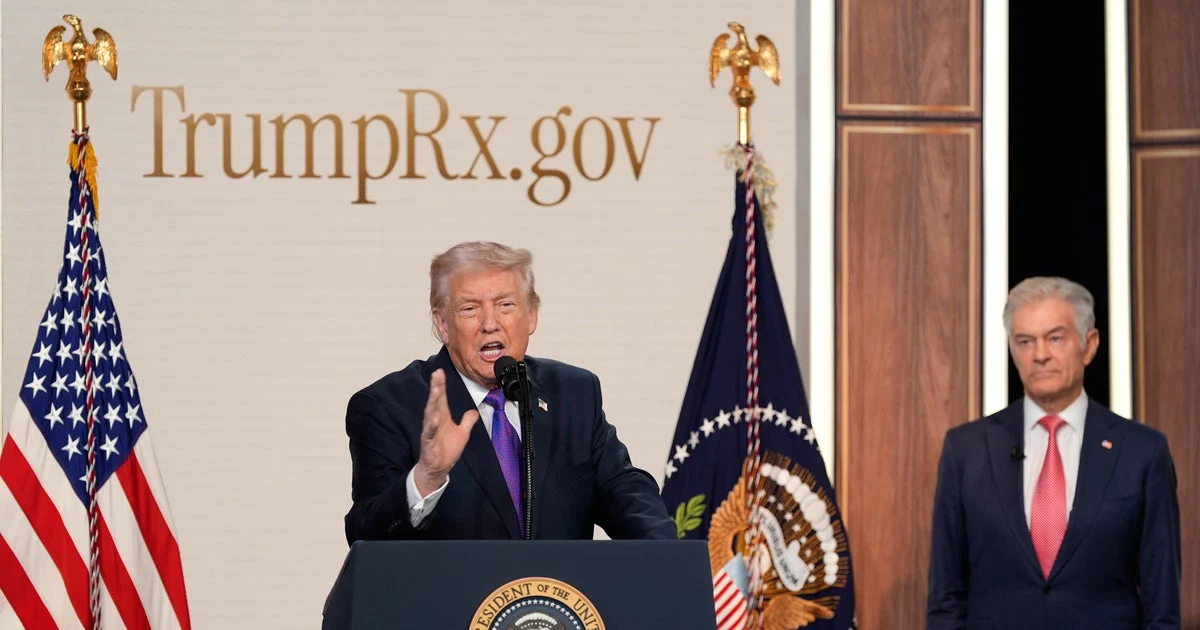
Since the start of his second term, former President Donald Trump introduced multiple initiatives aimed at lowering prescription drug costs for Americans. Despite some price reductions on certain medications, most brand-name drug prices continued to increase, with 2025 seeing the highest number of list price hikes on record.
Trump’s Promises and Actions
Trump launched his drug pricing campaign amid widespread public concern over prescription affordability; a recent Kaiser Family Foundation poll showed that about 60% of American adults worry about affording their medications, with more than 80% deeming drug prices unreasonable. The U.S. pays roughly three times more than other countries for many of the same drugs.
In July, Trump sent letters to 17 drug companies demanding voluntary price cuts and conducted individual White House meetings with pharmaceutical executives. He later announced agreements to implement “most favored nation” pricing on Medicaid and launched the TrumpRx website, offering discounted prices to cash-paying patients. The administration also pledged to accelerate approval of biosimilars, generic versions of expensive specialty drugs, by reducing FDA regulatory hurdles.
However, details about these agreements remain limited, and many discounts appear available primarily to uninsured patients paying out-of-pocket. The discounts often involve brand-name drugs that compete with much cheaper generics, sometimes offering savings that reflect discounts on drugs patients might not otherwise purchase.
Market Response and Price Trends
Data from 46brooklyn, a consulting firm tracking drug prices, shows that close to 1,000 brand-name drugs increased their prices in January 2026, following a 2025 with record-high price hikes. For example, Pfizer raised prices on 71 drugs by an average of 5% during early 2026, lowering prices of only one medication significantly.
Experts characterize the Trump-era discounts as “one-off” and largely symbolic, with limited enforceability or transparency about which drugs qualify. Aaron Kesselheim, a Harvard Medical School professor, said these measures “don’t change anything about the way drugs are priced.”
Medicare Negotiation Program Offers Significant Savings
One major success largely independent of Trump’s initiatives is the ongoing Medicare drug price negotiation program, initiated under the Biden administration and continued quietly by Trump. Starting in 2026, Medicare began enforcing negotiated discounts on 10 high-cost drugs, producing price reductions exceeding 50% for some medications and capping out-of-pocket spending for beneficiaries at $2,000 annually.
This program will expand to include 40 high-priced drugs over several years, projected to save Medicare more than $20 billion annually. Still, these savings benefit only Medicare enrollees and do not affect prices for privately insured or uninsured patients.
Selected Discounts and Limitations of TrumpRx
The TrumpRx platform offers discounts on about 30 Pfizer drugs and a few others. Notable deals include fertility drugs from EMD Serono, with prices lowered to roughly $168 per cycle for some treatments, potentially reducing the cost of fertility therapy by about 10%. Weight-loss drugs such as Novo Nordisk’s Wegovy and Eli Lilly’s Zepbound also saw price drops on TrumpRx, though these remain costly compared to prices in other countries.
Several discounted drugs listed on TrumpRx remain unaffordable for many, and generic competitors usually offer lower prices. For example, Humira, once the best-selling drug worldwide, was listed at $950 per dose on TrumpRx, down from nearly $7,000, yet biosimilar versions are available for about $208 per dose. Some heavily discounted drugs are older medications unlikely to affect market prices broadly.
Challenges to Lowering Drug Prices in the U.S.
Patent protections and regulatory barriers continue to delay generic and biosimilar competition, often long after approval. For instance, a generic version of the arthritis drug Otezla approved in 2021 will not reach the market until 2028 due to patent litigation.
Moreover, many Trump administration promises rely on voluntary industry cooperation and lack enforceable mechanisms for price control. Some recent legislation also exempts expensive drugs for rare diseases from negotiation, limiting broader impact.
Why it matters
Prescription drug affordability remains a critical concern for millions of Americans. While Medicare’s negotiation program represents a notable shift toward controlling costs, efforts outside of Medicare—including those initiated during Trump’s presidency—have produced limited, fragmented benefits. For most consumers, rising list prices continue to challenge access and affordability.
Patients paying cash without insurance face complex choices to find discounts, and the pharmaceutical industry’s pricing practices remain largely unchanged despite high-profile political initiatives.
Background
U.S. drug prices have long outpaced those in other developed countries due to weaker government negotiation powers and strong patent protections for brand-name drugs. Presidents from both parties have attempted various measures to curb costs, with mixed outcomes. The Trump administration’s approach combined public pressure on pharmaceutical companies, promotion of discount websites, and promises to streamline biosimilar approvals. Meanwhile, Biden’s administration advanced legislative mechanisms for Medicare to directly negotiate certain drug prices, marking the first such authority in the U.S.
Sources
This article is based on reporting and publicly available information from the following source:
Read more Politics stories on Goka World News.