
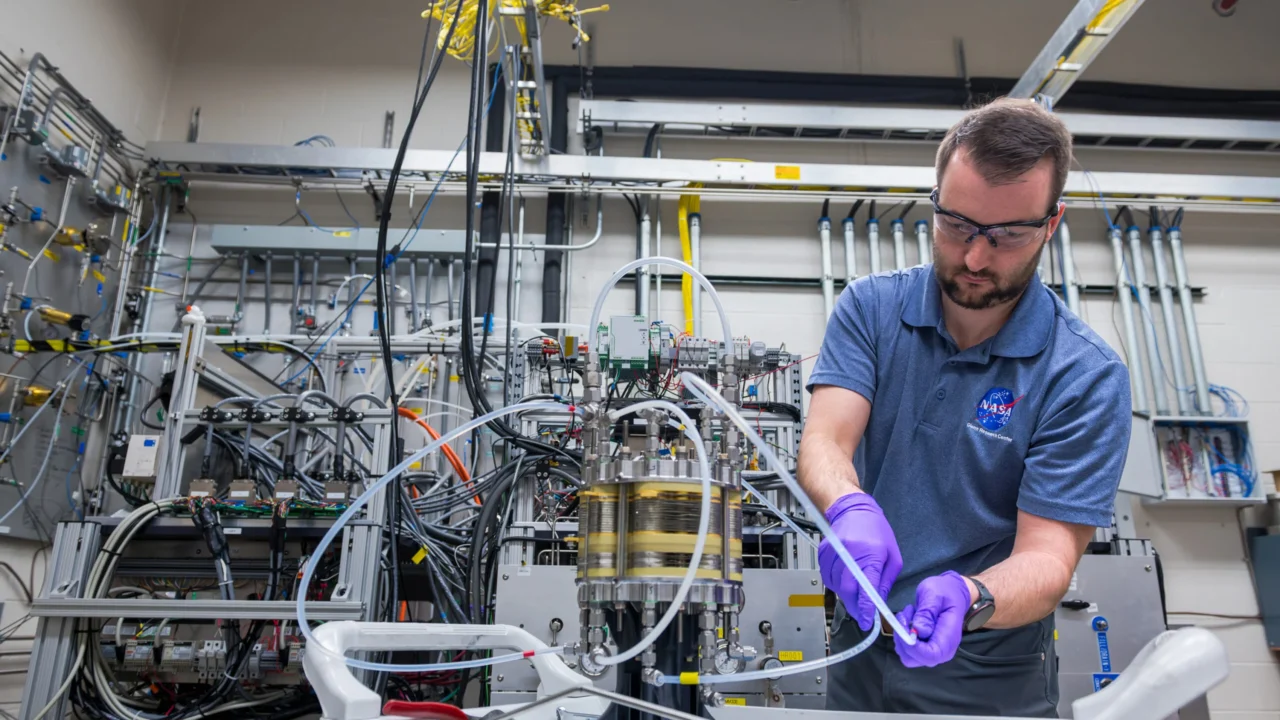
NASA engineers at the Glenn Research Center in Cleveland are conducting critical tests on a regenerative fuel cell system aimed at providing sustainable energy storage for future lunar exploration. The system, roughly the size of a sedan and designed to operate like a rechargeable battery, converts hydrogen and oxygen into electricity and water, then reverses the process to recharge by splitting water back into hydrogen and oxygen.
Lead engineer Dr. Kerrigan Cain described the system as ideal for powering habitats and exploration rovers on the Moon under NASA’s Artemis program. Its ability to recharge using lunar resources could enable long-term human presence by reducing reliance on energy supplies from Earth.
The regenerative fuel cell system weighs less but stores comparable energy to traditional battery systems and is capable of operating during the Moon’s harsh, dark, and nearly two-week-long nights. This recharging capability is key to maximizing efficiency and resource use on the lunar surface.
This phase of testing follows over five years of development and initial validation completed in 2025. The current milestone involves operating the entire system with the capacity to store generated hydrogen and oxygen gas during recharge for the first time. Testing takes place inside NASA Glenn’s Fuel Cell Testing Laboratory, where researchers run the system remotely and gather data to identify challenges and optimization opportunities.
The data collected will guide further refinement before the technology is tested in simulated lunar conditions beyond the laboratory environment. These harsher tests will ensure reliability and performance on the Moon’s surface.
The project is part of NASA’s Regenerative Fuel Cell initiative funded by the Space Technology Mission Directorate’s Game Changing Development Program, managed by NASA’s Langley Research Center in Virginia. Cain highlighted the collaborative nature of the effort, involving partnerships between NASA and industry to develop essential power solutions for deep space missions.
Why it matters
Regenerative fuel cells offer a sustainable energy storage solution essential for long-duration lunar missions. Their ability to recharge in situ allows astronauts to maintain power through prolonged lunar nights without resupply, addressing a critical challenge for continuous human presence on the Moon.
Background
Traditional power systems for lunar missions rely heavily on batteries or fuel deliveries from Earth, complicating mission logistics and costs. Regenerative fuel cells, which operate by cycling hydrogen and oxygen to produce and store energy, have long been studied but require demonstration under lunar-like conditions to prove feasibility for Artemis program goals. This testing represents a significant step toward operational deployment.
Sources
This article is based on reporting and publicly available information from the following source:
Read more Space & NASA stories on Goka World News.