
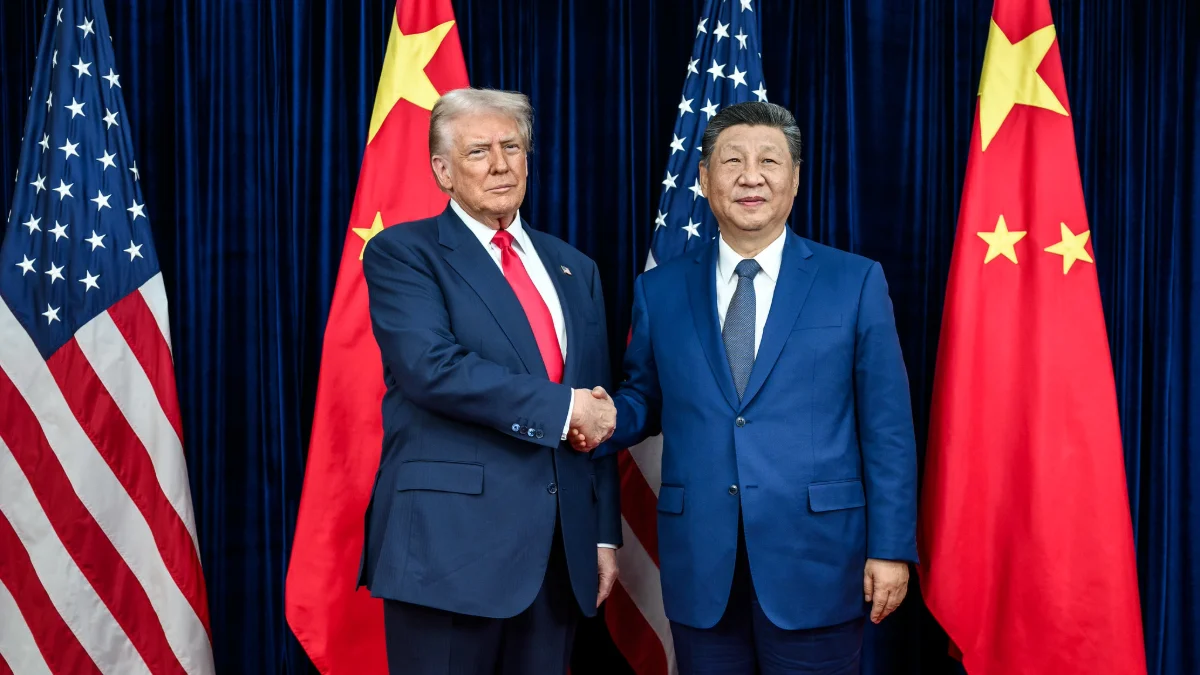
The upcoming summit between U.S. President Donald Trump and Chinese President Xi Jinping in Beijing next week is set to emphasize the need for enhanced collaboration on managing shared risks related to artificial intelligence (AI). Amid growing international concerns, both governments are reportedly considering putting AI issues on the summit agenda to establish a common understanding of AI’s potential harms and appropriate countermeasures.
Rising Concerns Over AI Model Releases
Recent developments, such as the limited release of Anthropic’s AI model Claude Mythos, have prompted the Biden administration to consider government review requirements before new AI technologies are deployed. This shift underscores concerns that AI could potentially facilitate the proliferation of biological or chemical weapons and increase cyberattack vulnerabilities. Experts and commentators, including New York Times columnist Thomas Friedman and author Sebastian Mallaby, have called for U.S.-China cooperation on AI risk governance as a necessary measure to address these threats.
Calls for U.S.-China Collaboration on AI Safety
Researchers Christina Knight and Scott Singer have emphasized the feasibility and necessity of expert-level collaboration between the two countries to mitigate AI risks. Former U.S. diplomatic official David Meale highlighted AI governance as a critical issue for the summit, while scholars S. Alex Yang and Angela Huyue Zhang recommended placing AI risk reduction at the forefront of bilateral discussions.
Despite differences, U.S. and Chinese AI experts share a general understanding of the risks posed by AI misuse and the need for technical controls such as alignment techniques and controlled operational environments. China’s AI models, like the open-source Kimi K2.5, have been found to be less reliable in rejecting malicious requests compared to U.S. counterparts, raising additional concerns about potential misuse.
China’s Recent AI Regulatory Updates and Dialogue Opportunities
China has implemented generative AI regulations since 2023 and recently updated its guidance to address anthropomorphic AI and specific open-source models like OpenClaw. These regulatory efforts suggest China’s growing seriousness toward AI risk mitigation, which could foster substantive exchanges during the summit. Past Track II dialogues, including those facilitated by the Brookings Institution and Tsinghua University, laid groundwork for unofficial dialogues on AI and national security, contributing to a 2024 government-to-government meeting in Geneva on military AI applications.
Potential for Official AI Risk Dialogue
Brookings China expert Kyle Chan advocates that the summit should pave the way for formal government communication channels focused on AI risks, safety guidelines, and information sharing regarding AI misuse. This cooperation would ideally engage technical experts from both nations to exchange strategies on areas like red-teaming AI models to prevent their use in chemical or biological weapons development.
This approach draws parallels to U.S.-Soviet Cold War collaboration on arms control technologies, demonstrating that dialogue on complex security issues is feasible between strategic rivals. The emergence of Claude Mythos reinforces the urgency for the Trump administration to initiate a bilateral AI risk reduction dialogue during the Beijing summit.
Why it matters
Artificial intelligence presents transnational security risks that, if unmanaged, could facilitate the proliferation of weapons of mass destruction and enable disruptive cyberattacks with global consequences. The U.S.-China dialogue on AI governance represents a critical opportunity to establish shared safety standards and reduce the likelihood of AI misuse, contributing to international stability and security.
Sources
This article is based on reporting and publicly available information from the following source:
Read more AI Regulation stories on Goka World News.