
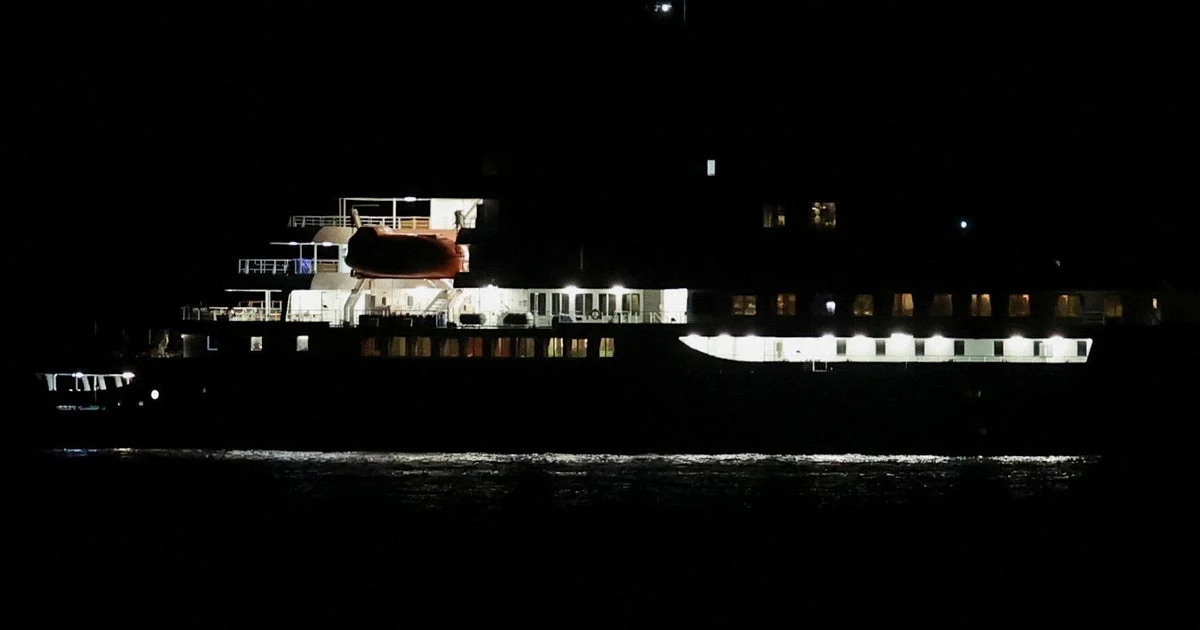
A Dutch-flagged cruise ship carrying nearly 150 people from over 15 countries arrived at Spain’s Canary Islands early Sunday amid a hantavirus outbreak onboard. The MV Hondius docked at Granadilla port on Tenerife, where health officials are preparing to evacuate most passengers and crew for medical evaluation and repatriation.
The cruise ship operator, Oceanwide Expeditions, announced that evacuation efforts would begin Sunday using launch boats that hold between five and ten people. The World Health Organization (WHO) and other health agencies are coordinating the complex operation. WHO Director-General Dr. Tedros Ghebreyesus traveled to Tenerife ahead of the ship’s arrival to oversee response efforts.
Among those onboard are 17 American passengers. The U.S. Centers for Disease Control and Prevention (CDC) dispatched a team of epidemiologists and medical professionals to conduct exposure risk assessments for American passengers and advise on monitoring protocols. Repatriated Americans will fly to Offutt Air Force Base in Omaha, Nebraska, and be quarantined individually at the University of Nebraska Medical Center’s National Quarantine Unit.
The hantavirus outbreak linked to the cruise has resulted in at least nine confirmed or suspected cases and three fatalities. Victims include a Dutch couple and a German woman, all of whom died after developing symptoms consistent with hantavirus. The Dutch couple had recently traveled in Argentina, Chile, and Uruguay—regions where the Andes strain of hantavirus, capable of human-to-human transmission, is endemic.
The virus is transmitted primarily through exposure to infected rodent urine, droppings, or saliva. According to WHO and CDC, hantavirus does not spread through asymptomatic individuals, and close contact is generally required for transmission. Both agencies have assessed the risk of broader public transmission as low.
Several passengers were evacuated earlier for emergency treatment, including three flown to the Netherlands and others to medical facilities in South Africa, Switzerland, and the British overseas territories where the ship docked. The source of the outbreak remains under investigation.
The MV Hondius began its cruise on April 1 in Ushuaia, Argentina, visiting remote islands across the South Atlantic and Southern Ocean before reaching the Canary Islands via Cape Verde. Following passenger evacuation, a reduced crew will resupply the ship and sail it back to Rotterdam, Netherlands.
Why it matters
The evacuation highlights the ongoing challenges of managing contagious disease outbreaks on cruise ships, which can pose international public health risks due to the mix of travelers from multiple countries. The coordinated response involving the WHO, CDC, and multiple governments underscores the importance of rapid containment, medical assessment, and repatriation procedures for infectious diseases. The hantavirus strain involved requires monitoring because of its potential for human-to-human transmission, unusual for most hantaviruses.
Background
Hantaviruses are a group of viruses transmitted to humans primarily through contact with infected rodents. Infections can lead to serious respiratory illnesses and have variable fatality rates depending on the strain. The Andes virus strain, found in parts of South America, is unique among hantaviruses for its documented ability to spread between humans under close contact. Cruise ships, with their confined environments and international passengers, have previously been focal points for outbreaks of emerging infectious diseases, necessitating strict health monitoring and quarantine infrastructure.
Sources
This article is based on reporting and publicly available information from the following source:
Read more World News stories on Goka World News.