
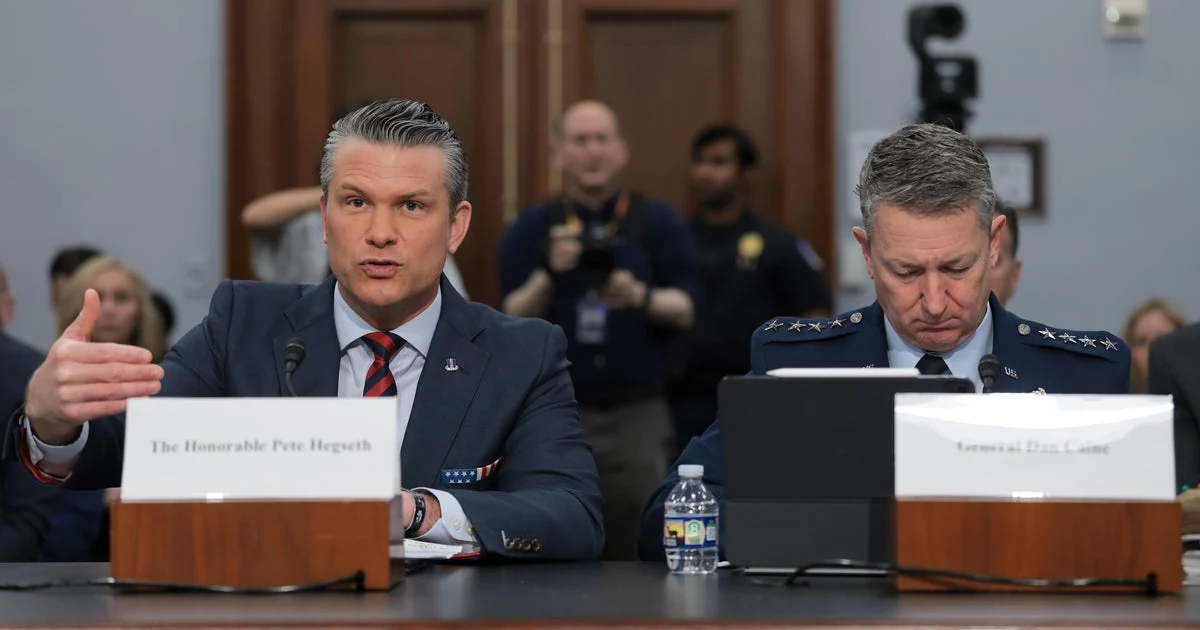
Lawmakers from both parties pressed Defense Secretary Pete Hegseth and Chairman of the Joint Chiefs of Staff Gen. Dan Caine during congressional hearings about the cost, authorization, and current status of the war with Iran as the Pentagon seeks an unprecedented $1.5 trillion defense budget for fiscal year 2027.
The $1.5 trillion figure marks a proposed 42% increase over the 2026 defense budget and serves as the starting point for appropriations negotiations. Hegseth called it a “historic” but “fiscally responsible budget,” adding the request reflects “the urgency of the moment.”
Congressional concerns over war costs and authorization
During hearings before the House and Senate Appropriations subcommittees, lawmakers sharply questioned Hegseth about the financial and legal foundations of the conflict with Iran. Acting Pentagon comptroller Jules Hurst testified the war has cost $29 billion to date, up from the $25 billion figure Hegseth cited last month. Internal U.S. assessments from April estimated the true cost could approach $50 billion.
Several Democrats and some Republicans expressed concern about the administration’s decision to proceed without explicit congressional approval. While multiple war powers resolutions aimed at curbing President Trump’s military authority regarding Iran have stalled, bipartisan support has emerged among some senators, including Republicans Susan Collins, Rand Paul, and Lisa Murkowski, the latter of whom plans to introduce formal authorization legislation.
Hegseth defended the administration’s stance, citing Article 2 of the War Powers Resolution as sufficient authority for military action without congressional authorization.
Questions over ceasefire and military diplomacy
Lawmakers also interrogated officials on the status and transparency of the Iran ceasefire. Representative Pete Aguilar pressed Hegseth on whether there was concrete documentation confirming the ceasefire’s existence, to which Hegseth replied that the ceasefire is “in effect” and “evident,” though he declined to provide detailed evidence.
Senator Lindsey Graham raised concerns about reports that Pakistan is allowing Iranian military aircraft to use its bases, questioning the credibility of Pakistan as a mediator in ongoing peace negotiations. Caine responded that he was aware of the reports but refrained from commenting due to the sensitivity of ongoing diplomatic efforts.
Calls for clarity on strategy and funding mechanisms
Democratic Representative Rosa DeLauro criticized the administration for lacking a “clear or coherent strategy” in managing the Iran conflict. Hegseth stated that strategic plans exist, including possible escalation and asset redeployment, but declined to reveal specific details in the hearing.
Rep. Tom Cole, chair of the House Appropriations Committee, expressed caution about using the budget reconciliation process for war funding, warning it could create future funding cliffs when temporary allocations expire, potentially causing sharp increases in discretionary spending to sustain operations.
Although the Pentagon initially indicated plans to request supplemental funding for the Iran war, the White House has since clarified it does not intend to release additional supplemental requests at this time.
Why it matters
This scrutiny occurs as the Pentagon’s unprecedented budget proposal reflects escalating military commitments and rising costs in the Iran conflict. The hearings highlight ongoing congressional unease over executive authority for war powers, the transparency of military operations, and the long-term fiscal implications of sustained defense spending increases. The debate over ceasefire legitimacy and mediation efforts underscores the diplomatic complexities that continue to shape U.S. policy in the region.
Sources
This article is based on reporting and publicly available information from the following source:
Read more Politics stories on Goka World News.