
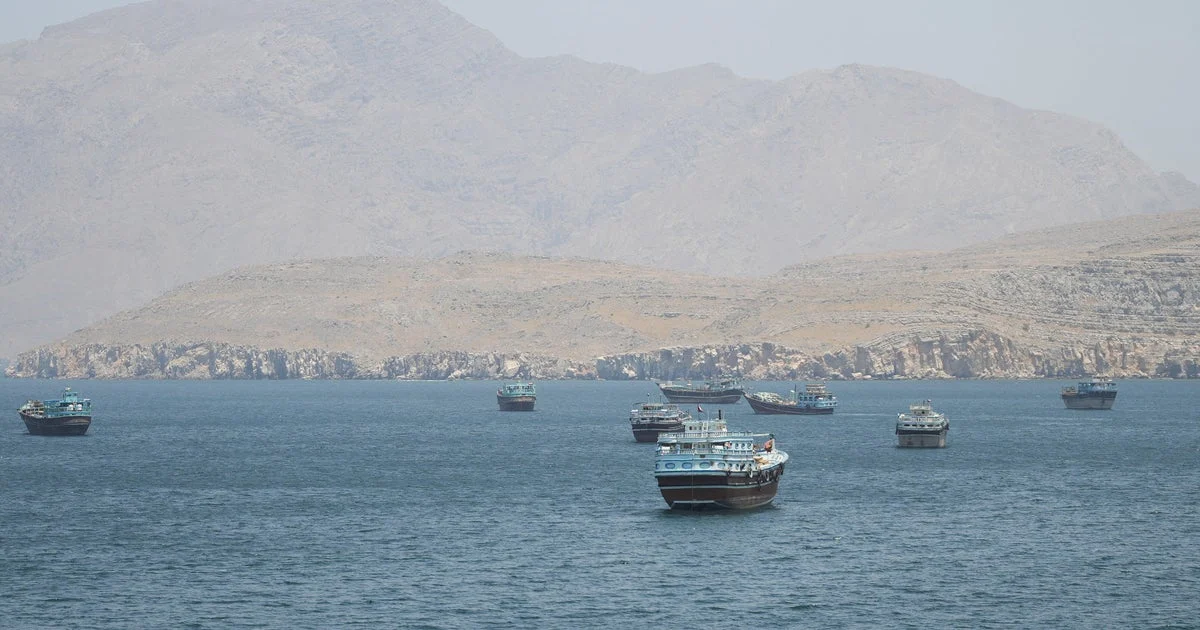
A ship taken by unknown parties near the Strait of Hormuz is being directed toward Iranian waters, according to a U.K. maritime agency, raising tensions around the vital shipping route. This development follows an attack on an Indian-flagged vessel near Oman, although no group has claimed responsibility.
On Thursday, President Donald Trump and Chinese President Xi Jinping met in Beijing and jointly affirmed that the Strait of Hormuz “must remain open” for international navigation, emphasizing that Iran should never develop a nuclear weapon, according to a White House readout.
President Trump said in an interview with Fox News that Xi expressed a desire to see a deal with Iran reached and offered Chinese assistance to help reopen the strait. “If I can be of any help whatsoever, I would like to help,” Trump quoted Xi as saying. China is a significant buyer of oil from the region and has an interest in maintaining free passage through the strait.
The Strait of Hormuz is a crucial chokepoint for global oil shipments, and its closure or disruption could have serious implications for international energy markets and geopolitical stability. Iranian Foreign Minister Seyed Abbas Araghchi stated that, from Iran’s perspective, the strait remains open to commercial vessels but noted that cooperation with Iranian naval forces is required. He accused the United States of imposing an illegal blockade that is primarily responsible for the heightened tensions.
The incident comes amid ongoing U.S. efforts to restrict Iran’s regional activities, including a blockade on Iranian ports and actions to limit arms supplies to groups like Hamas, Hezbollah, and Yemen’s Houthis, according to U.S. Central Command. CENTCOM reported that U.S. forces have redirected about 70 commercial vessels in the region and disabled four others to ensure compliance with the blockade.
Why it matters
The Strait of Hormuz is one of the world’s most important maritime passages for oil exports, accounting for about one-fifth of global petroleum shipments. Any escalation that threatens access to or control of this waterway can disrupt global oil supply, increase fuel prices, and exacerbate geopolitical conflicts in the Middle East. The agreement between the U.S. and China signals rare cooperation between two rivals on maintaining freedom of navigation, which is vital for global trade and energy security.
Background
Tensions in the Strait of Hormuz have escalated since the U.S. withdrew from the 2015 Iran nuclear deal and reimposed sanctions on Tehran, prompting Iran to threaten closure of the strait in retaliation for the U.S. blockade on its ports. Iran has charged vessels for passage and allowed selective transits of some Chinese ships after recent diplomatic discussions. The strategic passage has been a flashpoint for conflicts involving Iran, the U.S., and their allies, with repeated incidents of attacks on commercial shipping and military confrontations in the area.
As diplomatic efforts continue, including U.S.-brokered peace talks between Israel and Lebanon and the ongoing military and political maneuvers in the region, stability of the Strait of Hormuz remains a critical indicator of broader Middle East security dynamics.
Sources
This article is based on reporting and publicly available information from the following source:
Read more World News stories on Goka World News.