
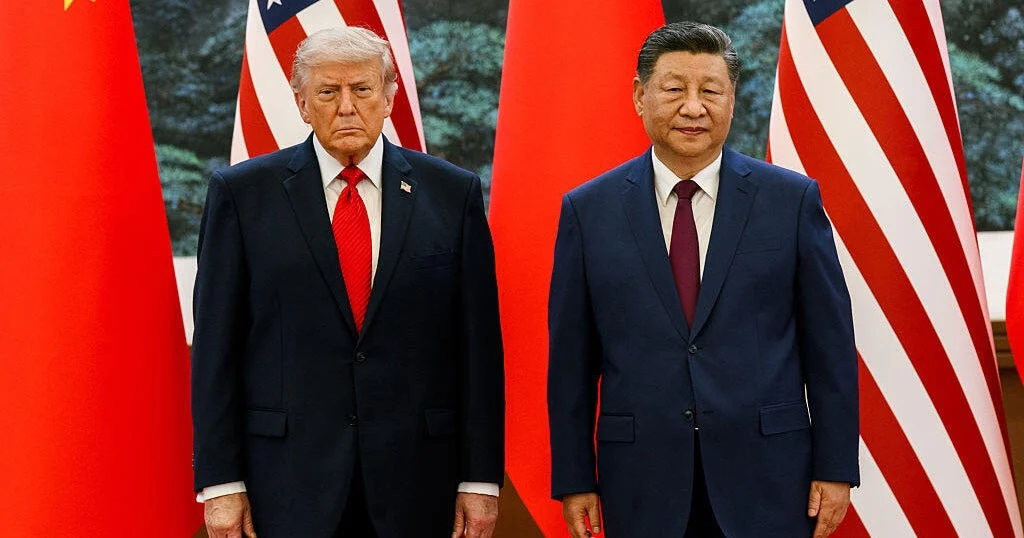
Residents of Flushing, Queens—a neighborhood home to one of the largest Asian populations in the United States—expressed cautious optimism following President Donald Trump’s state visit to China and his summit with Chinese President Xi Jinping. Speaking mostly in Mandarin, community members largely hope that closer ties between the U.S. and China will benefit both nations despite existing challenges.
Several individuals from China, Taiwan, Hong Kong, and Vietnam shared their perspectives with CBS News. A Chinese-American man in his 70s, who has lived in Queens for 34 years, emphasized the mutual benefit of a strong U.S. and a strong China, recalling a previous era when China was more open to the West. He remained hopeful that ongoing issues—such as tensions over Taiwan, trade tariffs, and regional conflicts—would not hinder diplomatic progress.
The Taiwan issue emerged as a significant point of division. Taiwanese residents in Flushing expressed strong support for Taiwanese independence. One Taiwanese-born man stated, “China and Taiwan have nothing in common,” reflecting deep-seated political and cultural differences. Meanwhile, a man born in Hong Kong voiced concerns about declining freedoms in Hong Kong under Chinese control and expressed hope that Xi Jinping would allow more freedoms in mainland China.
Community members were largely reticent to discuss the Trump administration’s policies directly. However, some acknowledged experiencing an increase in anti-Asian sentiment, particularly during the COVID-19 pandemic when hate crimes targeting Asians surged, according to FBI data. Although such incidents have decreased from their peak in 2023, more than 300 anti-Asian attacks were still reported across the U.S. last year, a figure above pre-pandemic levels. One Malaysian-born resident remarked that he sometimes feels disrespected as an Asian living in the U.S.
Despite these challenges, some remain positive about living standards and bilateral relations. A Chinese-born woman operating a snack stand praised the improving quality of life in both countries and expressed optimism that U.S.-China relations are improving overall.
Why it matters
The response from Flushing’s Chinese community highlights the complex sentiments held by Asian Americans amid evolving U.S.-China dynamics. Their views reflect the hope for diplomatic progress that balances economic cooperation with contentious political issues like Taiwan and human rights. This local perspective underscores broader public interest in how the Trump-Xi summit may influence future relations between the world’s two largest economies.
Background
President Trump’s 2026 state visit to China came at a time of heightened tensions, including disputes over trade tariffs, China’s stance on Taiwan, and ongoing conflicts in the Middle East affecting global geopolitics. Flushing, with a significant population of Chinese-speaking immigrants and Asian Americans, often serves as a microcosm for U.S.-Asia relations within the broader American social landscape.
Sources
This article is based on reporting and publicly available information from the following source:
Read more World News stories on Goka World News.