
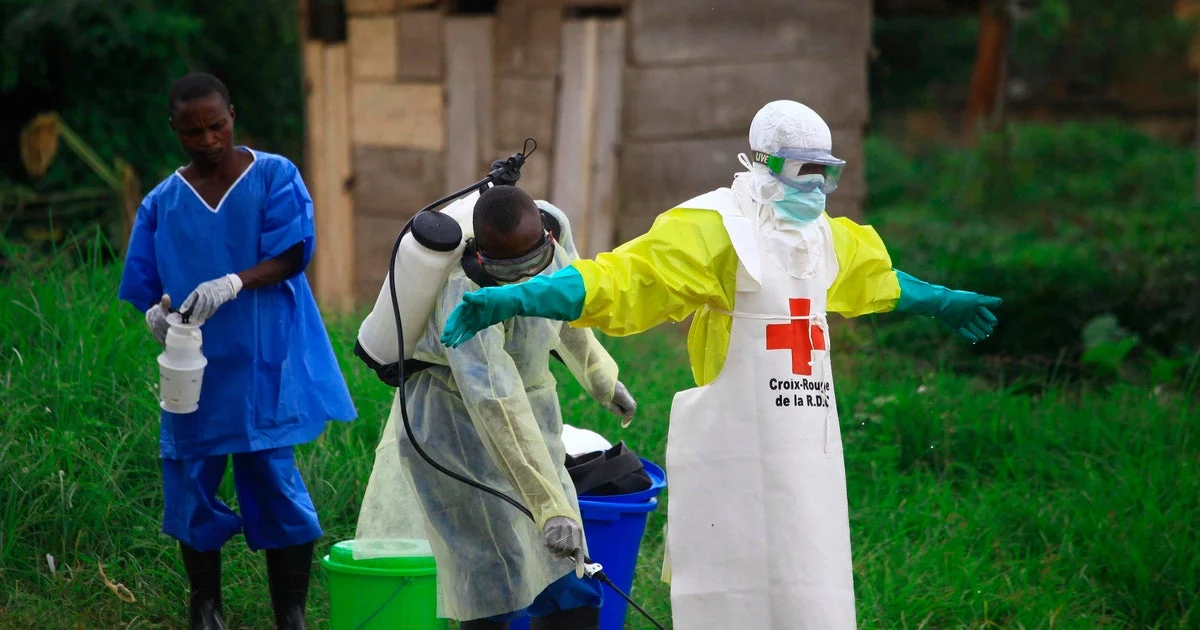
A new Ebola outbreak in the Ituri province of the Democratic Republic of Congo has resulted in at least 65 deaths and 246 suspected cases, Africa’s Centers for Disease Control and Prevention (Africa CDC) announced on Friday.
The outbreak is mainly concentrated in the Mongwalu and Rwampara health zones, with additional suspected cases reported in Bunia, the provincial capital near the Uganda border. Laboratory tests have confirmed the presence of Ebola virus in 13 of 20 samples analyzed so far.
The Africa CDC highlighted that four deaths have been confirmed among laboratory-positive cases. The affected region is remote and challenged by poor infrastructure, insecurity, and increased population movements, which complicate containment efforts.
Response and Coordination Efforts
Africa CDC is convening an urgent high-level meeting involving health authorities from Congo, Uganda, and South Sudan, alongside partners such as United Nations agencies. The meeting aims to focus on immediate response priorities including surveillance, laboratory capacity, infection prevention, safe burials, and resource mobilization.
Concerns are particularly acute due to the mobility of miners in Mongwalu and the overall insecurity related to armed groups active in eastern Congo. The proximity of the outbreak zone to the borders of Uganda and South Sudan increases the risk of cross-border spread.
Historical Context and Regional Challenges
This marks the 17th Ebola outbreak in Congo since the virus was first identified there in 1976. The province itself has suffered from persistent violence, including attacks by groups such as the M23 rebels and the ISIS-linked Allied Democratic Force, contributing to the difficulty of mounting effective public health responses.
Previous outbreaks have hit the region hard: a major 2018–2020 epidemic in eastern Congo caused over 1,000 deaths, while a West African outbreak from 2014 to 2016 killed more than 11,000 people. Congo’s vast size and limited road networks routinely pose logistical challenges to rapid outbreak response and vaccine deployment.
Why it matters
The outbreak threatens to exacerbate public health pressures in a conflict-affected region where health infrastructure is already fragile. The risk of cross-border spread necessitates coordinated regional efforts to monitor, contain, and prevent further transmission. Maintaining vigilance is crucial given Ebola’s severe and often fatal nature, transmitted through bodily fluids and requiring timely medical intervention and extensive infection control measures.
Sources
This article is based on reporting and publicly available information from the following source:
Read more Health & Public Health stories on Goka World News.