
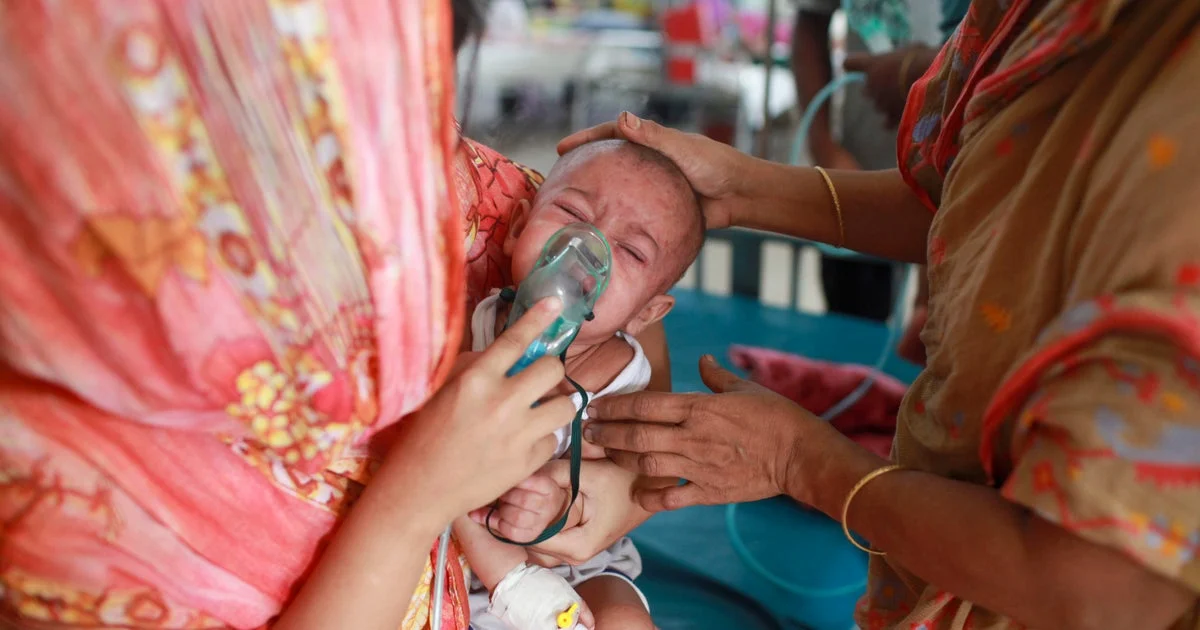
A severe measles outbreak in Bangladesh has infected more than 56,000 people and caused nearly 400 deaths, predominantly among children, according to the country’s Directorate General of Health Services (DGHS). The outbreak has overwhelmed hospitals across Bangladesh, with some patients treated on floors due to lack of beds, and is spreading rapidly across 58 of the 64 districts.
Health officials and aid agencies report that many of those affected are children who are either too young to be vaccinated or have received only partial vaccination. UNICEF representative Miguel Mateos Muñoz highlighted delayed vaccine supplies last year and noted that many children missed their second measles vaccine dose, reducing community immunity.
Measles is a highly contagious virus transmitted through airborne droplets from coughs or sneezes. Unvaccinated individuals have about a 90% chance of contracting the virus upon exposure. The disease can cause severe complications such as pneumonia, brain inflammation, permanent disability, and death. The World Health Organization (WHO) estimates that measles caused nearly 100,000 deaths globally in 2024 despite the availability of effective vaccines.
The outbreak in Bangladesh poses risks beyond its borders due to the country’s porous borders and dense population, including refugee camps. U.S. public health authorities are concerned about global measles outbreaks increasing the risk of cases in the United States, where vaccination rates are falling.
The U.S. Centers for Disease Control and Prevention (CDC) recorded 1,842 confirmed measles cases in 39 states as of early May 2026, significantly higher than the 285 cases reported in all of 2024. Nearly 93% of recent U.S. cases were linked to outbreaks rather than isolated travel-related instances. Declining vaccination coverage among U.S. children, now below the 95% threshold recommended to prevent spread, has left many vulnerable to infection.
The CDC warns that measles anywhere threatens everywhere, particularly in communities with lowered vaccine coverage. Vaccination declines have been documented in 78% of U.S. counties studied by Johns Hopkins University. The loss of elimination status in neighboring Canada after a similar resurgence underscores the risk.
Healthcare experts also voice concern that global events like the upcoming soccer World Cup could facilitate further transmission. Dr. Céline Gounder, CBS News medical correspondent, emphasized the potential for measles outbreaks tied to international travel and noted the U.S. itself could act as a source due to undervaccinated populations.
In response, Bangladesh, with support from UNICEF and WHO, launched an emergency vaccination campaign beginning May 5, successfully vaccinating 18 million children. The focus now is on restoring routine immunizations to prevent future outbreaks and reduce the global spread risk.
Why it matters
This outbreak highlights the dangers posed by declining vaccination coverage globally and in the U.S., threatening to reverse decades of progress against measles. The virus’s high contagiousness combined with international travel raises the risk of larger outbreaks and the potential loss of measles elimination status in the U.S. The current resurgence underscores the urgent need for sustained vaccination efforts worldwide.
Background
Measles was declared eliminated in the United States in 2000 due to widespread vaccine use. The combined measles, mumps, and rubella (MMR) vaccine requires two doses to provide effective immunity. Disruptions from vaccine supply changes and pandemic-related declines in routine immunizations have contributed to rising vulnerability. The CDC continues to monitor outbreaks linked to international travel from countries experiencing severe measles epidemics, including Bangladesh, Mexico, and parts of Africa.
Sources
This article is based on reporting and publicly available information from the following source:
Read more Health & Public Health stories on Goka World News.