
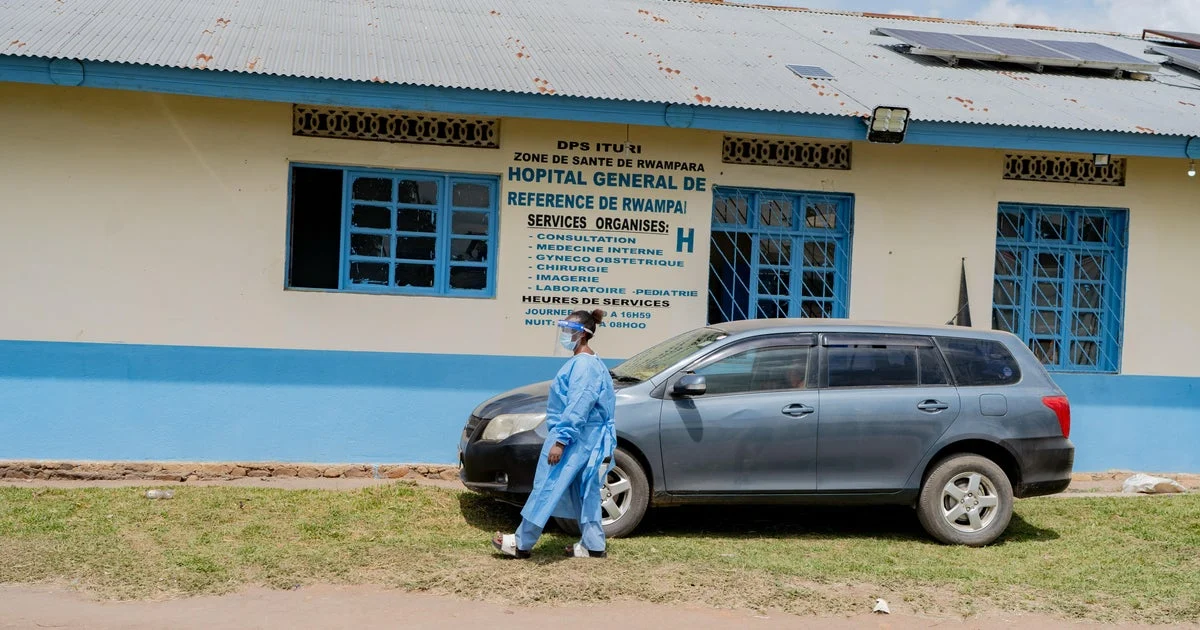
Three volunteers from the Democratic Republic of Congo (DR Congo) Red Cross have died after apparently contracting Ebola while performing humanitarian duties in the northeastern province of Ituri, the International Federation of Red Cross and Red Crescent Societies (IFRC) announced on May 23, 2026.
The volunteers—Alikana Udumusi Augustin, Sezabo Katanabo, and Ajiko Chandiru Viviane—were part of the Mongbwalu branch in Djugu territory, the epicenter of the ongoing Ebola outbreak. They contracted the virus during dead body management activities on March 27, before the outbreak had been formally identified in their community, the IFRC said in a statement.
One volunteer died on May 5, while the other two died on May 15 and 16. The IFRC praised their dedication, noting that the volunteers lost their lives serving their communities under dangerous conditions.
Current status of the outbreak
The Ebola outbreak affecting DR Congo and neighboring Uganda has been declared an international public health emergency by the World Health Organization (WHO). As of this report, DR Congo has confirmed 82 cases and seven confirmed deaths, with nearly 750 suspected cases and 177 suspected deaths.
Ugandan health authorities have reported three new confirmed Ebola cases, raising the country’s total to five. These include a Ugandan driver who transported the initial confirmed patient, a health worker exposed during treatment, and a Congolese woman who entered Uganda exhibiting mild symptoms.
Challenges for healthcare workers
The Ebola virus involved in this outbreak is the Bundibugyo strain, which is rarer and currently lacks approved vaccines or treatments. Ebola is highly contagious through direct contact with bodily fluids and can cause severe bleeding and organ failure.
Health experts have expressed concern for frontline responders. Dr. Craig Spencer, an emergency physician and Ebola survivor, highlighted the high risk faced by healthcare workers due to their close exposure to contagious patients and victims. This concern is reflected in the WHO’s recent decision to raise the risk level for DR Congo to “very high,” while maintaining a high regional risk and a low global risk.
Why it matters
The deaths of these Red Cross volunteers underscore the dangers humanitarian workers face during Ebola outbreaks, especially when the virus is initially undetected in communities. The expanding case count in both DR Congo and Uganda raises the urgency for coordinated response efforts and protective measures for healthcare staff and volunteers. The WHO’s emergency declaration highlights the international community’s recognition of the outbreak’s potential to spread beyond borders.
Background
DR Congo has experienced multiple Ebola outbreaks over recent years, with response efforts complicated by regional instability and limited resources. The Bundibugyo strain involved in this outbreak differs from the more common Zaire strain and poses additional challenges due to the lack of licensed vaccines or specific treatments. This outbreak’s identification after initial volunteer exposures reflects difficulties in early detection, emphasizing the need for improved surveillance and rapid response capabilities.
Sources
This article is based on reporting and publicly available information from the following source:
Read more Health & Public Health stories on Goka World News.