
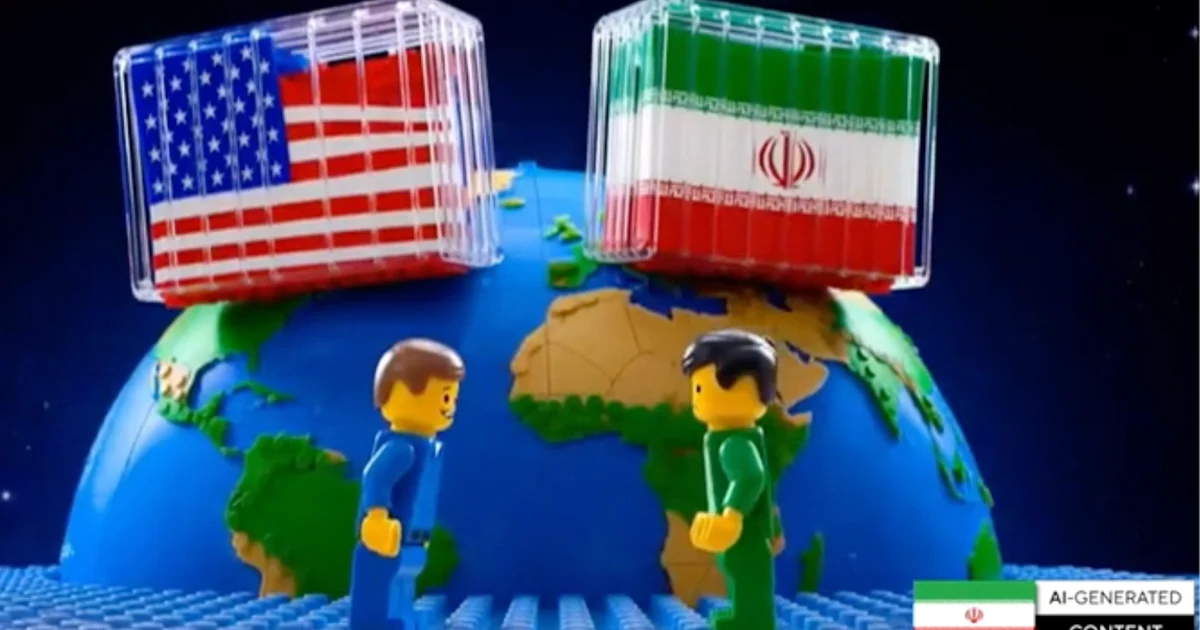
As the conflict between the United States and Iran nears its three-month mark, a significant online propaganda war is unfolding, with Iran seemingly gaining the upper hand. Studies and experts indicate that Tehran’s digital content, often distributed through social media platforms, is attracting dramatically more engagement than U.S. efforts in the same sphere.
Iran’s digital propaganda surge
Research by the Institute for Strategic Dialogue observed a thirtyfold increase in views and likes on Iranian-related social media accounts during the first 50 days of the conflict. For example, an Iranian diplomatic post responding to a controversial image shared by former President Donald Trump garnered more than 24 million views—an unusually high number for diplomatic accounts.
Much of Iran’s online content leverages striking and broadly accessible methods, such as using LEGO animations to relay political messages. Representatives from these groups, like Explosive Media based in Tehran, emphasize the universal appeal of such formats, which transcend language barriers and resonate globally. Many of the videos are believed to be produced using artificial intelligence, enabling efficient, low-cost content creation.
Challenges for U.S. information efforts
The United States has struggled to achieve similar impact and resonance with its messaging. Jamie Rubin, former head of the State Department’s Global Engagement Center—which was disbanded in 2024—attributes part of the failure to a lack of coherent strategy and institutional support. Rubin highlighted the importance of a unified cause, trusted messengers, and allied backing to build public consensus in military engagements, elements he contends are presently missing in U.S. efforts regarding the war with Iran.
Rubin also criticized the centralization of U.S. messaging control within the White House, which he says slows and diminishes responsiveness. Early in the conflict, the White House produced videos mixing war footage with popular culture references that initially garnered hundreds of millions of views but were discontinued after accusations of trivializing the conflict. Since then, responses have largely been limited to social media posts, including those by former President Trump on his platform.
Strategic implications of the propaganda conflict
Experts note that Iran’s propaganda strategy leverages emotionally resonant themes, such as highlighting the financial costs of war to the American public, which may effectively erode domestic support for continued military engagement. The use of provocative topics—including referencing controversial files related to Jeffrey Epstein and alleging Israeli influence in drawing the U.S. into war—illustrates a tactic common in information warfare: spreading insinuations without needing to prove their truthfulness.
Why it matters
The online propaganda battle plays a key role in shaping public perception and diplomatic dynamics in the protracted U.S.-Iran conflict. Iran’s ability to produce widely viewed and emotionally engaging content signals a shift in the effectiveness of digital information warfare, partly enabled by new technologies like artificial intelligence.
Meanwhile, the apparent deficiencies in U.S. information dissemination strategies may undermine broader efforts to maintain domestic support and international legitimacy. Observers warn that without adapting to the evolving media landscape, U.S. messaging risks further losing ground in the global contest for influence.
Sources
This article is based on reporting and publicly available information from the following source:
Read more Digital Policy stories on Goka World News.