
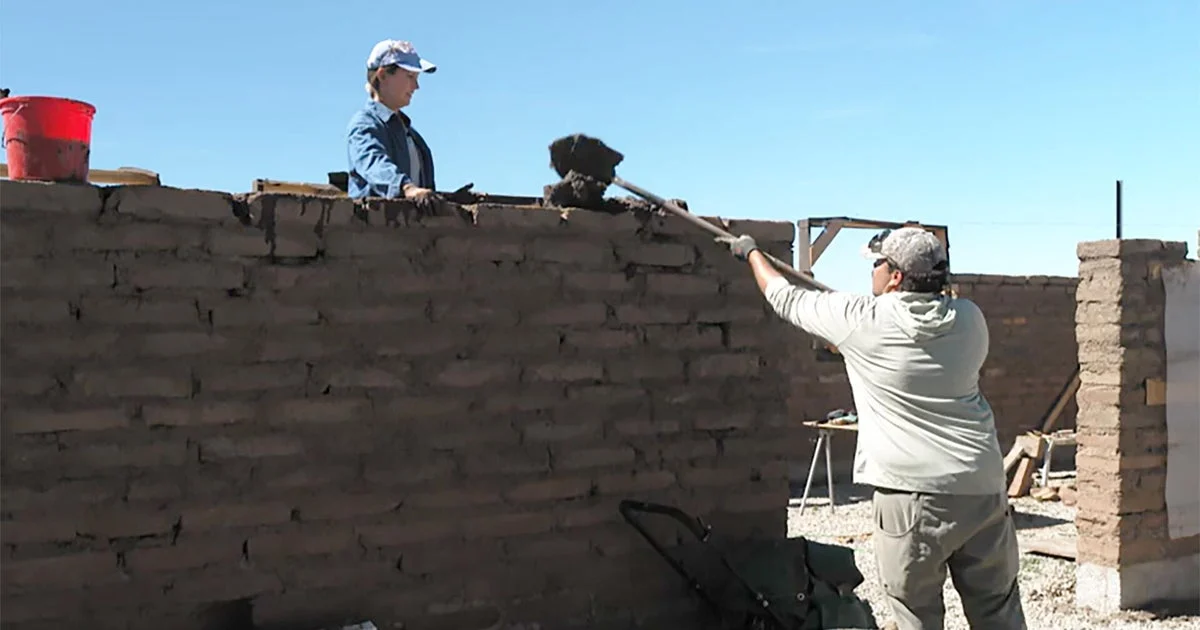
Adobe construction, the ancient practice of making mud bricks, is experiencing a global resurgence as designers and builders blend traditional methods with modern technology such as 3-D printing.
What happened
For thousands of years, civilizations worldwide have used earth-based materials—mudbrick, wattle and daub, and rammed earth—to build homes. Adobe, specifically the process of creating mud bricks, has recently found renewed interest not only among do-it-yourself enthusiasts but also in major architectural projects like museums. Modern practitioners are merging traditional adobe techniques with cutting-edge 3-D printing technologies to innovate sustainable building methods that utilize natural, locally sourced materials.
Why it matters
The revival of adobe construction offers an eco-friendly alternative to conventional building materials, helping reduce carbon emissions associated with industrial masonry and concrete. Combining ancient practices with 3-D printing advances construction efficiency and precision, potentially lowering costs and waste. This trend reflects a growing focus on sustainability and resilience in architecture, which is important amid global environmental challenges.
Background
Adobe has been a staple building material across diverse cultures for millennia, prized for its thermal properties, abundance, and low environmental impact. Traditional adobe construction faced a decline with the rise of modern materials like concrete, but increased environmental awareness and new technologies have spurred its comeback. Recent innovations include using 3-D printers to assemble adobe structures, reducing labor and enhancing structural integrity while preserving the material’s earth-based benefits.
Sources
This article is based on reporting and publicly available information from the following source:
Read more Science & Technology stories on Goka World News.