
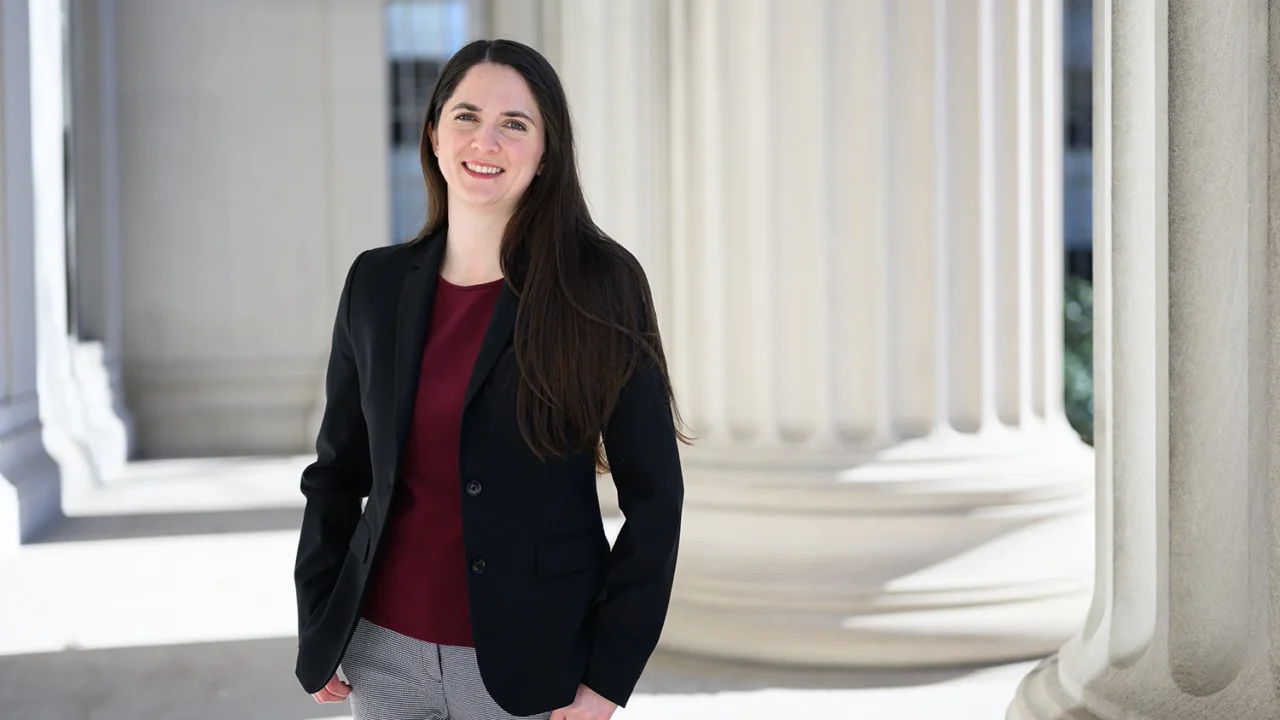
Lauren Fortier, a doctoral student at MIT’s Department of Nuclear Science and Engineering, is advancing technology to automate nuclear plant operations by developing supervisory control systems that combine human and machine oversight. Her work aims to reduce the intense manual labor traditionally required in nuclear plants and enable the autonomous operation of future small-scale reactors, especially in remote locations.
What Happened
Fortier transitioned from working as a naval nuclear operator supervising reactors on U.S. aircraft carriers to nuclear engineering research at MIT, where she developed protocols for remote and automated nuclear plant control. Starting with her master’s thesis on supervisory control systems, she is now continuing her research as a PhD candidate with collaboration support from the Idaho National Laboratory (INL) and industry leaders such as Westinghouse.
Her project focuses on creating an integrated supervisory control framework to facilitate a smooth transition from human-centric operations to a combination of machine-driven and human-supervised controls. Utilizing a process known as finite state automata, her system operates through transparent, event-driven automation rather than AI-driven machine learning, ensuring predictability and safety. Fortier’s work recently earned recognition in the 2025 Innovations in Nuclear Energy Research and Development Student Competition by the U.S. Department of Energy.
Key Facts
Lauren Fortier is a doctoral student at MIT’s Nuclear Science and Engineering department. Her research is supported by co-advisors including Sacit Cetiner (MIT and INL), Anuradha Annaswamy (MIT Mechanical Engineering), and Curtis Smith (MIT NSE). Collaborations with Idaho National Laboratory’s Human System Simulation Laboratory and Westinghouse have been crucial to her research.
The supervisory control system she is developing is based on finite state automata, which use discrete events and transparent execution logic instead of statistical AI models. This approach is designed to build operator trust by providing step-by-step automated procedures that humans can intervene in as necessary. The automation targets next-generation small modular reactors and microreactors, envisioned for deployment in rural or remote areas where large operational staffs are cost-prohibitive.
What This Means
Fortier’s research addresses a critical challenge in nuclear energy: how to maintain safety and efficiency while shifting to smaller, distributed reactors that cannot support the large staff required by traditional nuclear plants. By developing a supervisory control system that balances automation with human oversight, Fortier’s work could reduce operational costs and increase accessibility of nuclear power in remote regions.
This approach may also help overcome skepticism around AI-based automation in safety-critical systems. By relying on a transparent, event-driven framework, her system allows operators to understand and predict machine behavior, facilitating trust and smoother human-machine collaboration. The outcome could accelerate the commercialization of microreactors, supporting clean energy goals with economically viable nuclear options.
Moreover, such automation could reshape nuclear plant workforce demands, potentially reducing the need for extensive on-site staffing while still ensuring robust human control over critical decisions. This stepwise integration of automation might also set a precedent for other industrial automation efforts in highly regulated sectors.
Background
Traditional nuclear plants operate with fully staffed control rooms managing complex manual procedures. However, these plants usually run at full capacity, justifying operational costs. Fortier recognized the need for more autonomous systems as emerging microreactors, which are smaller and located in less accessible areas, cannot afford large operational teams.
Her Master’s research at MIT established foundational supervisory control systems using simulators emulating real nuclear plant responses, paving the way for her doctoral focus on blending human and machine control. Her background as a naval nuclear operator, where reliance on nuclear power is absolute, informs her understanding of plant operations and automation needs.
What Comes Next
Fortier plans to continue refining the supervisory control system with a focus on scaling from small test frameworks to real-world applications in next-generation nuclear equipment. She will further integrate control theory and human factors insights, drawing on ongoing partnerships with INL and Westinghouse. Her doctoral work is expected to culminate in advanced automation technologies ready for deployment in commercial microreactors.
Sources
This article is based on reporting and publicly available information from the following sources:
Read more Science & Technology stories on Goka World News.