
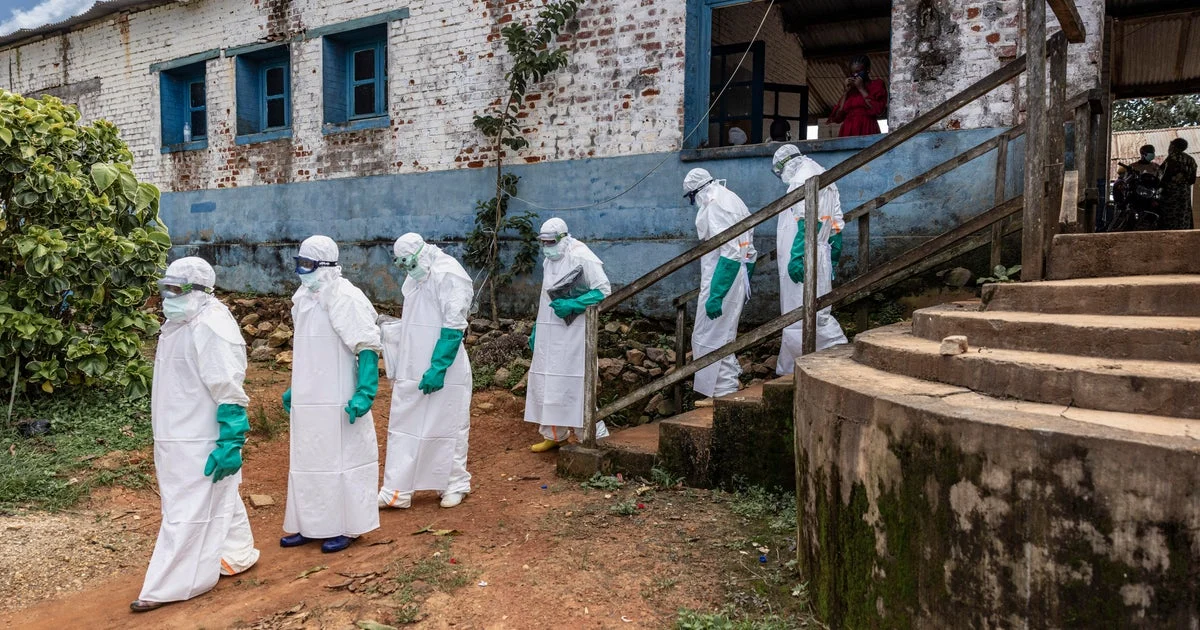
The Ebola outbreak in the Democratic Republic of the Congo (DRC) has resulted in at least 220 suspected deaths, according to the World Health Organization (WHO), as new Ebola cases have emerged in neighboring Uganda. The outbreak, primarily concentrated in Congo’s eastern Ituri province, now involves over 900 suspected cases, with confirmed infections exceeding 100.
What happened
WHO Director-General Tedros Adhanom Ghebreyesus reported that delayed detection of Ebola cases has forced health workers to play catch-up in controlling the virus. On May 25, Ugandan health authorities announced two new confirmed Ebola cases, raising Uganda’s total to seven, all linked to the ongoing outbreak in Congo. The first known case in Uganda involved a 59-year-old Congolese man who died in Kampala on May 14, after seeking treatment in the capital.
Following this death, two additional Congolese nationals tested positive in Uganda. Subsequently, Uganda identified its first local transmissions, including a driver and a healthcare worker exposed to the initial patient. Two more health workers at a Kampala private hospital also tested positive as of May 25.
In Congo, the outbreak remains centered in Ituri province, where response efforts have been impaired by community resistance, violence, and misinformation. Recent attacks on treatment centers have included an assault on Mongbwalu General Hospital, where armed men demanded bodies of relatives and prompted urgent evacuations amid gunfire. This was the third attack on healthcare facilities within a week.
Authorities in Congo have imposed restrictions on funerals, banning wakes and gatherings exceeding 50 people to limit viral transmission through contact with bodies. However, these measures have sparked protests and fueled distrust toward health officials.
Why it matters
This Ebola outbreak represents a significant public health emergency in central Africa, with cross-border transmission complicating containment strategies. The infection of healthcare workers and resistance from local communities heighten risks of wider spread. The WHO has classified the risk to Congo as “very high” but maintains the global risk remains low. The lack of approved vaccines or treatment for the Bundibugyo species driving this outbreak further challenges control efforts.
Background
The current Ebola outbreak emerged in Congo several days or weeks before authorities officially announced it on May 15. The Bundibugyo strain is responsible, a variant without any approved vaccines or therapies yet available. Researchers at the University of Oxford are developing a vaccine candidate expected to enter clinical trials within two to three months.
Violence and insecurity in the affected region, with a history of armed conflict, hinder public health measures and vaccination campaigns. Previous outbreaks of Ebola have been complicated by community mistrust and attacks on health workers, making containment difficult in vulnerable areas.
Sources
This article is based on reporting and publicly available information from the following source:
Read more Health & Public Health stories on Goka World News.