
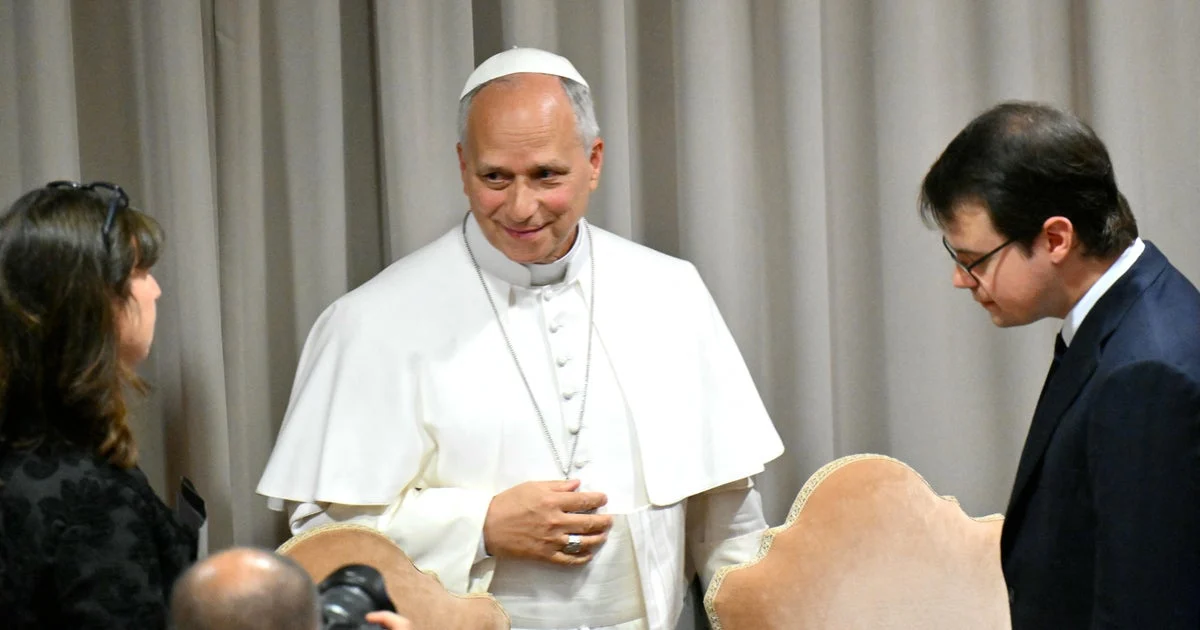
Pope Leo XIV released a landmark encyclical on May 25, 2026, urging the global community to “disarm” artificial intelligence (AI) due to its potential to undermine human dignity and reshape civilization in fundamentally harmful ways.
What happened
The 82-page encyclical, titled Magnifica Humanitas (Magnificent Humanity), addresses the anthropological and ethical challenges presented by the rise of generative AI technologies. Drawing a parallel to Pope Leo XIII’s 1891 Rerum Novarum encyclical during the Industrial Revolution, Leo XIV frames AI as a revolutionary force with broad societal impacts. He warns that artificial intelligence risks making the world “less human” by hollowing out workforces, concentrating wealth, and reducing people to data-driven systems focused on efficiency over morality and dignity.
The document calls on governments, corporations, and societies to avoid fueling an arms race in AI development aimed at geopolitical or commercial dominance. It condemns the use of AI in warfare, stating unequivocally that “there exists no algorithm capable of making war morally acceptable.”
During the Vatican presentation, Cardinal Michael Czerny emphasized that the encyclical focuses on the human condition in the age of AI, rather than the technology itself. The Vatican also engaged in dialogue with prominent AI ethicists, including Christopher Olah, co-founder of the AI firm Anthropic, underscoring the Church’s interest in guiding AI’s development with ethical oversight rather than outright rejection.
Why it matters
The encyclical marks the first major papal document to directly confront the rise of artificial intelligence, framing it as a defining challenge of humanity’s future. Pope Leo’s call for AI “disarmament” responds to growing societal unease over AI’s expanding role in jobs, economic inequality, and military applications. His warnings highlight concerns that unchecked AI could deepen social divides, normalize autonomous warfare, and erode moral responsibility.
By issuing this statement, the Vatican joins a global conversation about technology governance and ethical AI, emphasizing human dignity and responsibility amid rapid digital transformation. This message arrives at a time when militaries worldwide are integrating AI into weapons systems, raising critical questions about the moral limits of automation in conflict.
Background
Pope Leo XIV, the first U.S.-born pope, took his name in homage to Pope Leo XIII, who led the Church through industrial upheaval more than a century ago. His encyclical builds on a long tradition of Catholic social teaching concerned with labor, justice, and the human impact of technological change.
The Vatican’s engagement with AI experts reflects a recognition that technology companies wield influence rivaling governments, necessitating ethical dialogue across sectors. Although Anthropic, represented by Olah, is known for a human-centered AI approach, its technologies remain involved in military and intelligence use, illustrating the complex ties between innovation and national security.
Pope Leo also drew attention to spiritual risks, cautioning that society may start treating AI as a substitute for divine guidance, creating new ‘idols’ that lead to existential paralysis.
Sources
This article is based on reporting and publicly available information from the following source:
Read more AI Regulation stories on Goka World News.