
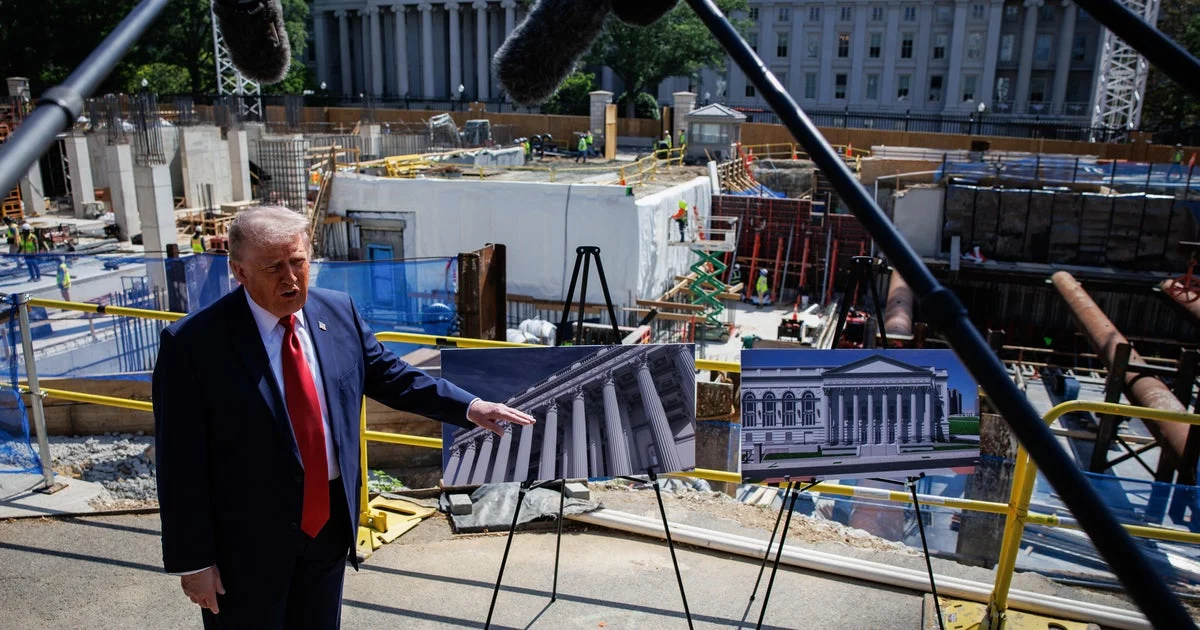
Acting Attorney General Todd Blanche filed a court request on Sunday urging the resumption of construction on the White House ballroom, emphasizing the need for enhanced security following a recent shooting near the White House. Blanche argued that the ballroom is critical to ensuring the President can carry out constitutional duties safely within a secure facility.
What happened
The filing comes after a gunman opened fire at a U.S. Secret Service checkpoint near the White House on Saturday evening. Secret Service officers returned fire, fatally wounding the suspect. A bystander was also injured in the incident. This marked the second security breach targeting the President’s vicinity within the month.
Blanche described the ballroom as an integral part of the White House East Wing Project, intended to provide state-of-the-art security. It incorporates numerous protective features, including heavy steel, missile- and drone-resistant columns, bulletproof and blast-resistant glass, military-grade ventilation systems, and hermetically sealed air systems designed to counteract contamination threats.
The planned 9,000-square-foot ballroom will contain bomb shelters, a top-tier medical facility, secure military installations, and sniper stations on its roof, further underscoring its role as a secure “safe haven” for Presidents, families, staff, foreign dignitaries, and guests.
Construction was temporarily halted last month by a Washington, D.C. district court judge who ruled that congressional approval is required. Subsequently, the Senate parliamentarian disallowed the $1 billion funding for the ballroom to be included in a budget reconciliation bill. Congress recessed without resolving the funding dispute. Nevertheless, an appellate court has allowed construction to continue temporarily until a panel of judges reviews the case in early June.
Why it matters
The ballroom is part of a broader effort to bolster White House security following recent shooting incidents, including one at the White House Correspondents’ Dinner earlier this month. The Acting Attorney General contends that without the facility, the President cannot safely perform duties essential to national governance. The debate highlights tensions between executive security priorities and congressional oversight, particularly regarding the project’s financing and legislative authority.
Background
The White House ballroom is a component of an extensive East Wing expansion intended to improve the President’s security infrastructure. The project includes a mix of public and private financing, with President Donald Trump stating the ballroom is privately funded while security-related expenses were proposed to be included in a congressional reconciliation package. Federal Judge Richard Leon previously voiced concerns about the funding arrangement and congressional involvement in the project.
The current temporary halt on construction reflects ongoing legal and political challenges, underscoring the complexity of balancing urgent security infrastructure upgrades against constitutional and legislative processes.
Sources
This article is based on reporting and publicly available information from the following source:
Read more US News stories on Goka World News.