
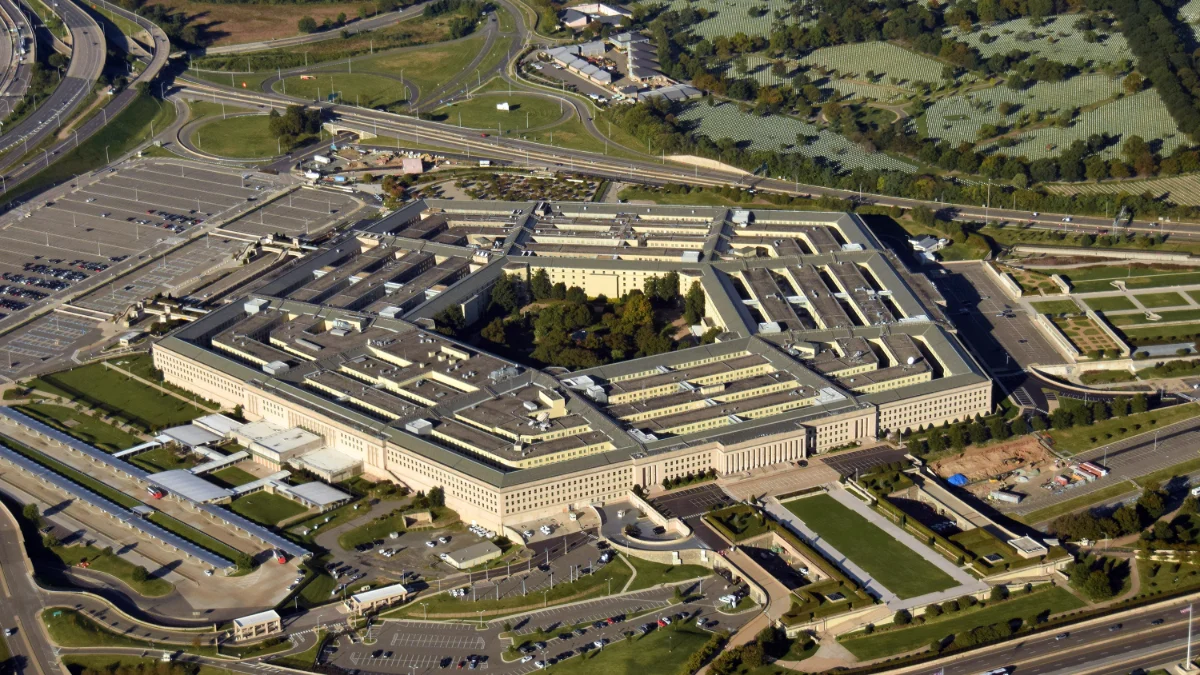
The U.S. Department of Defense (DOD) announced agreements with eight technology companies to deploy commercial artificial intelligence (AI) systems on classified military networks, marking a significant expansion of AI integration in national defense. Simultaneously, the White House postponed an executive order that would have established a voluntary federal review process for frontier AI models prior to public release.
What happened
In early May, the DOD finalized deals with Google, OpenAI, Nvidia, Microsoft, Amazon Web Services, SpaceX, Oracle, and startup Reflection to use their AI systems within highly classified military environments for “lawful operational use.” The initiative aims to advance the Pentagon’s objective to become an “AI-first fighting force” by equipping warfighters with enhanced AI tools. Anthropic notably did not participate in these agreements.
Prior to the announcement, over 600 Google employees signed a letter urging CEO Sundar Pichai to reject the classified contracts, citing concerns about the lack of enforceable limits on AI applications in warfare.
Alongside military deployment, the Trump administration sought to increase government oversight of AI development. Agreements were reached with Google DeepMind, Microsoft, and xAI to provide the Commerce Department’s Center for AI Standards and Innovation (CAISI) early access to unreleased frontier AI models. This extended preexisting arrangements with OpenAI and Anthropic initiated in 2024.
A draft executive order intended to formalize a voluntary pre-deployment AI review process emerged publicly. It proposed voluntary early access—up to 90 days—to AI models for federal security evaluation, paired with the creation of a classified benchmarking system involving Treasury, NSA, NIST, and CISA. However, on May 21, President Trump postponed signing the order, citing concerns that it might impede U.S. leadership over China in AI development. Influential tech leaders, including Elon Musk and Mark Zuckerberg, reportedly opposed the initiative.
The draft order received mixed reactions, with some policymakers and advocacy groups calling for mandatory government review and stronger AI safety measures.
In parallel, the NSA and U.S. Cyber Command launched a joint AI task force to study and accelerate the safe integration of frontier AI models across the Pentagon’s operations, including highly sensitive systems.
Why it matters
The DOD’s partnership with leading tech firms to deploy AI on classified military networks signals a major federal commitment to embedding AI capabilities in national security infrastructure. This move could enhance operational effectiveness but raises ethical and security questions about AI’s military use.
The postponed executive order highlights the tension between fostering AI innovation and establishing appropriate federal oversight to mitigate risks related to national security and AI misuse. As AI capabilities rapidly evolve, the U.S. government’s approach to balancing security, innovation, and regulation will influence global AI governance standards.
Background
Since 2024, the U.S. government has pursued voluntary agreements with key AI developers to gain early access to emerging frontier AI models, aiming to identify potential security vulnerabilities before public release. Tensions over AI safety have intensified following the briefing of senior officials by Anthropic on the model Mythos, which reportedly can detect cybersecurity flaws.
The Trump administration has prioritized AI as a cornerstone of national defense strategy, seeking to ensure U.S. military primacy in AI-enabled conflict environments. However, this ambition competes with concerns from employees, civil society, and lawmakers about ethical limits and risks associated with militarized AI.
Recent regulatory debates reflect broader challenges in governing AI, balancing innovation-driven economic competition—especially with China—and safeguarding against potential harms from advanced AI systems.
Sources
This article is based on reporting and publicly available information from the following source:
Read more AI Regulation stories on Goka World News.