
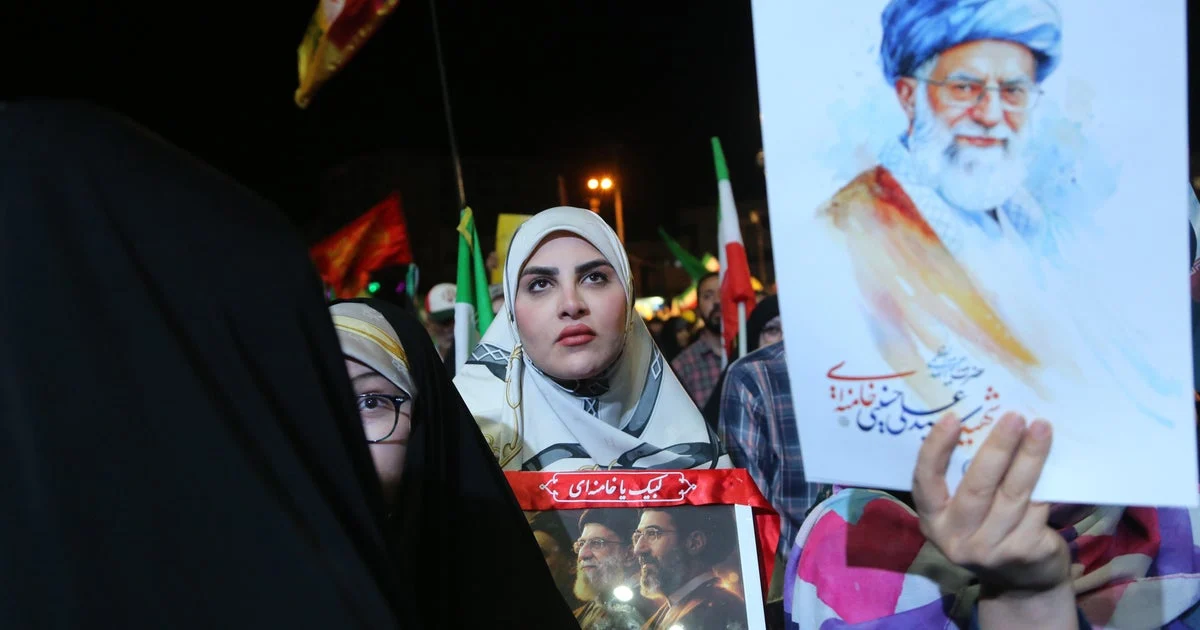
Former President Donald Trump expressed optimism about a potential deal with Iran on Monday, despite escalating military tensions between the two nations and their allies. Trump stated on his social media platform, Truth Social, that “Iran really wants to make a deal” and urged critics to “sit back and relax, it will all work out well in the end.”
What happened
In recent days, the fragile ceasefire between the U.S. and Iran has been tested by a series of military strikes and retaliatory attacks. The U.S. military conducted “self-defense strikes” targeting Iranian radar and drone sites in response to what it described as “aggressive Iranian actions.” Iran responded by firing two ballistic missiles at American forces in Kuwait, both of which were intercepted by U.S. forces, according to Central Command (CENTCOM).
Meanwhile, Iran announced it would suspend peace talks with the U.S., citing Israel’s ongoing military operations against Hezbollah in Lebanon and Gaza as violations of the ceasefire agreement. The Iranian semi-official Tasnim news agency quoted officials linking the Israeli conflict with Hezbollah as a key reason for halting negotiations.
Violence in Lebanon has also intensified, with Israeli forces capturing the medieval Beaufort Castle and launching strikes against Hezbollah targets in Beirut. Lebanese President Joseph Aoun described the Israeli operations as a “vicious and reprehensible Israeli aggression.”
U.S. officials have indicated Israel will not tolerate continued Hezbollah attacks on civilians and pushed for Hezbollah to cease hostilities to facilitate de-escalation and renewed diplomatic progress.
Why it matters
The ongoing military clashes and diplomatic tensions affect regional stability in the Middle East and complicate efforts to achieve a broader agreement between the U.S. and Iran. The proposed deal reportedly includes a 60-day extension of the ceasefire, reopening of the Strait of Hormuz for global shipping, and frameworks for addressing Iran’s nuclear program and other contentious issues.
Delays and suspensions in talks increase the risk of further escalation involving the U.S., Iran, Israel, and allied militias, threatening both civilians’ safety and international energy security.
Background
The ceasefire between the U.S. and Iran began in April 2026 following months of conflict involving Iran-backed militias and Israeli forces. Despite the agreement, sporadic attacks, missile launches, and retaliatory strikes have persisted, highlighting the fragile nature of the truce.
Iran has frequently accused the U.S. and Israel of violating the ceasefire through military operations in the region, while the U.S. maintains its responses are purely defensive. Hezbollah, an Iranian-backed militia in Lebanon, has been engaged in a conflict with Israel that has further complicated diplomatic efforts.
Multiple international actors including the U.N. Security Council have called for de-escalation and diplomatic resolution amid ongoing violence in Lebanon and Gaza.
Sources
This article is based on reporting and publicly available information from the following source:
Read more Politics stories on Goka World News.