
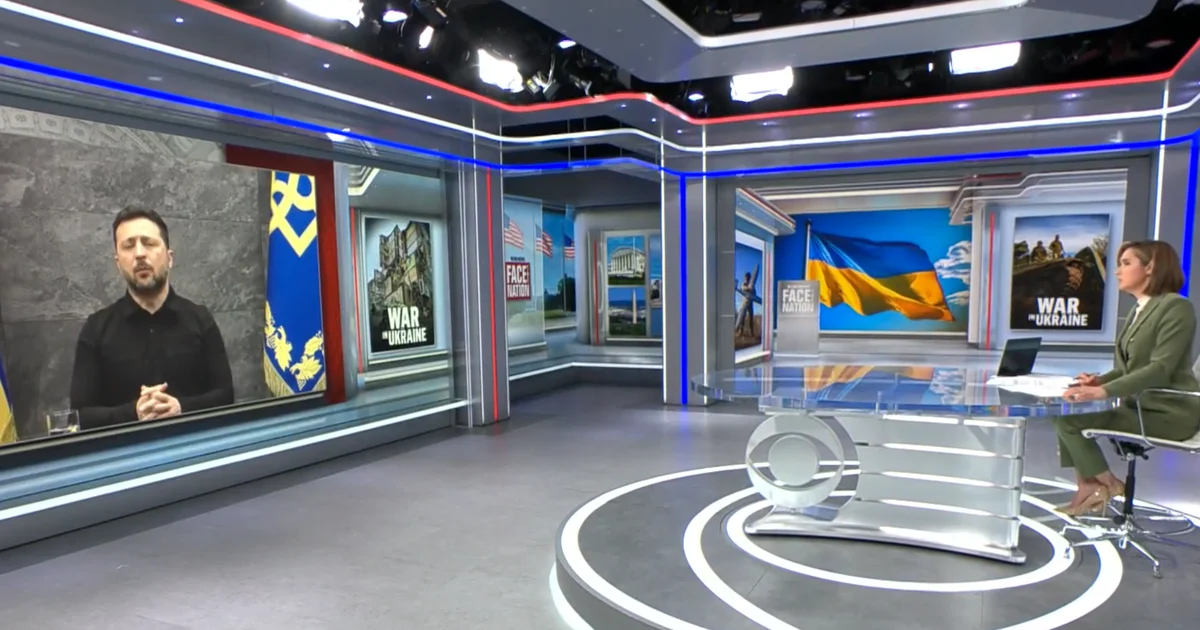
Ukrainian President Volodymyr Zelenskyy warned of an imminent large-scale Russian military attack on Kyiv and urgently requested enhanced anti-ballistic missile support from the United States amid the ongoing war. Zelenskyy emphasized the increasing intensity of Russian strikes, which have included hundreds of Iranian drones and dozens of ballistic missiles.
What happened
In an exclusive interview with CBS News on May 31, 2026, Zelenskyy detailed the escalating Russian attacks on Ukraine. He reported that recent assaults involved over 600 Iranian-made Shahed drones and about 30 ballistic missiles in a single operation. The Ukrainian military is strained in its defense capabilities, especially in anti-ballistic missile systems, which Zelenskyy identified as the “biggest deficit” in Ukraine’s arsenal.
Zelenskyy explained that Russia continues to take operational risks, including indirect attacks near NATO countries such as Poland, Romania, and the Baltic states, as part of political pressure aimed at deterring Western support for Ukraine. He called for stronger unified NATO responses to these provocations.
Expressing concern over the limited American production of interceptors due to competing demands—including the conflict involving Iran in the Middle East—Zelenskyy said he had sent a personal letter to the White House and U.S. Congress requesting increased production and expedited delivery of anti-ballistic missile interceptors.
While Ukraine has integrated advanced AI and anti-drone technologies, Zelenskyy highlighted that the country still relies heavily on U.S. manufacturing for missile defense systems. He noted ongoing efforts to develop European anti-ballistic capacities but stressed these require time, during which Ukraine remains vulnerable.
Regarding peace negotiations, Zelenskyy stated Ukraine’s readiness to engage in direct talks with Russia if conditions allow, but pointed out that no formal discussions are currently scheduled. He acknowledged severe Russian losses and suggested that mounting military and economic pressures might eventually compel Moscow to negotiate.
Zelenskyy also expressed hope that U.S. peace envoys would visit Kyiv soon, emphasizing the importance of firsthand understanding of the conflict’s human impact.
Why it matters
Zelenskyy’s appeal spotlights the critical role of U.S. defense support in sustaining Ukraine’s resistance against intensified Russian missile attacks. The request for a surge in anti-ballistic missile production comes at a time when U.S. resources are stretched by multiple global commitments, including the war in the Middle East.
Increased missile attacks on civilian infrastructure raise humanitarian and strategic stakes, intensifying pressure on U.S. policymakers and NATO allies to clarify and possibly expand their military and diplomatic support for Ukraine.
The interview also highlights the broader geopolitical tensions involving Russia’s disregard for NATO borders and the challenge of balancing military aid with diplomatic efforts to resolve prolonged conflicts.
Background
Since Russia invaded Ukraine in early 2022, the war has evolved into a protracted conflict involving extensive use of drones, ballistic missiles, and modern warfare technologies. The United States and European allies have provided substantial military aid to Ukraine, including intelligence sharing and weaponry, but supply chain limitations remain a concern.
The U.S. is simultaneously engaged in diplomatic negotiations to stabilize the Middle East amid conflict with Iran, complicating resource allocation decisions. Previous attempts at cease-fire talks between Russia and Ukraine have stalled, with ongoing sanctions and political pressures continuing to shape the conflict’s trajectory.
Sources
This article is based on reporting and publicly available information from the following source:
Read more World News stories on Goka World News.