
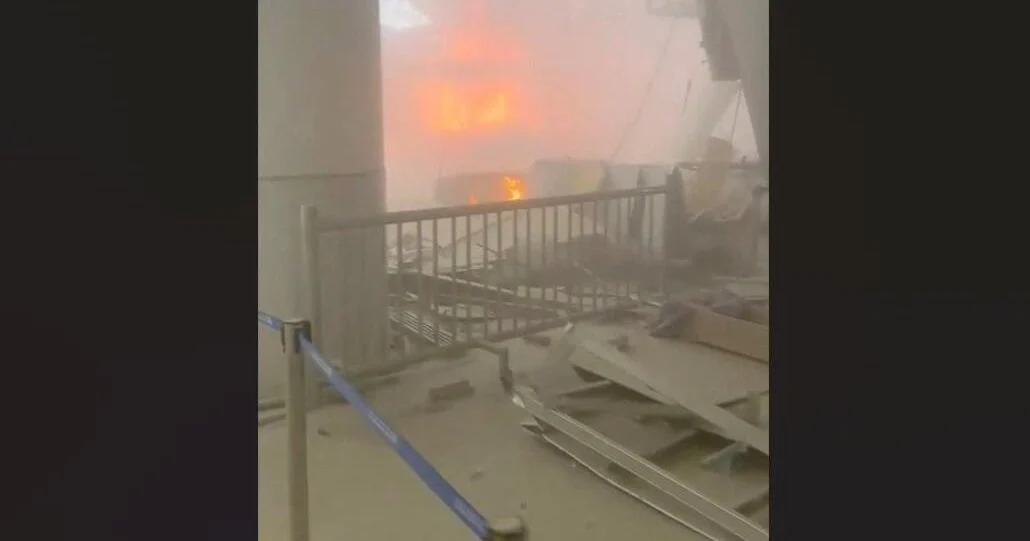
An Iranian missile and drone attack struck Kuwait International Airport on June 3, killing one person and injuring dozens, as tensions escalated between Iran and the United States in the Gulf region. Iran stated the assault was retaliation for recent U.S. airstrikes targeting Iranian military positions in the area.
What happened
Early Wednesday, Iranian forces launched missiles and drones toward Kuwait International Airport, severely damaging Terminal 1. While many projectiles were intercepted, falling debris caused casualties and destruction. Kuwait’s Directorate General of Civil Aviation temporarily halted all flights before partially resuming operations at terminals 4 and 5 after safety checks.
Iran’s Revolutionary Guards confirmed responsibility, citing the attack as retaliation for U.S. strikes on an Iranian island and vessel the previous night. The U.S. Central Command termed its recent strikes “self-defense” actions against Iranian military assets. Iran’s Foreign Minister Seyed Abbas Araghchi described the strikes as “self-defense” against U.S. operations that threaten civilian shipping and violate an existing ceasefire.
President Donald Trump denied reports that Iran had suspended indirect peace talks, asserting continuous dialogue despite the ongoing conflict. Trump also indicated that Iran’s supreme leader, Mojtaba Khamenei, remains involved in peace efforts despite reported injuries.
U.S. Secretary of State Marco Rubio indicated that the fate of Iran’s enriched uranium remains key in negotiations, with no agreement reached. Rubio stated that while military operations named “Epic Fury” had ended, the U.S. claims to have significantly degraded Iran’s military capabilities.
Why it matters
This attack marks a major escalation in the conflict between the U.S. and Iran, involving a third-party nation, Kuwait, thereby broadening the war’s regional impact. The strike on a civilian international airport raises concerns over regional security and civilian safety in the Gulf. It threatens to destabilize trade routes, including the critical Strait of Hormuz, a vital passage for global oil shipments.
Energy experts warn that prolonged disruption in Middle Eastern energy supplies due to the conflict could severely damage the global economy, hitting Asia and developing nations hardest. The Organization for Economic Cooperation and Development estimates that a sustained disruption would slow global growth and increase risks of recession and inflation worldwide.
Background
The attack comes amid ongoing hostilities between Iran and the United States following U.S. military strikes on Iranian targets in the Gulf. Iran has repeatedly vowed to respond decisively to any U.S. aggression. Kuwait, hosting U.S. military bases, has been drawn into the conflict as Iran targets American forces in the region.
Efforts for indirect peace negotiations between the U.S. and Iran continue, focusing heavily on Iran’s nuclear program and enriched uranium stockpiles. However, mistrust and violence persist, undermining ceasefire agreements and complicating diplomatic resolutions.
Sources
This article is based on reporting and publicly available information from the following source:
Read more World News stories on Goka World News.