
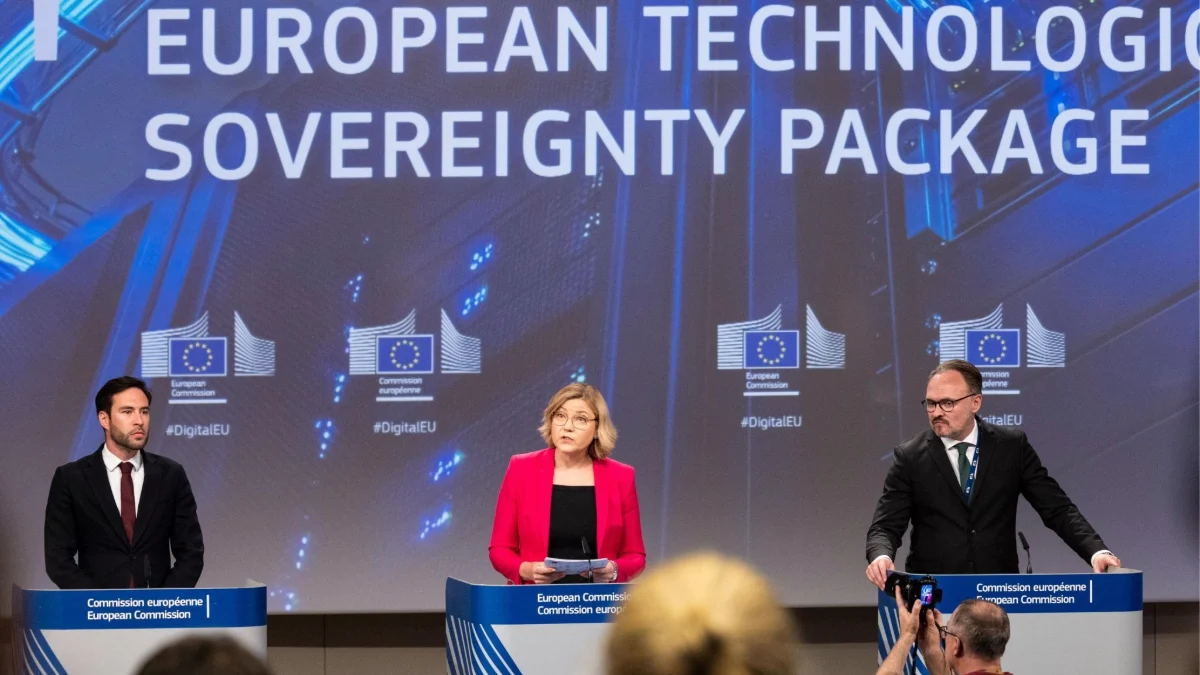
The European Commission on June 3, 2026, revealed its first comprehensive strategy to enhance Europe’s technological sovereignty by reducing dependence on foreign cloud, semiconductor, and software providers. The initiative aims to safeguard critical infrastructure and public services while fostering domestic technological capacity.
What happened
The European Commission introduced a multifaceted package encompassing new regulatory criteria, investment plans, and emergency powers targeting chips, cloud services, artificial intelligence (AI), and data center expansion. Central to the package is the Cloud and AI Development Act, which sets four tiers of trust for cloud services used by public authorities. These tiers consider factors like ownership, control, supply chain dependencies, infrastructure location, and cybersecurity risks.
Under the new rules, cloud providers failing to meet EU sovereignty standards could be barred from sensitive government contracts. The Commission would also have emergency authority to prioritize semiconductor production during supply crises, including overriding existing commercial agreements.
The strategy balances promoting European autonomy with maintaining openness to “like-minded partners.” It proposes measures such as fast-tracked data center permits, the creation of a EuroCloud Federation for sharing resources across member states, and procurement preferences to build local cloud and AI capabilities.
On semiconductors, the plan shifts from boosting supply to connecting domestic chipmakers with European industrial users to meet expected demand growth through 2040. The updated Chips Act grants the Commission powers to issue priority orders during shortages while protecting compliant manufacturers from contract liabilities.
The Commission also highlighted the urgent need to expand data center capacity across the EU, aiming to triple output within five to seven years, while cautioning about potential electricity grid strains and rising energy costs. A voluntary coordination framework among operators and energy providers will be introduced in late 2026, with binding measures possible if voluntary steps fall short.
Why it matters
The EU’s tech sovereignty strategy represents its most ambitious effort to reduce reliance on dominant non-European technology providers—especially U.S. cloud companies, which control over 70% of the EU cloud market. This dependency raises concerns about operational autonomy and exposure to foreign laws, including data access under third-country jurisdictions like U.S. legislation.
By establishing clear sovereignty criteria and supporting European alternatives, the EU seeks to secure essential services such as healthcare, energy, and public administration from external risks, including supply chain disruptions and geopolitical tensions.
The package also signals a strategic shift toward coordinated investment and industrial policy, aiming to close vast funding gaps — with estimates of €120 billion needed for semiconductors and €200 billion for data centers by 2036 — to position Europe as a competitive digital economy.
Background
Europe’s dependence on foreign technology has been a growing concern amid global supply chain tensions and restrictions stemming from export controls, such as the recent U.S.-led semiconductor export regime targeting China. The EU previously invested €52 billion through its 2023 Chips Act to double its global semiconductor share by 2030, but the market share remains under 10%.
The European Parliament recently opted to replace Google with the French search engine Qwant, citing sovereignty and privacy. Member states like The Netherlands have also taken steps to block foreign acquisitions impacting critical digital infrastructure.
This strategy builds on such trends, aiming to coordinate across EU institutions and member states to implement a consistent framework for technological autonomy without closing the bloc’s markets to trusted international partners. The forthcoming negotiations between the Commission, Parliament, and member countries will determine how these proposals will be enacted.
Sources
This article is based on reporting and publicly available information from the following source:
Read more Digital Policy stories on Goka World News.