
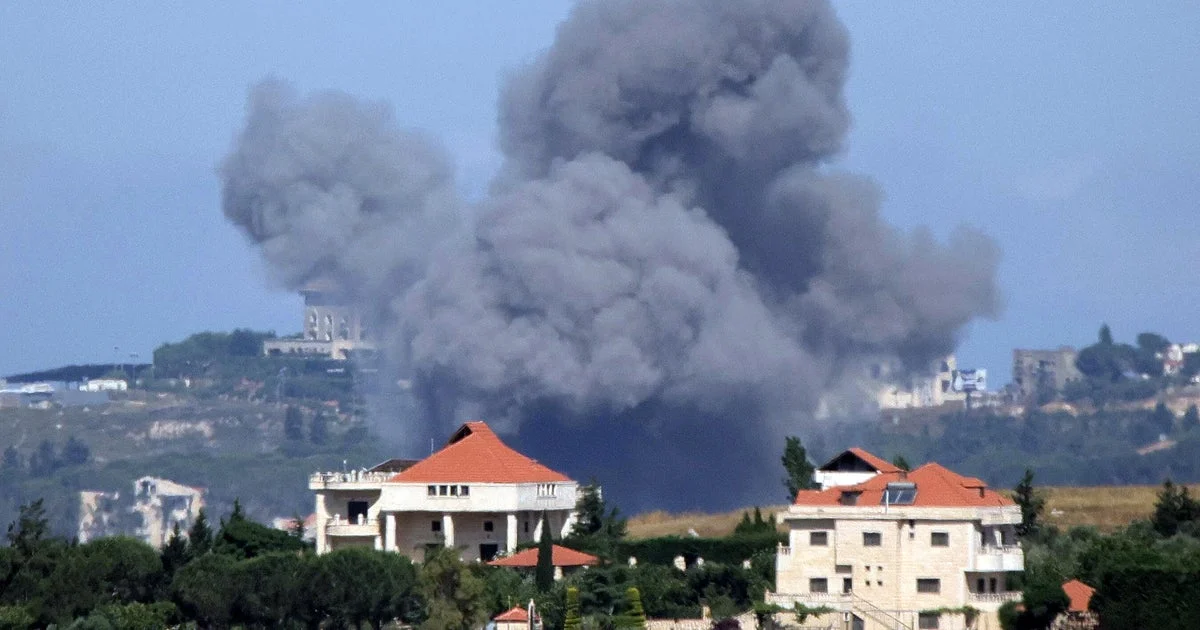
Iran has accused the United States of violating a fragile ceasefire after an Israeli airstrike on Beirut’s southern suburbs triggered missile exchanges and heightened regional tensions. The ceasefire, which took effect in early April, is now strained as peace talks between involved parties remain deadlocked.
What happened
On June 7, Israel confirmed that it was targeted by missile attacks launched from Iran—the first such bombardment since the ceasefire began in April. Iran’s state media confirmed the missile launches, and explosions were heard in northern Israel, where air raid sirens sounded in multiple areas. Israeli officials reported efforts to intercept the missiles but acknowledged that their defense systems are not foolproof.
The escalation followed an Israeli airstrike on Beirut’s southern suburbs that killed two people and injured 20, including women and children, according to Lebanon’s health ministry. Israel stated the strikes targeted Hezbollah command centers and were retaliation for militant fire toward northern Israel earlier the same day.
In response to the increased aggression, the U.S. military reported downing six Iranian one-way attack drones over two days, with several ballistic missiles fired toward Kuwait and Bahrain largely intercepted. The U.S. retaliated by bombing Iranian coastal radar sites on Goruk and Qeshm Island.
Iran’s leadership accused the U.S. of providing Israel a “green light” to conduct the Beirut strike and warned that such attacks, alongside the ongoing blockade of Iranian ports, justify targeting American and Israeli assets in the region. An adviser to Iran’s supreme leader indicated that peace negotiations are stalled, placing the pressure on the U.S. to release frozen Iranian assets.
Additionally, multiple shooting attacks near the Israeli-occupied West Bank resulted in at least one death and five injuries. Israeli police identified the attacker as a Palestinian citizen of Israel.
Why it matters
The recent missile launches and airstrikes represent a significant escalation that undermines a tenuous ceasefire agreement, threatening to widen the ongoing conflict in the Middle East. The involvement of multiple countries, including the U.S., Iran, Lebanon, Israel, and Gulf states, complicates diplomacy and raises the risk of broader regional instability.
With peace talks reportedly stalled and accusations of ceasefire violations increasing distrust, there is a heightened potential for further military confrontations. The U.S. and its Gulf allies have indicated intentions to leverage frozen Iranian assets to finance rebuilding efforts from conflict-related damage, signaling continued economic and political repercussions.
Background
The ceasefire in early April had offered a fragile pause in a broader conflict involving Israel, Iran, Hezbollah, and allied forces. However, sustained hostilities, including drone attacks, missile launches, and airstrikes, have persisted. Diplomatic efforts, including recent negotiations led by U.S. envoys, aim to resolve the conflict and address issues such as Iranian nuclear assets and the release of detained Americans, though substantial progress remains elusive.
The ongoing war and blockade have intensified humanitarian and security challenges in Lebanon and neighboring countries, complicating the geopolitical landscape. The latest flare-ups highlight the persistent volatility and the difficulties of achieving lasting peace in the region.
Sources
This article is based on reporting and publicly available information from the following source:
Read more World News stories on Goka World News.