
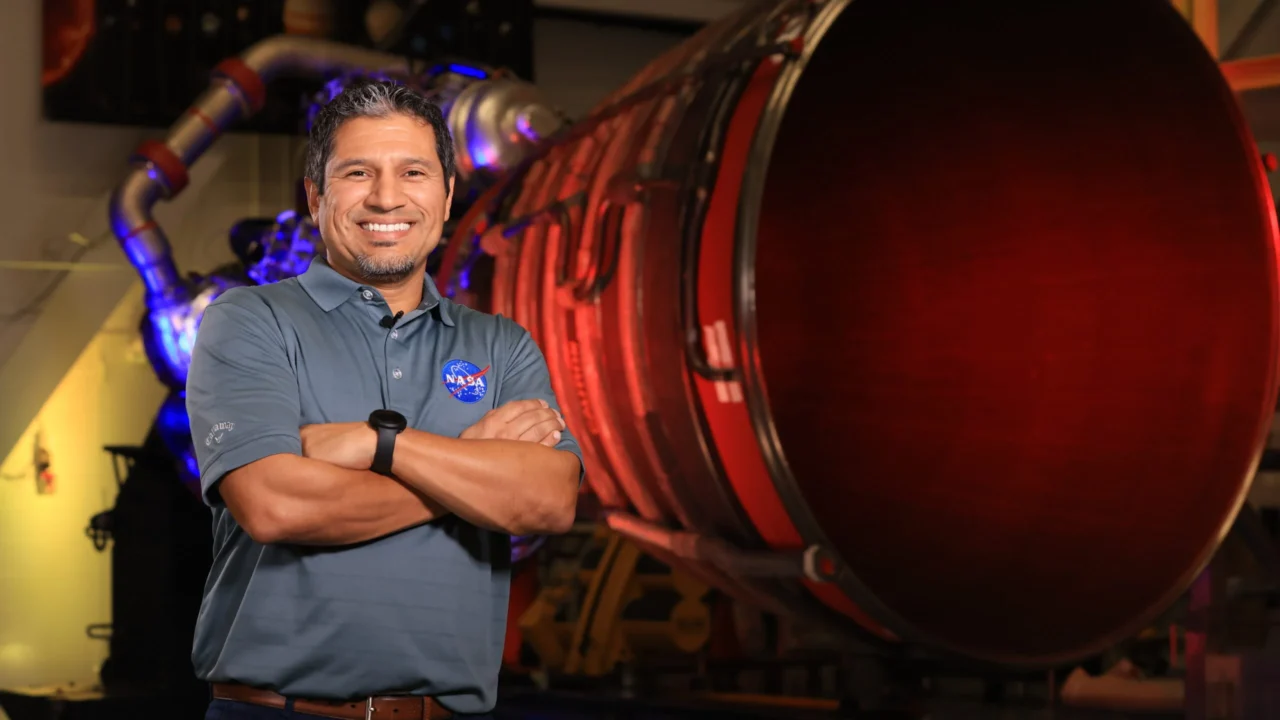
Elkin Norena, resident management officer for NASA’s Space Launch System (SLS) Program at Kennedy Space Center, Florida, is a critical figure supporting the Artemis II mission, which will send astronauts on a crewed lunar flyby. Norena’s role continues a lifelong dedication to space exploration that began with his work on space shuttle missions and now advances America’s return to the Moon.
What Happened
Elkin Norena provides onsite management and technical support for NASA’s Exploration Ground Systems team as they prepare, stack, test, and launch the SLS rocket and Orion spacecraft. After more than a dozen shuttle missions supporting low Earth orbit operations, International Space Station assembly, and the Hubble servicing missions, Norena now aids the Artemis II mission. This mission follows the successful Artemis I uncrewed launch and will carry an international crew on a lunar flyby and return.
Key Facts
- Norena serves as the resident management officer for the SLS Program at Kennedy Space Center.
- He supports NASA’s Exploration Ground Systems team responsible for launch vehicle preparation and testing.
- He has worked on over a dozen space shuttle missions, including ISS assembly and Hubble servicing.
- Elkin is part of the Artemis II mission team, following successful Artemis I and Artemis II launches.
- The SLS Program is managed at NASA’s Marshall Space Flight Center in Huntsville, Alabama.
- Norena holds a computer engineering degree from the University of Central Florida.
Why It Matters
Norena’s work is vital to advancing NASA’s Artemis lunar exploration program, marking America’s return to human spaceflight beyond low Earth orbit. His decades of experience in shuttle operations to Artemis missions highlight the bridging of historic spaceflight achievements with new lunar goals. Artemis II’s crewed lunar flyby lays the groundwork for Artemis III, aiming to land astronauts on the Moon and establish a sustainable human presence.
Background
Norena began his NASA career as an electrical engineer on the Space Shuttle Program and served as flight termination engineer for 17 shuttle missions. His shuttle work contributed to the International Space Station’s construction and scientific experiments in orbit. Transitioning to the SLS program, he was among the original team members involved in launching Artemis I and II. His technical expertise and leadership now support this new era of lunar exploration.
Analysis
Norena views Artemis II as historic and transformative, linking NASA’s legacy of shuttle and Apollo missions with future deep space exploration. He emphasizes the importance of Artemis for returning humans to the Moon permanently and advancing space technology. His role as resident manager facilitates critical coordination between launch pad activities and the broader SLS Program managed at Marshall Space Flight Center.
Who Is Affected
The Artemis II mission directly involves the international crew aboard Orion and NASA teams at Kennedy Space Center and Marshall Space Flight Center. It also impacts the broader scientific and aerospace communities invested in lunar exploration and related technologies.
What Remains Unclear
This information was not confirmed in the reviewed sources.
What Comes Next
Following the Artemis II preparations and successful launch, NASA aims to proceed with Artemis III, targeting the first crewed lunar landing in the Artemis program. The timelines for these events are pending official mission schedules.
Sources
This article is based on reporting and publicly available information from the following source:
Read more Space & NASA stories on Goka World News.