
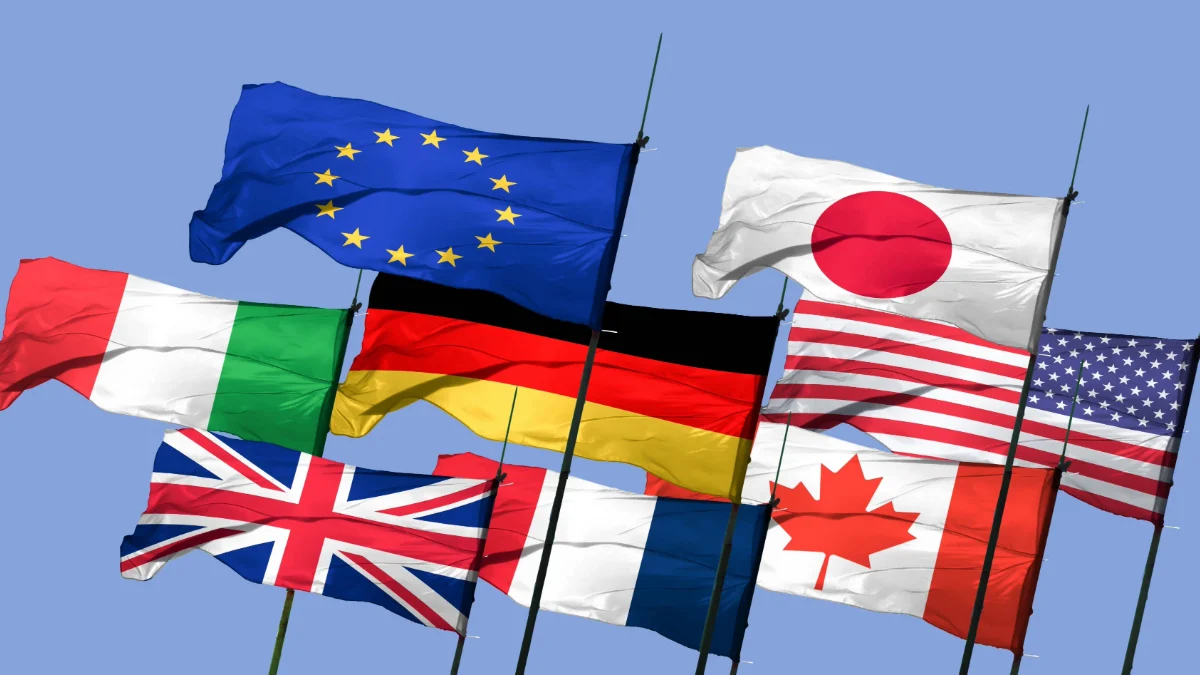
In the lead-up to the G7 Summit held in Évian, France, from June 15 to 17, member nations revealed distinct and sometimes conflicting strategies on artificial intelligence (AI) sovereignty, sparking concerns over digital policy rifts among traditionally close allies. The European Union, the United States, and Canada each announced separate initiatives to bolster domestic AI infrastructure and technological independence, underscoring increased geopolitical competition in the digital realm.
What Happened
Between June 2 and June 4, shortly before the G7 Summit hosted by French President Emmanuel Macron, the United States, European Union, and Canada announced individual policy packages to assert control over AI technologies and their underlying infrastructure. The White House issued an executive order on June 2 outlining national security measures targeting advanced large language models without mandating regulatory controls. The European Commission followed with its European Tech Sovereignty package on June 3, proposing increased EU investment in chip manufacturing, cloud computing, and open-source AI technologies. Canada unveiled its national AI strategy on June 4, focusing on public investment in AI infrastructure and fostering international alliances, particularly with European nations.
Key Facts
- G7 Summit dates: June 15-17, 2023, in Évian, France.
- US executive order on AI published June 2, 2023.
- European Commission’s European Tech Sovereignty package released June 3, 2023.
- Canada’s national AI strategy announced June 4, 2023.
- Policy efforts involve boosting domestic chip production, cloud infrastructure, and open-source AI technologies.
- Initiatives emphasize reducing reliance on US and Chinese technology giants.
- France invited OpenAI CEO Sam Altman to the summit, signaling the importance of AI discussions.
- Canada formed a Sovereign Tech Alliance with Germany earlier in 2023; the EU announced AI cooperation with South Korea and a digital partnership with Brazil.
Why It Matters
The conflicting AI sovereignty policies illustrate a growing divergence among Western allies, driven by national security concerns, economic interests, and a desire for technological self-reliance. These developments influence how digital infrastructure and AI governance will evolve globally, potentially fragmenting the digital ecosystem. The emphasis on sovereignty could reshape international digital trade, regulatory standards, and alliances, particularly with nations aiming to avoid dependency on the dominant US and Chinese tech firms.
Background
The G7 has historically served as a forum for coordinated international policy on emerging technologies, including AI governance frameworks established two years prior. However, geopolitical shifts and rising technology nationalism have amplified calls for digital sovereignty, with countries like France championing efforts to reduce dependencies on foreign tech companies. Recent policies build on an escalating trend of governments investing in domestic AI infrastructure and forging alliances to balance US and Chinese dominance.
Analysis
European Commission President Ursula von der Leyen framed the European Tech Sovereignty initiative as essential for protecting critical services and citizen interests from external domination, stating the importance of controlling technologies vital to hospitals, energy grids, and public services. Meanwhile, US policies emphasize maintaining American technological leadership through export of hardware and software infrastructure, resisting multilateral regulations that could constrain national advantages. Canada’s Prime Minister Mark Carney emphasized AI’s role in national strength and the importance of international alliances to assert collective influence over AI’s future.
Who Is Affected
- Member countries of the G7, especially the United States, European Union states, and Canada.
- Technology companies, particularly US-based major AI firms such as OpenAI, Google, and Anthropic.
- Other nations involved in partnerships, including Germany, South Korea, and Brazil.
- Global consumers and businesses dependent on AI infrastructure and services.
What Remains Unclear
- The extent to which these differing AI sovereignty policies will be reconciled or further diverge at the G7 Summit.
- Whether the summit will produce concrete multilateral commitments on AI governance or focus primarily on economic benefits.
- The impact on ongoing negotiations around AI regulation and digital trade standards.
What Comes Next
- The G7 Summit in Évian, France, from June 15 to 17, 2023, will serve as the immediate platform for discussion and potential compromise on AI sovereignty.
- Ongoing collaboration initiatives, such as the Canada-Germany Sovereign Tech Alliance and EU partnerships with South Korea and Brazil, are set to continue developing post-summit.
Sources
This article is based on reporting and publicly available information from the following source:
Read more AI Regulation stories on Goka World News.