
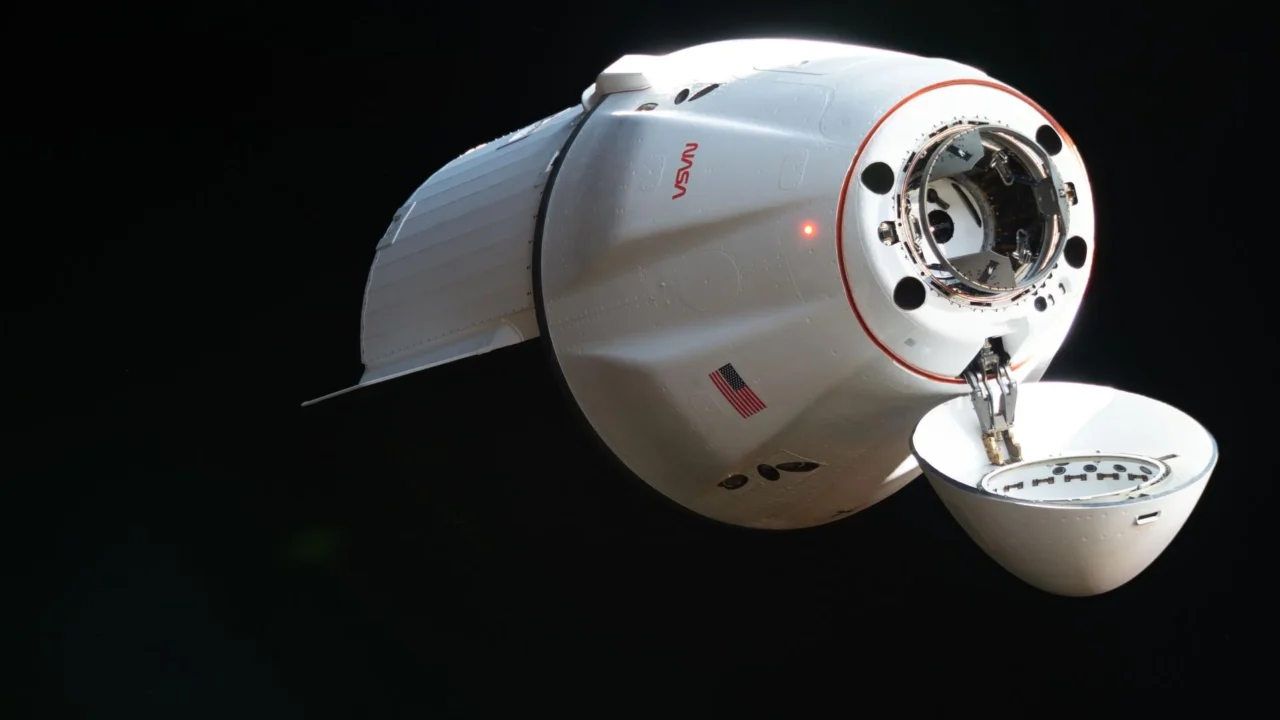
NASA’s SpaceX Dragon spacecraft undocked from the International Space Station (ISS) on June 16, 2024, beginning its journey back to Earth. The spacecraft is carrying crucial scientific research samples and hardware collected during its stay aboard the orbiting laboratory.
What Happened
The Dragon spacecraft departed from the forward port of the station’s Harmony module at approximately 12:05 p.m. EDT on June 16, following commands from SpaceX ground controllers. After undocking, it maneuvered away from the ISS using its thrusters. The spacecraft is scheduled to reenter Earth’s atmosphere on June 17, with a splashdown off the California coast expected around 5:08 a.m. PDT. NASA provided live coverage of the undocking via NASA+, Amazon Prime, and its YouTube channel.
Key Facts
- The Dragon spacecraft transported nearly 6,500 pounds of crew cargo and science experiments.
- It initially arrived at the ISS on May 17, 2024, after launching aboard a Falcon 9 rocket from Cape Canaveral Space Force Station.
- Returning scientific materials include bioprinted organ and cartilage tissue samples, data for enhancing cryogenic fuel storage, and DNA-inspired materials for cancer treatment research.
- Returned hardware includes an ocular imaging device for crew eye health monitoring, an absorbent bed for filtering cabin air contaminants, and a separator pump from the waste and hygiene compartment.
Why It Matters
The return of these samples and hardware enables continued scientific analysis on Earth that could improve future space exploration and have applications in medical and material sciences. The research is vital for advancing long-duration human spaceflight and developing technology for missions to the Moon and Mars.
Background
SpaceX’s Dragon spacecraft have been a critical component of cargo resupply missions to the ISS for over a decade. NASA and its international partners have continuously utilized the ISS since its inception over 25 years ago to conduct experiments and develop technology not feasible on Earth. These missions support NASA’s Artemis program, targeting lunar and Martian exploration.
Analysis
This mission exemplifies the ongoing collaboration between NASA and commercial partners like SpaceX in sustaining ISS operations and maximizing scientific returns, according to NASA officials. The returned research is expected to contribute valuable insights into human health and fuel management in space.
Who Is Affected
NASA researchers, international space agencies, and commercial aerospace entities involved in the ISS program directly benefit from these cargo deliveries and sample returns. Additionally, terrestrial scientific and medical communities stand to gain from the analysis of returned specimens.
What Remains Unclear
- The final condition and detailed results of the returned experiments will be determined after arrival and processing on Earth.
- The operational status of some hardware upon return is yet to be assessed.
What Comes Next
Following splashdown, the returned cargo will be transported to NASA facilities for examination and analysis. NASA will continue to monitor Dragon spacecraft missions in support of ISS resupply and research return operations.
Sources
This article is based on reporting and publicly available information from the following source:
Read more Space & NASA stories on Goka World News.