
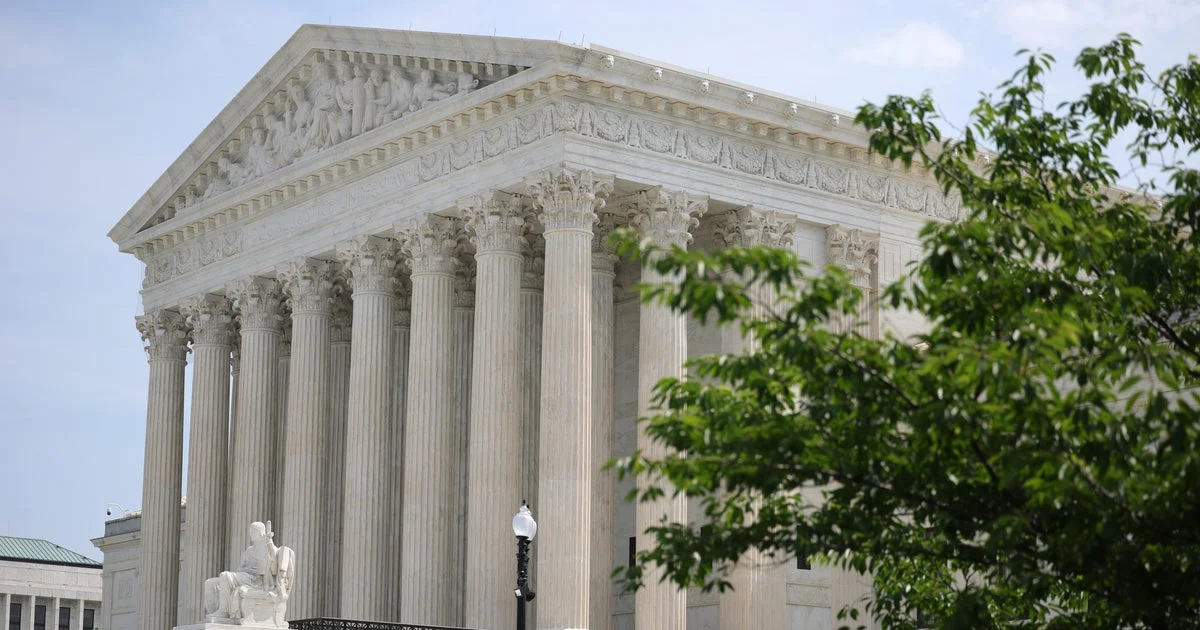
The U.S. Supreme Court on June 15, 2026, declined to hear a case involving a free speech dispute at Noblesville High School in Indiana, where a student-led anti-abortion club was barred from posting flyers featuring “Defund Planned Parenthood.” This refusal leaves in place lower court rulings supporting the school’s policy restricting political content.
What Happened
The case originated in 2021 when freshman student E.D. founded Noblesville Students for Life, a student-initiated pro-life club. E.D. submitted flyers for approval to advertise the club’s meetings, which included “Defund Planned Parenthood” slogans and images. School officials denied approval, citing policies that prohibited political or disruptive content on posters displayed in common areas. After a dispute involving club leadership and flyer content, the school suspended and later reinstated the club.
E.D. and the club, supported by the Alliance Defending Freedom, sued the school alleging a violation of First Amendment rights. Federal courts ruled in favor of the school, applying the 1988 Supreme Court precedent Hazelwood School District v. Kuhlmeier, which permits schools to regulate student speech in school-sponsored activities to serve legitimate educational concerns. The Seventh Circuit concluded that posters with political messages could be reasonably perceived as bearing the school’s endorsement and justified the school’s restrictions to maintain political neutrality and focus on education.
Justice Samuel Alito dissented from the Supreme Court’s decision not to review the case, urging clarification on the relationship between Hazelwood and other government speech rulings.
Key Facts
- The flyers featured slogans “Defund Planned Parenthood” and “I am the Pro-Life Generation.”
- The school requires administrative approval for club flyers, disallowing political or disruptive content.
- The federal district court and the Seventh Circuit Court upheld the school’s restrictions and club suspension.
- Judges cited the 1988 Hazelwood decision to uphold school editorial control over student speech in school-sponsored activities.
- Supreme Court Justice Samuel Alito dissented from the refusal to hear the case, calling for clarity on precedent.
Why It Matters
The Supreme Court’s denial preserves existing precedent allowing schools to restrict certain political speech in student group materials displayed on school property. The ruling affects the balance between student free speech rights and schools’ authority to control political messaging in school-sponsored activities.
Background
The case builds on two key precedents. In 1969’s Tinker v. Des Moines, the Supreme Court held that students retain their First Amendment rights at school, but in 1988’s Hazelwood decision, the Court permitted schools to regulate speech in school-sponsored settings linked to legitimate pedagogical interests. The current dispute focuses on whether student flyers represent private speech or school endorsement.
Analysis
The Seventh Circuit highlighted concerns that political posters displayed on school walls could appear as official endorsements, potentially disrupting the educational environment. Legal advocates for E.D. argued that Hazelwood’s application suppresses student speech on controversial issues, challenging the scope of school control.
Justice Alito’s dissent signals ongoing judicial debate over the boundaries between student free speech and schools’ editorial authority.
Who Is Affected
Students in public schools nationwide may be impacted by this precedent relating to political expression within school-sponsored activities and use of school property for student messaging.
What Remains Unclear
- Whether the Supreme Court will revisit the issue in future cases to clarify the interaction of Hazelwood with other First Amendment rulings.
- The broader implications for student political speech regulation across different school districts.
What Comes Next
This information was not confirmed in the reviewed sources.
Sources
This article is based on reporting and publicly available information from the following source:
Read more Politics stories on Goka World News.