
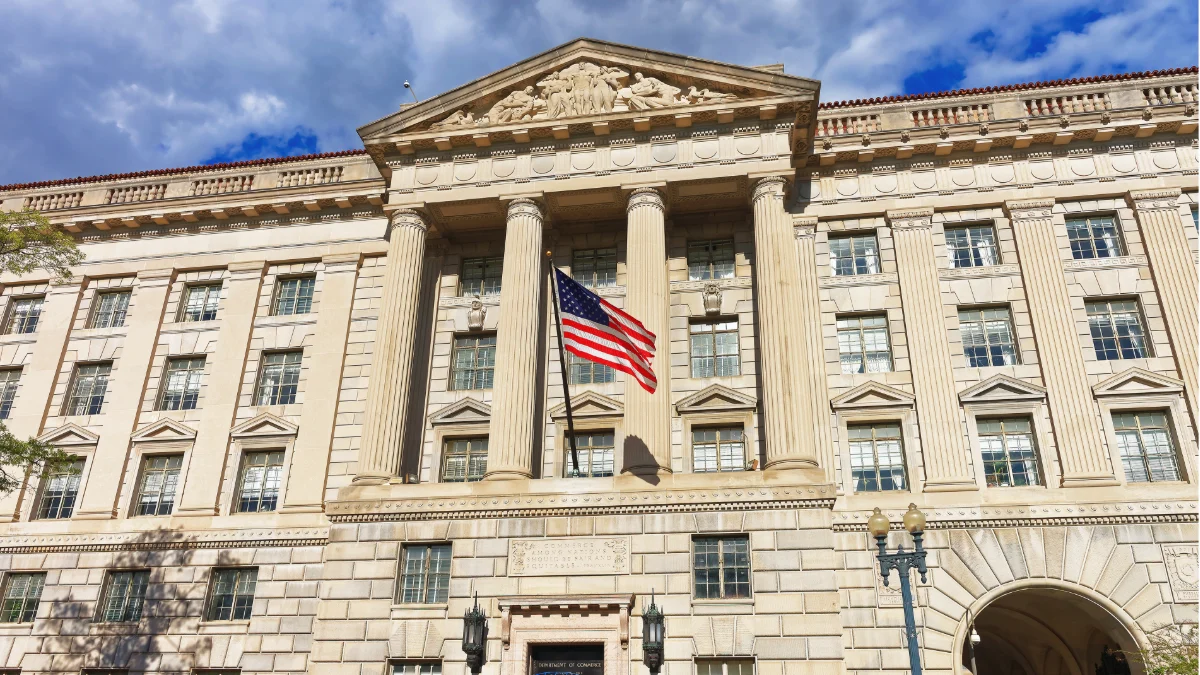
The United States Department of Commerce issued an export control directive on June 12, requiring Anthropic to suspend all access by foreign nationals, within or outside the US, to its AI models Fable 5 and Mythos 5. This directive forced Anthropic to disable the models for all users in compliance with the government’s order. In response, cybersecurity experts led by Alex Stamos have sent an open letter urging the US administration to reconsider the ban on these AI models.
What Happened
On June 12, the US Department of Commerce notified Anthropic that it must halt all foreign national access to its Fable 5 and Mythos 5 AI models under new export control regulations. Subsequently, Anthropic disabled access to these models for all customers. The White House’s intervention sparked significant debate, with experts and foreign governments concerned about the implications of the move for global AI access and cooperation. Alex Stamos and cybersecurity leaders organized an open letter addressed to Secretary of Commerce Howard Lutnick and National Cyber Director Sean Cairncross, arguing against the restrictive order.
Key Facts
- Jurisdiction: United States Department of Commerce export control authority.
- Affected platforms: Anthropic’s AI models Fable 5 and Mythos 5.
- Measure in effect: Immediate suspension of foreign national access to the models, including Anthropic’s own foreign employees.
- Compliance action: Anthropic fully disabled access to the models to comply with the directive.
- Purpose of open letter: To argue the models are not uniquely capable of dangerous cyber exploitation compared to other AI models already publicly available.
- Models noted for cybersecurity: Mythos excels at finding security vulnerabilities and exploits but is not unparalleled compared to other AI like OpenAI’s GPT 5.5 or the Opus series.
Why It Matters
The export ban impacts global access to cutting-edge AI models, complicating international cooperation and potentially disadvantaging US-based AI companies in the competitive AI race. The restrictions raise questions about the coherence and strategic rationale behind US AI export controls, especially when other AI models with similar capabilities remain accessible internationally. The policy also creates uncertainty about future government interventions, affecting trust in US AI technology among foreign stakeholders.
Background
The directive came after Amazon, hosting Anthropic’s models, conducted internal testing revealing ways to circumvent the safety prompt filters designed to prevent malicious use. This testing exposed vulnerabilities in the Fable model’s content moderation system. The US government’s rapid response followed, aiming to mitigate cybersecurity risks. Prior to this, AI models such as Opus and GPT series had demonstrated capabilities to find and exploit software vulnerabilities, raising ongoing security concerns regarding generative AI tools.
Analysis
Alex Stamos, chief product officer at Corridor and a former Facebook chief security officer, noted that Mythos is well-regarded for bug finding but that this competency is not unique—other AI models can perform similar tasks without the export restrictions. The open letter suggests the US government may have overreacted due to limited understanding or, more critically, may be using the export ban as a political tool against Anthropic. Security experts emphasize that while AI’s capabilities have rapidly advanced, proper regulation should balance security concerns with innovation and global collaboration.
Who Is Affected
- Foreign nationals and employees of Anthropic barred from accessing Fable 5 and Mythos 5 within and outside the US.
- Anthropic, forced to suspend model access globally.
- US AI industry facing increased regulatory uncertainty.
- Foreign governments and AI users concerned about reliance on US-based AI models amid unpredictable policy shifts.
What Remains Unclear
- The exact criteria and process by which export controls will be applied on individual cases going forward.
- Whether the directive targets cybersecurity risks specifically or also includes political motives against Anthropic.
- Potential appeal mechanisms or negotiations that could restore some foreign access.
- The longer-term impact on US AI industry competitiveness and international AI cooperation frameworks.
What Comes Next
This information was not confirmed in the reviewed sources.
Sources
This article is based on reporting and publicly available information from the following source:
Read more AI Regulation stories on Goka World News.