
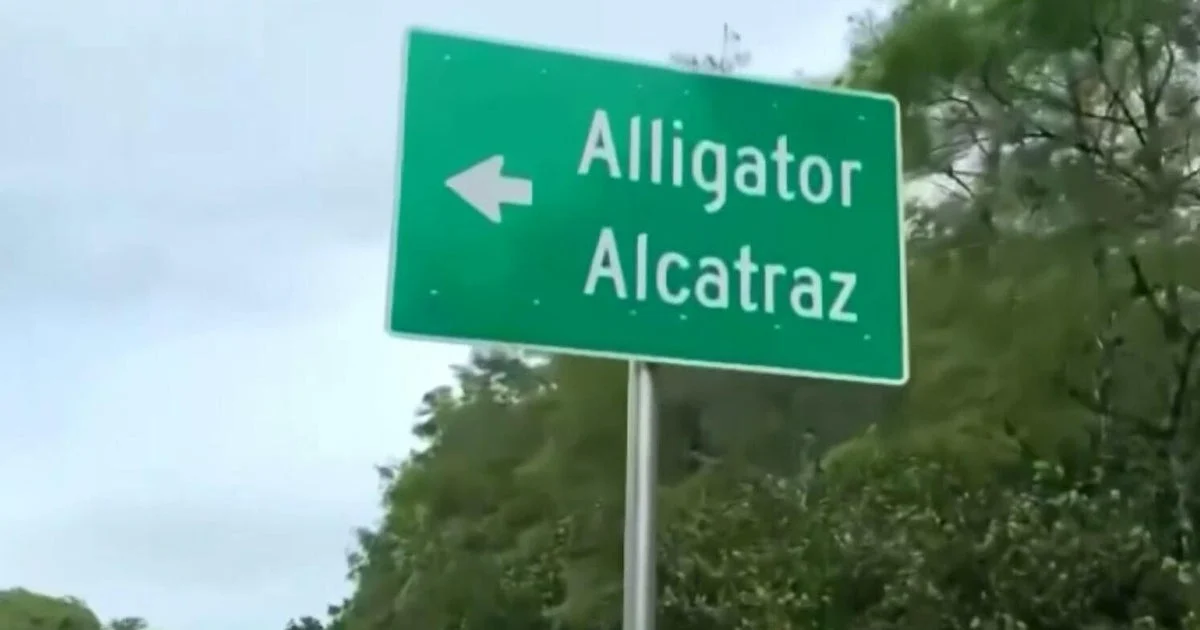
U.S. Immigration and Customs Enforcement (ICE) announced on June 16, 2026, that it has moved detainees out of the Florida Everglades detention center known as “Alligator Alcatraz” due to safety concerns related to hurricane season. The agency transferred roughly 1,400 detainees to other facilities to protect them from potential weather threats.
What Happened
An ICE spokesperson confirmed to CBS News that detainees were relocated from the Alligator Alcatraz detention center for their safety amid anticipated hurricane season threats. The transfer occurred in June 2026. This move follows reports from CBS News Miami the previous month that companies operating the facility had been informed about its closure. Despite this, Homeland Security Secretary Markwayne Mullin later indicated that the agency had no immediate plans for permanently closing the center but acknowledged vulnerabilities to hurricanes and other natural disasters.
Key Facts
- Approximately 1,400 detainees were housed at Alligator Alcatraz before the relocation.
- The detention center is located on an unused airstrip in the Florida Everglades.
- ICE opened the facility last year to expand detention capacity rapidly.
- Secretary of Homeland Security Markwayne Mullin confirmed plans exist to move detainees swiftly in case of emergencies like hurricanes or wildfires.
- The facility consisted of large air-conditioned tents with bunk beds and chain-link fence cells.
Why It Matters
The relocation highlights the operational challenges ICE faces in managing detention facilities in vulnerable locations, especially during hurricane season, which poses significant risks to detainees’ safety. It also underscores the ongoing political and social debate over the conditions and use of makeshift detention centers.
Background
Alligator Alcatraz was established under the Trump administration as part of a rapid expansion effort to increase detention capacity amid heightened immigration enforcement efforts. The austere facility was intended to house individuals accused of being in the U.S. illegally at relatively low cost, with some officials suggesting its harsh conditions could serve as a deterrent.
The center has faced intense criticism from immigration advocates, environmentalists, and local Native American groups who cited poor living conditions, lack of proper facilities, and restricted legal access for detainees. The administration has denied these allegations.
Analysis
Secretary Mullin has acknowledged the center’s environmental and weather-related vulnerabilities, emphasizing ICE’s contingency plans for natural emergencies. The earlier decision to open the facility reflected the administration’s focus on expanding detention capacity quickly and cost-effectively, though critics argue this approach compromises detainee welfare and legal rights.
Who Is Affected
The detainees who were housed at the facility are directly affected, along with ICE detention operations in Florida and the broader immigrant population subject to detention policies. Local environmental and indigenous groups remain stakeholders due to the center’s location in the Everglades and associated impacts.
What Remains Unclear
- Whether the Alligator Alcatraz facility will be permanently closed or reopened after hurricane season.
- The specific locations where all detainees have been transferred.
- The long-term plans for ICE’s detention capacity in Florida.
What Comes Next
This information was not confirmed in the reviewed sources.
Sources
This article is based on reporting and publicly available information from the following source:
Read more US News stories on Goka World News.