
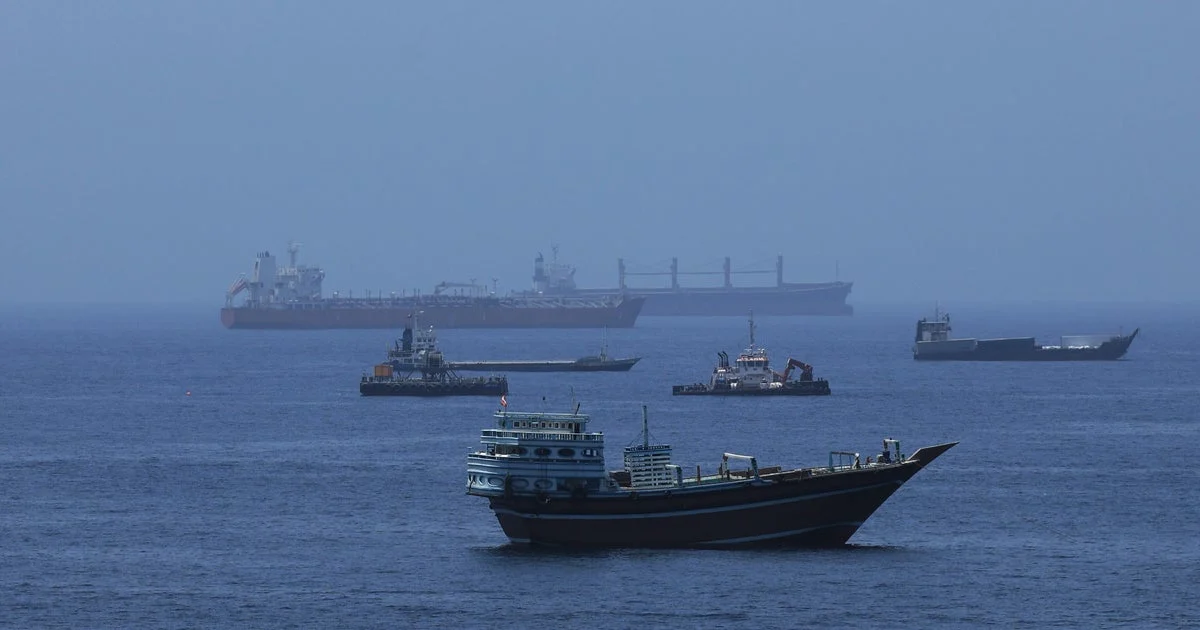
Iran’s Islamic Revolutionary Guard Corps (IRGC) struck a commercial vessel in the Strait of Hormuz near the Oman coast on Thursday evening, marking a significant escalation amid ongoing disputes over maritime transit fees and navigation routes in this strategically vital waterway.
What Happened
The incident took place on June 25, 2026, in the Strait of Hormuz, a critical chokepoint for global oil transportation. A Singapore-flagged cargo vessel was reportedly hit by an “unknown projectile” near the coast of Oman, according to the U.K. Maritime Trade Operations (UKMTO). The vessel sustained damage to its bridge but reported no casualties, and it continued its journey after the attack.
A U.S. official confirmed that the missile strike was carried out by the IRGC. This occurred amid heightened tensions surrounding navigation routes; the U.S.-endorsed vessel passage involves hugging the Omani coastline, whereas Iran has advocated for a northern route closer to its own coast. Iran’s Persian Gulf Strait Authority (PGSA) warned that only passage through routes authorized by the PGSA guarantees safe passage, insurance coverage, and liability protections.
On the same day, Oman’s Foreign Minister Badr bin Hamad Al Busaidi and Iranian Foreign Minister Seyed Abbas Araghchi held a phone call discussing “freedom of navigation” and agreed to cooperate to implement the objectives of the U.S.-Iran memorandum of understanding (MoU) regarding maritime administration, though the issue of transit “fees” remains undecided. Oman rejected the idea of charging fees, while Iran has been less clear, suggesting it may pursue such fees once the current 60-day pause concludes.
Key Facts
The cargo ship hit was Singapore-flagged and was damaged specifically at the bridge area; no injuries were reported. The attack happened at 5:40 p.m. local time. UKMTO monitors suspicious activity in the Gulf and provided the initial report. The PGSA issued a statement emphasizing that vessels traveling outside PGSA-designated routes bear full responsibility for any consequences, including lack of insurance coverage.
The incident caused the International Maritime Organization (IMO) to pause its evacuation plan for stranded ships in the strait until safety guarantees can be confirmed. IMO Secretary-General Arsenio Dominguez emphasized seafarer safety and the need for coordinated navigational security before proceeding with any evacuations.
Separately, Brent crude oil prices hovered around $75 per barrel on Thursday, reflecting the ongoing geopolitical tensions in the region but briefly dipped to near pre-conflict levels around $70.
U.S. Secretary of State Marco Rubio reaffirmed opposition to Iran’s proposed tolls for ships transiting the Strait, while Oman reiterated it would not impose fees. The Gulf Cooperation Council (GCC) members, including Qatar, Bahrain, Kuwait, Oman, Saudi Arabia, and the UAE, issued a joint statement supporting U.S. objectives and the necessity of free, unconditional navigation through the Straits as guaranteed by international law.
What This Means
The strike by Iran’s Revolutionary Guard highlights the fraught nature of maritime security in the Strait of Hormuz, a critical artery for nearly a fifth of the world’s oil supply. The incident risks heightening tensions between Iran, Gulf states, and global powers invested in energy security and free navigation.
For international shipping companies and traders, the attack reinforces the ongoing uncertainties and potential disruptions to shipping routes in one of the world’s most geopolitically sensitive waterways. The ambiguity over transit fees and authorized navigation routes complicates maritime logistics and insurance, possibly raising costs and risks for vessels and insurers alike.
Regionally, this event underscores the fragile balance of power and existing security dilemmas among Gulf nations, Iran, and external actors such as the United States. The cooperation dialogue between Oman and Iran, while signaling a hopeful step toward maritime governance, remains unsettled over contentious issues like tolls, which could further strain diplomatic relations if unresolved.
Background
The Strait of Hormuz is a narrow passage connecting the Persian Gulf to the Gulf of Oman and the Arabian Sea, through which approximately 21 million barrels of oil per day are transported—making it one of the world’s most important oil transit chokepoints. Iran has established the Persian Gulf Strait Authority to oversee and regulate passage but disputes remain about navigation routes and jurisdiction.
Previous incidents in this waterway have involved attacks on commercial vessels, raising fears of wider regional conflict and disruptions to global oil markets. The ongoing negotiations involving the U.S., Iran, and Gulf states have attempted to address security and economic concerns, but have faced setbacks including disagreements over Iran’s nuclear ambitions and regional military activities.
What Remains Unclear
The exact nature and details of the projectile that struck the vessel remain undisclosed. It is also not confirmed which ship exactly reported the strike officially, as multiple merchant vessels transit the area regularly. Iran’s final position on instituting “transit fees” after the current pause is still open-ended, with no definitive commitments made.
The full scope and timeline of the cooperative framework between Oman and Iran to govern navigation and safety in the Strait also remain under negotiation and have yet to be finalized.
What Comes Next
The International Maritime Organization’s evacuation plan for stranded ships in the Strait will remain on hold until safety assurances are clarified. Oman and Iran plan to continue dialogue to define the future administration of maritime services in the waterway.
Further diplomatic discussions involving Gulf nations, Iran, and international stakeholders are expected to continue addressing freedom of navigation, security guarantees, and regional stability measures aligned with the U.S.-Iran memorandum of understanding.
Sources
This article is based on reporting and publicly available information from the following sources:
Read more World News stories on Goka World News.