
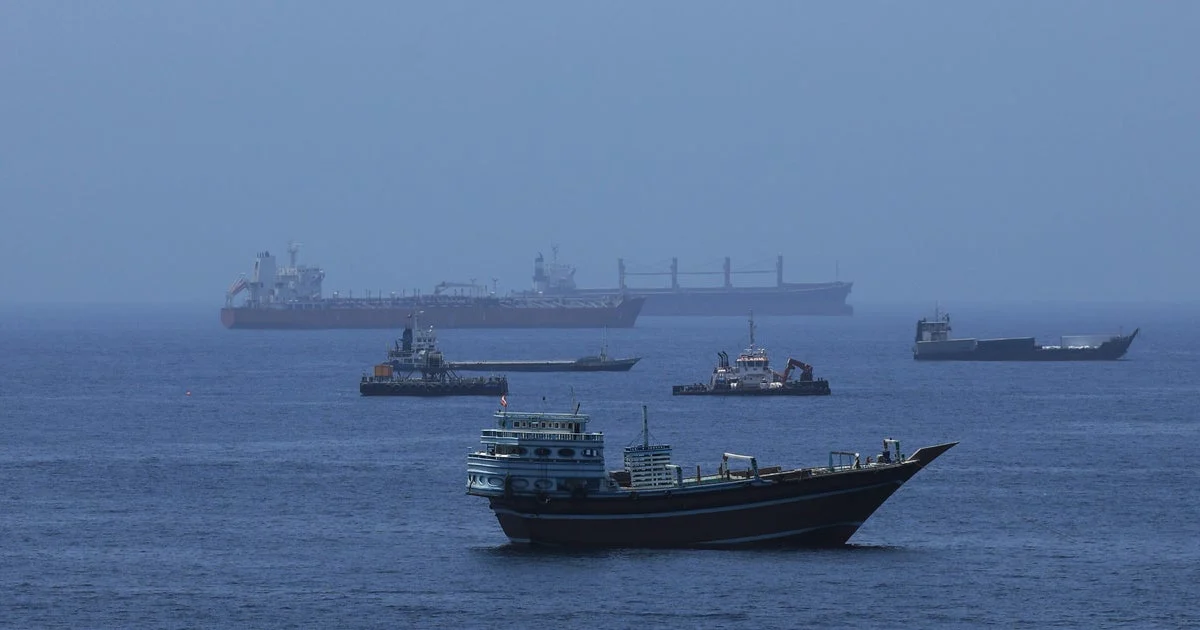
Iran’s Revolutionary Guards attacked a Singapore-flagged commercial ship in the Strait of Hormuz on June 25, 2026, marking a significant challenge to a recent agreement between the US and Iran that aimed to restore safe and toll-free passage through the critical maritime corridor.
What Happened
On Thursday, a Singapore-flagged vessel was struck on its starboard side by an unidentified projectile near Dahit, Oman, according to an advisory from the U.K. Maritime Trade Operations Centre. The incident led to damage on the ship’s bridge, though no casualties or environmental damage were reported. A U.S. official confirmed that Iran’s Revolutionary Guards carried out the attack.
Following the strike, the United Nations’ International Maritime Organization (IMO) paused a recently launched evacuation plan designed to assist ships stranded in the Persian Gulf. IMO Secretary-General Arsenio Dominguez stated that the halt was necessary to “reconfirm that the necessary safety guarantees continue to be in place.”
The attacked vessel had passed through the Strait of Hormuz prior to being hit and was not traveling under the IMO’s evacuation plan at the time of the strike.
Key Facts
The US and Iran signed a memorandum of understanding just last week that sought to reopen the Strait of Hormuz for shipping with toll-free safe passage guaranteed by Iran for 60 days. This agreement followed months during which the strait was effectively closed due to conflict.
Since the agreement, ship traffic has surged: 70 vessels passed through the strait on June 23 compared to only six the week before, according to analytics firm Kpler. This increased activity contributed to a significant drop in global oil prices.
The IMO had announced a “large-scale” evacuation effort to help thousands of mariners exit the region, offering two transit routes: one through Iranian waters in the north and one through Omani waters in the south. However, route disagreements have persisted. The US supports the route near Oman’s coast, while Iran insists ships request permission and transit closer to its coast.
Iran’s Persian Gulf Strait Authority warned that any passage outside its designated transit framework would not receive safe passage guarantees or insurance coverage. Iran has not dismissed plans to impose tolls on ships after the agreement expires, a point rejected by the US and regional allies as contravening international law.
Oman expressed intentions to jointly manage the strait with Iran but ruled out imposing tolls.
Secretary of State Marco Rubio, speaking in Bahrain on Thursday, emphasized that the US will judge Iran based on actions rather than rhetoric, and will respond if ships are threatened or prevented from moving freely.
What This Means
This strike represents a direct challenge to fragile diplomatic progress aimed at stabilizing a strategically vital waterway through which one-fifth of the world’s oil supply passes. The attack undermines efforts to normalize shipping traffic and signals Tehran’s willingness to assert control over the Strait of Hormuz, complicating US administration goals to reduce regional tensions.
For global markets and maritime operators, the incident signals ongoing instability, despite recent agreements. Any further disruptions could affect the flow of oil and goods, potentially driving up prices and impacting the world economy. For countries reliant on the strait for energy imports, continued uncertainty threatens to exacerbate geopolitical risks in an already volatile region.
The hesitation of the IMO to proceed with the evacuation plan reflects the precarious security environment, illustrating the difficulty in ensuring safe maritime passage amid competing claims of sovereignty and security concerns.
Background
The Strait of Hormuz is a narrow but essential shipping lane connecting the Persian Gulf with the Arabian Sea, carrying approximately 20% of the world’s seaborne oil. It has long been a flashpoint due to its strategic importance and contentious political control between regional powers.
Over recent months, hostilities and sanctions had severely limited vessel traffic through the strait. The June 17 memorandum of understanding between the US and Iran aimed to allow toll-free, safe passage for 60 days, hoping to encourage commerce and stabilize oil markets.
What Comes Next
The IMO will reassess the safety situation before resuming the maritime evacuation plan. Meanwhile, US officials have indicated plans to monitor Iran’s compliance closely, with Secretary Rubio stating potential consequences if Iran’s rhetoric is backed by further threats or interference with shipping.
The expiration of the 60-day agreement on toll-free passage looms as a key point of uncertainty, with Iran considering toll charges and the US and allies preparing to oppose any such moves diplomatically and legally.
Sources
This article is based on reporting and publicly available information from the following source:
Read more World News stories on Goka World News.