
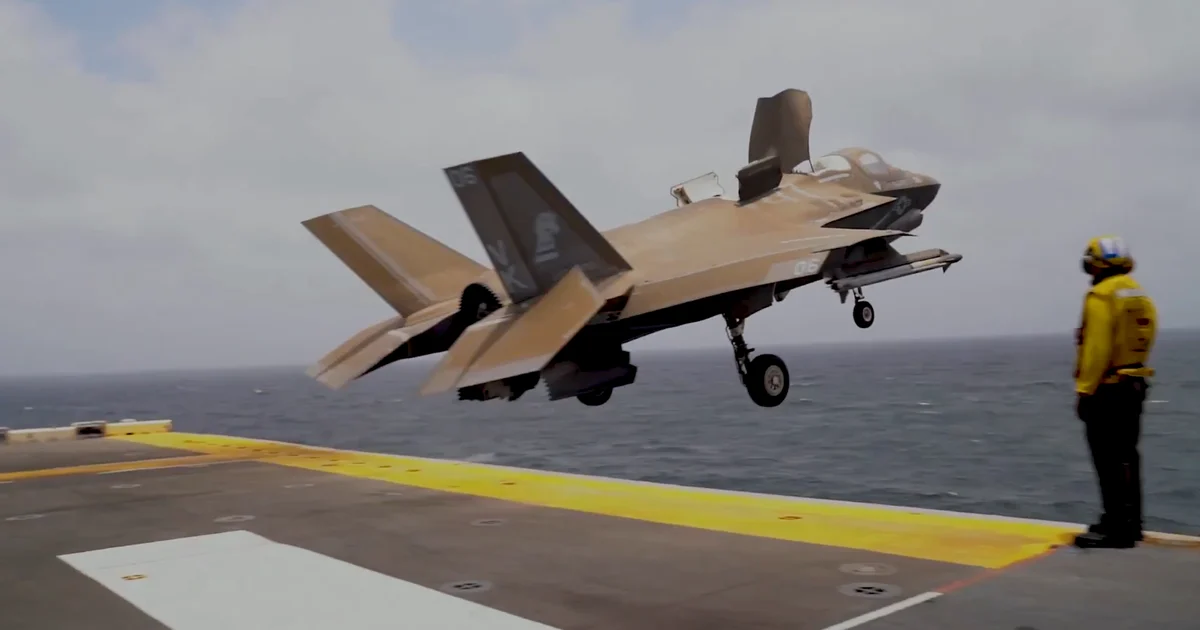
The United States launched retaliatory air strikes against Iran on June 26, 2026, targeting multiple Iranian missile and drone storage sites and radar installations. This military action came in response to an Iranian drone attack on a commercial cargo ship transiting the Strait of Hormuz, which U.S. officials and President Donald Trump condemned as a violation of the ceasefire agreement between the two nations.
What Happened
U.S. Central Command confirmed that on Friday, American aircraft struck designated Iranian targets including missile and drone storage facilities as well as radar sites in the Strait of Hormuz region and on Qeshm Island. The strikes followed Iran’s drone attack the previous day on a Singapore-flagged cargo vessel named Ever Lovely. President Trump characterized Iran’s action as a “foolish violation” of the ceasefire agreement extended just one week prior. The U.S. claimed to have shot down three of the four drones fired at ships passing through the strategic maritime corridor.
Key Facts
The retaliatory strikes were authorized by the U.S. military after Iran’s drone attack using at least four unmanned aerial vehicles against commercial shipping. The Ever Lovely ship sustained damage but was able to continue its voyage. Vice President J.D. Vance reaffirmed the administration’s position on enforcing the ceasefire, stating on social media that “violence will be met with violence” and urging diplomatic communication to resolve disagreements.
House Democrat Representative Suhas Subramanyam remarked that the conflict between the U.S. and Iran remains unresolved, casting doubt on the durability of the memorandum of understanding (MOU) governing the ceasefire. U.S. Secretary of State Marco Rubio, meanwhile, announced progress in a separate peace framework between Lebanon and Israel, though Hezbollah was excluded from negotiations.
What This Means
The U.S. strikes mark a serious escalation in tensions with Iran, underscoring the fragility of the current ceasefire and the complexities of maintaining peace in the volatile Strait of Hormuz region, a vital artery for global oil shipments. For American policymakers and citizens, the incident highlights ongoing risks to maritime security and commercial freedom in strategically important waterways. The willingness of the U.S. to respond militarily sends a clear message about enforcing agreements and protecting vital economic interests.
However, this action also signals potential for further confrontations, complicating diplomatic efforts to stabilize relations with Iran. The attack and subsequent response reveal how fragile ceasefire agreements can be when enforcement and interpretation of terms remain disputed. For communities dependent on stable energy markets and safe international trade routes, escalation threatens economic ripple effects at home.
Moreover, this episode exposes challenges in U.S. foreign policy coherence. While the White House sustains military pressure, legislative voices express skepticism about diplomatic acumen, hinting at internal divisions over strategy and objectives. Consequently, American citizens may anticipate heightened uncertainty in the Middle East with possible impacts on defense spending and security priorities.
What Comes Next
U.S. officials have indicated that the retaliatory strikes are ongoing and that mechanisms for diplomatic engagement remain open, though unclear at this stage. The U.S. administration maintains that Tehran can resolve disputes through direct communication under the memorandum of understanding. Further developments are expected as the situation evolves, with congressional scrutiny likely to intensify on the conflict’s trajectory.
Sources
This article is based on reporting and publicly available information from the following sources:
Read more US News stories on Goka World News.