
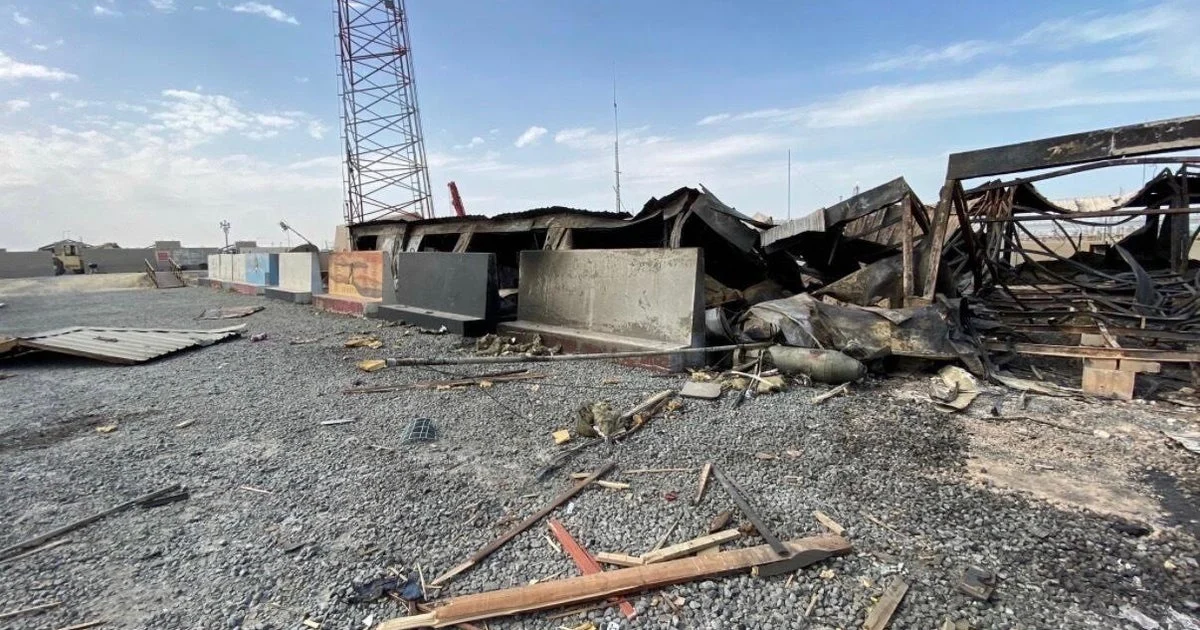
In the early phase of the escalating conflict between the United States and Iran, a decision by a U.S. Army Reserve commander not to relocate troops farther from Iranian missile range resulted in a devastating Iranian drone strike on American forces stationed in Kuwait. The strike on March 1, 2026, at a small Kuwaiti port killed six U.S. soldiers and wounded more than 20 others, highlighting significant strategic miscalculations amid rising regional tensions.
What Happened
In late February 2026, as U.S. troops conducted Operation Epic Fury against Iran, military leadership moved most U.S. personnel stationed in Kuwait to locations in Jordan and western Saudi Arabia, aiming to place them beyond Iranian missile reach. However, Brigadier General Clint Barnes, commander of the Iowa-based 103rd Sustainment Command responsible for logistics under U.S. Central Command, rejected relocation options to safer bases such as Logistical Support Area Jenkins near Yanbu and Prince Sultan Air Force Base close to Riyadh. Instead, he elected to station his unit at Port of Shuaiba, about 30 miles south of Kuwait City and approximately 65 miles southwest of Iran, despite Army intelligence warnings that this site was a likely target for Iranian retaliation.
On March 1, Iranian drones attacked the Port of Shuaiba, penetrating U.S. defenses and killing six soldiers, including Master Sergeant Nicole Amor. The strike caused significant casualties and damage, while other options used by the military were also later struck by Iranian attacks, though without fatalities.
Key Facts
The sources include multiple serving and former U.S. military personnel who disclosed the timeline and decision-making to CBS News. According to these accounts, intelligence briefed Barnes from January onwards identified Port of Shuaiba as a high-risk target. Two alternate relocation bases, LSA Jenkins and Prince Sultan Air Force Base, were scouted and approved but ultimately rejected by Barnes. The deadly drone strike resulted in six U.S. troop deaths and over 20 injuries. The 103rd Sustainment Command, responsible for logistics, had arrived at Shuaiba in September 2025 following a previous deployment pattern from summer 2025 when an active unit temporarily relocated there during a different conflict scenario.
Post-strike investigations were ordered by the Pentagon and led by U.S. Army Central and Third Army to ascertain the circumstances. Despite the probe’s completion in early July, the results have not been publicly released. Congressional Democrats, including military veterans and senators, have called for hearings to address purported strategic and medical resource failures surrounding the attack and the Pentagon’s preparedness.
What This Means
The refusal to reposition troops away from a vulnerable Kuwaiti port amid clear intelligence warnings has had far-reaching implications for U.S. military strategy and troop safety in the Middle East. The strike exposed weaknesses in force protection and logistical planning that hindered the ability to adequately defend the unit or treat casualties effectively, as survivors recounted the absence of sufficient medical personnel and supplies at the site.
This event underscores the challenges of balancing operational continuity and force protection during rapidly evolving conflicts, especially against an adversary with growing drone and missile capabilities like Iran. It also highlights the political pressures U.S. military leaders face in maintaining strategic footholds amid regional hostilities, possibly at the expense of personnel safety.
The attack, and the subsequent calls for congressional inquiry, may influence U.S. defense policies, including decisions on troop deployments and rules of engagement in volatile areas. It also reflects broader tensions in the region, where U.S.-Iran hostilities contribute to instability affecting not only military personnel but also diplomatic relations among Gulf states hosting foreign forces.
Background
The 103rd Sustainment Command was following a precedent set by a temporary relocation during the July 2025 conflict between Israel and Iran, where Iranian ballistic missiles were intercepted while targeting Israel but did not directly strike U.S. positions. However, by January 2026, as tensions escalated with the launch of Operation Epic Fury, U.S. Army intelligence identified the expanded risk to troops stationed near Iran’s direct missile range, particularly at Shuaiba.
The March 1 attack is one of the deadliest incidents for U.S. forces in the ongoing conflict with Iran, reflecting an intensified phase where Iranian forces have expanded their drone strike capabilities against U.S. assets in the region.
What Remains Unclear
The official conclusions of the Pentagon and Army investigations into the attack have not been released publicly, leaving questions about the detailed chain of command decisions and specific shortcomings in base fortifications unanswered. There is also no definitive public statement on whether the rejection of relocation options was influenced by operational priorities beyond those disclosed.
The degree to which the strike was a result of intelligence failures versus command decisions is yet to be fully confirmed.
What Comes Next
More than 20 congressional Democrats have called for public hearings by the House and Senate Armed Services Committees to scrutinize the preparations and aftermath of the attack, questioning Pentagon readiness and survivor care. As of late September 2026, the Defense Department has not scheduled these hearings, and the Pentagon has declined detailed comment on the probe’s findings.
Military and political leaders continue to navigate the evolving conflict with Iran, including debates over the scope of U.S. military engagement and war powers, as highlighted by recent close Senate votes on limiting U.S. hostilities against Iran.
Sources
This article is based on reporting and publicly available information from the following source:
Read more US News stories on Goka World News.