
The United States patent process, established by law in 1790, has been a pivotal innovation that enabled a vast array of technological advances, underpinning America’s growth as a global industrial power. The U.S. Patent and Trademark Office has issued over 12.6 million patents, protecting inventions that transformed sectors from agriculture and transportation to electricity and manufacturing, according to the Smithsonian Institution’s National Museum of American History.
What Happened
The patent system was enshrined in the U.S. Constitution in 1788 and formalized by the first statute signed by President George Washington in 1790. It guaranteed that the “first and true inventor” would receive exclusive rights for a limited time, fostering innovation by legally securing inventors’ claims. This system played a foundational role across key sectors:
- Agriculture: Eli Whitney’s cotton gin revolutionized raw cotton processing, doubling production each decade in the 19th century, while Cyrus Hall McCormick’s mechanical reaper improved grain harvesting efficiency.
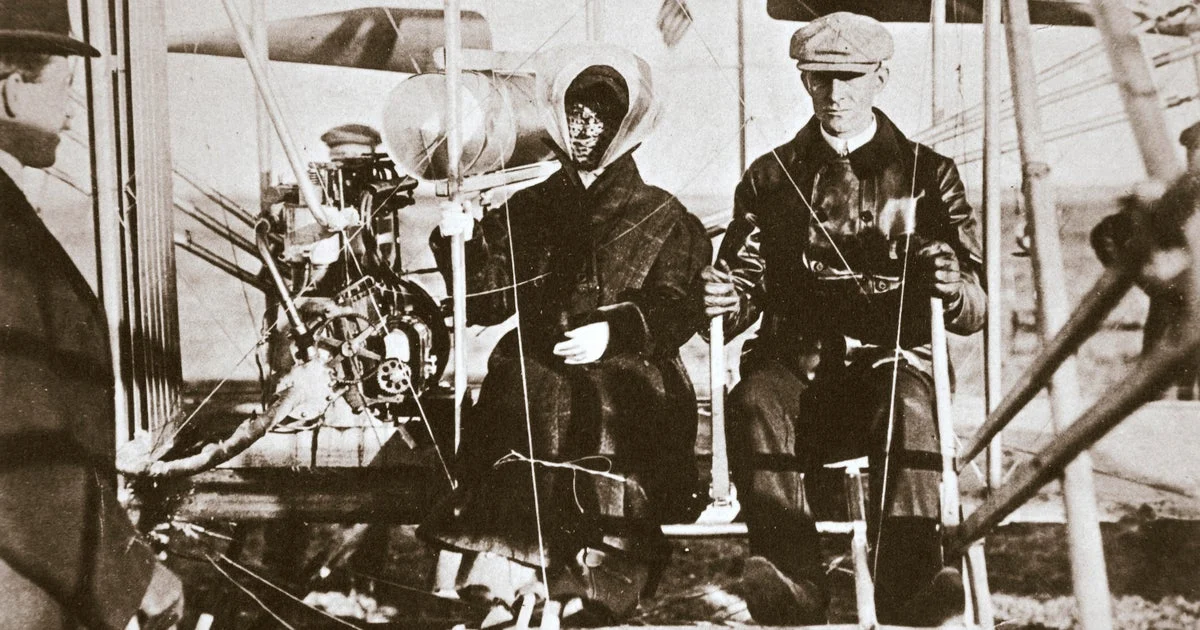
- Transportation: Patents for steamboats by John Fitch and James Rumsey pioneered upstream river travel, while the spread of 30,000 miles of railroad tracks by the 1870s connected the country coast to coast. The Wright brothers’ powered flight in 1903 opened the aerial frontier.
- Electricity: Charles F. Brush’s arc lamp marked the first electric street lighting system, enabling safer urban night life and 24-hour factory operations. Thomas Edison’s incandescent bulb and electrical systems further extended the nation’s electric infrastructure.
- Manufacturing: The American system of interchangeable parts, starting with Eli Whitney’s firearms contracts, allowed mass production practices culminating in Henry Ford’s Model T assembly line.
- Energy: The discovery of oil by Edwin Drake in 1859 initiated America’s petroleum era, crucial for fuel and industry, while also fostering innovations in emerging energy sectors like nuclear and renewables.
Key Facts
Since its inception, the U.S. Patent and Trademark Office has issued more than 12.65 million patents. The first patent law uniquely granted rights to the “first and true inventor,” including women and free Black inventors, in an era predating suffrage and civil rights advances. The expansion of railroads reached nearly 30,000 miles by the 1850s. The Wright Flyer’s 1903 powered flight marked America’s entry into aviation technology. Electric street lighting was introduced in Cleveland by Charles F. Brush. Oil production began in Pennsylvania in 1859, setting the stage for the petroleum age.
What This Means
This patent framework created an ecosystem that encouraged individual inventors and companies to continuously improve technology, accelerating America’s industrial and economic development. It allowed innovations to pass into the public domain after protection expired, enabling others to build on existing ideas and fueling cumulative technological progress. For everyday Americans, these inventions enhanced agricultural productivity, transformed transportation accessibility, and improved urban living conditions through electricity. The advances in manufacturing efficiency facilitated the mass production of goods, lowering costs and broadening availability.
Energy innovations catalyzed by the patent system shaped fundamental national infrastructure and continue to influence modern energy debates, including the ongoing transition toward renewable sources. The patent system’s early inclusivity also reflected and supported the country’s complex social evolution by granting intellectual property rights regardless of race or gender at an early stage. The legacy of these technological leaps remains embedded in contemporary environmental, economic, and social landscapes, influencing energy consumption patterns, urban planning, and industrial practices.
Background
The U.S. Constitution’s intellectual property clause provided the legal foundation supporting inventors’ rights, fostering a culture of innovation aligned with democratic principles. The patent law’s focus on the “first and true inventor” contrasts with European patent systems of the time and allowed for wider participation across social groups. The rise of agriculture via inventions like the cotton gin and mechanical reaper set early economic directions, which were complemented by transportation breakthroughs through steamboats and railroads. Electrical innovations subsequently transformed city life and industry. Manufacturing progressed from bespoke artisanal production toward standardized, mass manufacturing, facilitating large-scale economic growth.
Sources
This article is based on reporting and publicly available information from the following sources:
Read more Business stories on Goka World News.