
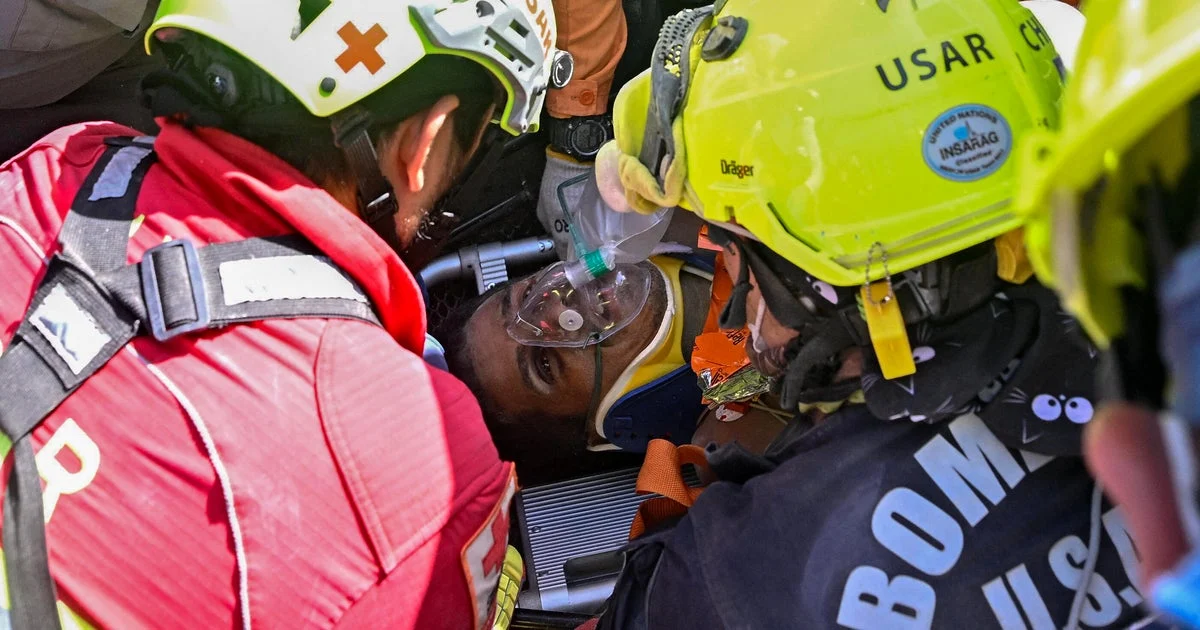
In Venezuela, a remarkable rescue unfolded in the coastal city of Catia La Mar as Hernan Gil, a security guard, was pulled alive from the rubble of a collapsed building eight days after powerful twin earthquakes shattered the region. This rare survival has been welcomed by a multinational relief effort amid a broader crisis of destruction, death, and displacement.
What Happened
On July 2, 2026, rescue teams working in Catia La Mar, in La Guaira state, successfully extracted Hernan Gil from a seven-story building that collapsed during the twin earthquakes on June 24. Gil had been trapped for eight days under approximately 140 tons of concrete. The rescue was the result of an intense operation conducted by a team from Venezuela and six other countries — Chile, the United States, Portugal, Costa Rica, El Salvador, and Mexico. Rescuers first made contact with Gil four days before his extraction and sustained him by feeding him through a syringe as they carefully worked to avoid further collapse of nearby damaged structures.
Key Facts
The official death toll from the twin earthquakes has reached nearly 2,600, with more than 11,000 people injured, according to Venezuela’s National Assembly President Jorge Rodriguez. Nearly 13,000 residents have been displaced, left homeless by the destruction. Catia La Mar and the nearby city of La Guaira, just north of Caracas, suffered extensive devastation, with entire neighborhoods razed to the ground. NASA’s preliminary satellite assessment estimated that approximately 58,870 buildings were damaged or destroyed.
Relief teams have been deployed extensively, including over 300 American rescuers and 23 search dogs, working under difficult conditions exacerbated by continuing aftershocks. The focus has shifted from rescue to survival as food and water shortages grow and humanitarian needs escalate.
What This Means
The rescue of Hernan Gil symbolizes the extraordinary challenges and rare successes within the broader catastrophe afflicting Venezuela. His survival amid the widespread collapse underscores the complexity and risks of search and rescue operations many days after such disasters, particularly where infrastructure is fragile and aftershocks persist.
This event also highlights international cooperation in humanitarian response efforts, with multiple countries coordinating resources and expertise to save lives. However, the scale of destruction and displacement presents ongoing challenges for recovery and relief, with thousands still unaccounted for and essential services strained.
The tragedy exposes vulnerabilities in Venezuela’s infrastructure and emergency preparedness, amplified by the country’s prolonged economic crisis. The crisis is fueling food and water scarcity and increasing risks of disease outbreaks, making recovery a prolonged and critical effort that will require sustained global support.
Background
Venezuela has been grappling with an economic crisis and political instability for years, which have debilitated public services and infrastructure. The earthquakes came at a politically sensitive time, amid an ongoing transition following the United States-backed change in leadership six months prior. The twin quakes, measuring 7.2 and 7.5 in magnitude, struck on June 24, causing widespread destruction in coastal cities critical to Venezuela’s economy.
What Remains Unclear
The precise number of missing persons remains uncertain, with tens of thousands unaccounted for amid the rubble and displacement. The extent of damage to infrastructure beyond the initial assessments and the full humanitarian impact is still being evaluated as rescue and relief operations continue.
What Comes Next
Humanitarian agencies, including the World Food Programme, have called for urgent funding of $50 million to provide food for half a million affected people over the next three months. Venezuelan authorities have declared seven days of mourning in response to the human toll. Relief efforts will remain focused on delivering aid, preventing disease outbreaks, and rebuilding in the hardest-hit regions.
Sources
This article is based on reporting and publicly available information from the following source:
Read more World News stories on Goka World News.