
China’s recent ballistic missile test from a nuclear submarine in the South Pacific has sparked widespread concern among regional governments and the United States, highlighting rising tensions over nuclear weapons development and strategic military activities in a geopolitically sensitive area.
What Happened
On July 7, 2026, China launched a long-range ballistic missile carrying a dummy warhead from one of its nuclear-powered submarines in the South Pacific Ocean. The launch occurred at 12:01 p.m. local time and was officially described by state news agency Xinhua as part of routine annual military training that complied with international law and was not aimed at any specific country or target. The launch coincided with the start of joint naval exercises between China and Russia off China’s eastern coast near Qingdao on the same day.
Key Facts
The missile carried a dummy warhead and was fired from a nuclear-powered submarine, marking a continuation of China’s undersea ballistic missile testing, with the last similar test in Pacific waters conducted two years earlier. According to the Pentagon’s 2025 report, China has an estimated stockpile of about 600 nuclear warheads as of 2024 and is expected to exceed 1,000 by 2030. The country operates six ballistic-missile submarines and 59 nuclear-powered attack submarines, according to the Nuclear Threat Initiative.
Countries in the region, including Australia, New Zealand, Japan, and Taiwan, condemned the launch. New Zealand highlighted that the missile passed through the South Pacific Nuclear Free Zone, established under the 1986 Treaty of Rarotonga, which China ratified in 1987 with commitments not to conduct nuclear weapons tests or threaten nuclear attack within the zone. Australia simultaneously signed a new mutual defense treaty with Fiji aimed at countering Chinese influence in the Pacific.
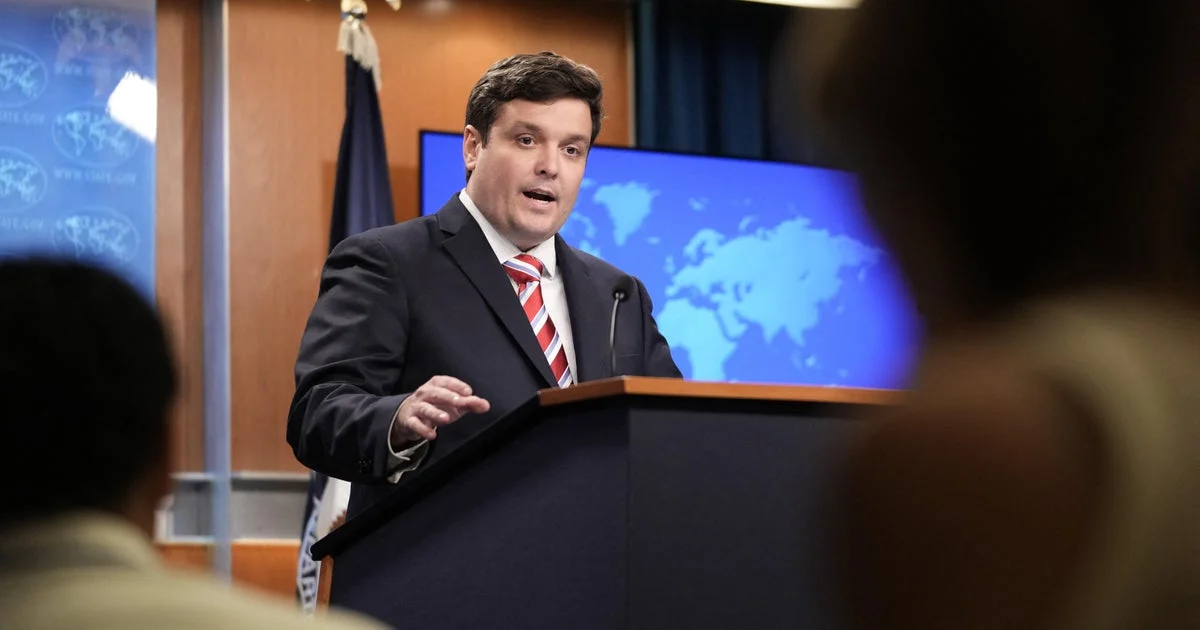
The U.S. State Department expressed “great concern” over China’s “rapid and opaque nuclear weapons buildup” and urged Beijing to engage in arms control discussions and agree to regular notification of missile and space launches consistent with other nuclear powers’ commitments. The U.S. reaffirmed its defense commitments to allies in the region.
What This Means
The missile test underlines China’s acceleration of nuclear and military modernization, affecting the strategic balance in the Indo-Pacific. This development intensifies security anxieties among Pacific nations and U.S. partners, complicating diplomatic efforts to maintain regional stability and nuclear nonproliferation.
The timing of the launch alongside joint China-Russia naval exercises signals a growing demonstration of military cooperation challenging established power dynamics. For the wider international community, the launch raises concerns about transparency and confidence-building measures in nuclear arms policies, given China’s opaque nuclear posture compared with other major powers.
For Pacific Island nations and treaty signatories of the nuclear-free zone, the incident represents a breach of established nuclear nonproliferation norms, potentially undermining regional trust. It also amplifies calls for stronger collective security arrangements and closer U.S. and allied defense collaboration in response to perceived Chinese strategic assertiveness.
Background
China’s last long-range ballistic missile test in the Pacific was in 2024, when it fired an intercontinental missile with a dummy warhead in international waters, an event viewed as a declaration of growing global military stature. China adheres to a declared “no first use” nuclear policy but continues to develop its nuclear arsenal as part of a broader strategy to modernize its armed forces. This buildup has been frequently highlighted in U.S. defense assessments as a major factor shaping future regional and global security dynamics.
Reactions
U.S. State Department spokesperson Tommy Pigott condemned the test as inconsistent with nuclear nonproliferation goals. Australia’s Foreign Minister Penny Wong labeled it destabilizing to regional security. New Zealand’s Foreign Minister Winston Peters criticized China for last-minute notification, which came mere hours before the test. Japan urged China to reconsider such launches to avoid threatening its airspace. Taiwan accused China of using missile tests as intimidation against the international community. China dismissed the criticism, urging other countries not to overinterpret the event.
What Comes Next
The U.S. and its allies continue to call for China to engage in formal arms control dialogues and establish routine notification practices for missile and space launches as followed by other permanent members of the UN Security Council. Meanwhile, the joint China-Russia naval exercises are ongoing, with the broader implications for regional military posturing expected to unfold over the coming months.
Sources
This article is based on reporting and publicly available information from the following source:
Read more World News stories on Goka World News.