
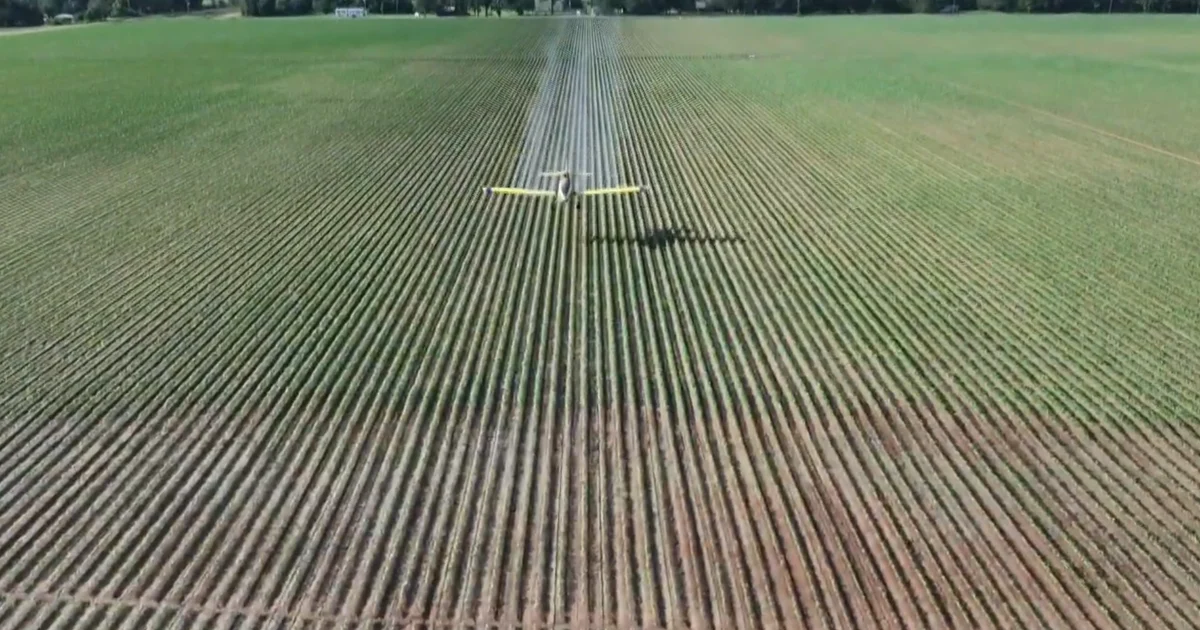
Farmers in northeast Louisiana are facing escalating operational costs as soaring fuel and fertilizer prices, driven by the ongoing Iran war, tighten financial pressures on an already vulnerable agricultural sector.
What Happened
Since the outbreak of the Iran war earlier this year, the price of kerosene-based Jet-A fuel, essential for agricultural aviation, has surged dramatically. Reed Keahey, an agricultural pilot in Columbia, Louisiana, reported that the fuel price jumped from $2.46 per gallon in February to a peak of $4.11 in May. For his typical 7,500-gallon purchase, this increase meant spending over $30,000 on a single fueling. Although prices have recently moderated to $3.18 per gallon, they show signs of rising again.
Simultaneously, fertilizer prices, particularly for urea—a nitrogen fertilizer crucial to corn production—have skyrocketed. Urea supply has been disrupted due to the intermittent closures of the Strait of Hormuz, a vital shipping route in the Persian Gulf region that accounts for nearly half of global urea exports. The Guererro farming business, based in Louisiana, revealed its urea fertilizer costs had exceeded their budget by approximately $120,000 to $130,000 due to these price spikes.
Key Facts
- Jet-A fuel price rose from $2.46 per gallon in February 2026 to $4.11 per gallon in May 2026.
- Typical fuel purchase quantity for agricultural pilot Reed Keahey is 7,500 gallons.
- At $4.11 per gallon, one fueling round cost Keahey just over $30,000.
- Urea fertilizer prices surged because of Iran war-related disruptions to the Strait of Hormuz shipping lane.
- The Guererro farm’s urea fertilizer costs exceeded budget by $120,000 to $130,000 in 2026.
- The American Farm Bureau Federation reported a 46% increase in U.S. farm bankruptcies in 2025 compared to 2024.
What This Means
The surge in energy and fertilizer prices presents a critical threat to the profitability and survival of farmers in regions dependent on imported inputs. For pilots like Keahey, the skyrocketing fuel costs strain operational budgets, yet passing these costs fully onto farmers risks making their businesses unsustainable. Keahey’s decision to absorb some costs reflects the close interdependence within this economic ecosystem.
For farmers such as the Guererros, the fertilizer price inflation from geopolitical tensions causes severe budget overruns, forcing tough decisions about planting, crop treatment, and overall financial viability. The disruptions in the Persian Gulf—including closures of key shipping channels—demonstrate how international conflicts directly ripple through local economies, notably the essential food supply chain.
Combined with the 46% rise in farm bankruptcies reported last year, these developments suggest a sector under significant duress, where smaller farms may struggle to survive unless commodity prices or input costs stabilize. For communities reliant on agriculture, escalating costs threaten livelihoods and regional economic stability.
Background
The Iran war, which intensified in early 2026, has intermittently disrupted maritime traffic through the Strait of Hormuz, a critical chokepoint through which about 20% of the world’s oil supply passes. This disruption has not only driven global energy prices higher but also impacted shipments of fertilizers, such as urea, widely produced and exported from Persian Gulf countries.
Louisiana’s agricultural sector, known for corn and other crop production, relies heavily on external sources for both fuel and fertilizers. Rising input costs have compounded challenges from prior years, including volatile commodity prices and increasing reports of farm insolvency across the United States.
What Comes Next
With fuel prices fluctuating and fertilizer supply uncertainties ongoing, the agricultural community faces a precarious outlook. Farmers and service providers like Keahey will likely continue absorbing costs or reducing margins to sustain their operations. The American Farm Bureau Federation and other agricultural organizations are expected to monitor bankruptcy rates closely and advocate for policy or market interventions to support affected farmers.
Sources
This article is based on reporting and publicly available information from the following source:
Read more Business stories on Goka World News.