
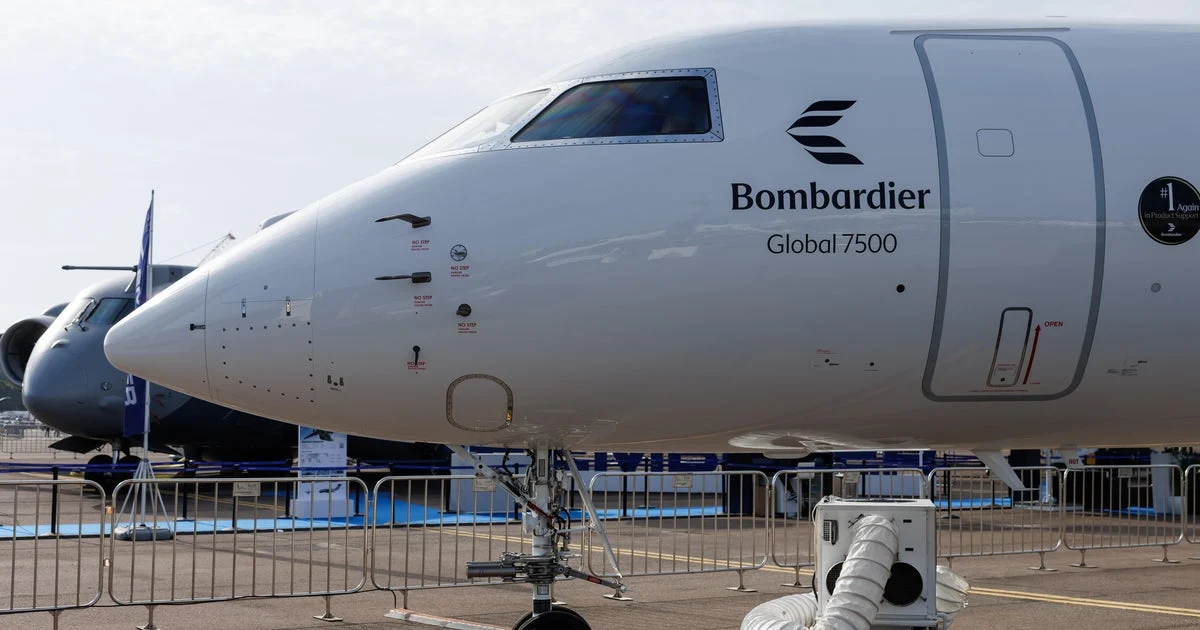
Canadian aerospace manufacturer Bombardier has become embroiled in the increasingly tense trade conflict between the United States and Canada, facing a threat from former President Donald Trump to ban its aircraft sales in the U.S. The company employs tens of thousands across both countries and relies heavily on American suppliers, making the dispute a critical issue for stakeholders on both sides of the border.
What Happened
On Monday, Donald Trump posted on Truth Social that Bombardier would no longer be allowed to sell its planes in the United States unless it moved aircraft manufacturing stateside. He stated, “NO MORE SELLING BOMBARDIER IN THE UNITED STATES! Their products aren’t good enough! … If they want our Market, they must build here, and stop treating America like a ‘piggybank.'” This declaration came hours prior to Canadian tariffs on $20 billion of U.S. goods taking effect at midnight Tuesday, escalating the trade standoff between the two nations.
In response, Bombardier emphasized its significant U.S. economic footprint, including plants in multiple states and partnerships with thousands of American suppliers. Nonetheless, the company’s shares declined about 3% following Trump’s remarks. Analysts from investment bank Stifel questioned the legal feasibility of enforcing such a ban, warning it could disrupt a tight private jet market and harm both U.S. customers and domestic suppliers.
Key Facts
Bombardier, founded in Quebec in the 1930s, is a leading global manufacturer of medium and large business jets. It operates production facilities in Canada, the U.S., and Mexico, and maintains a workforce spread across 20 U.S. states, including plants in Arizona, California, Connecticut, Delaware, Florida, Illinois, Kansas, New Jersey, Texas, and Washington, D.C. The company supports a supply chain of approximately 2,800 U.S. suppliers in 47 states, spending over $2.5 billion annually on American supplies.
Its jets, including the Challenger model, utilize American-made engines produced by Honeywell in Phoenix, Arizona. Bombardier moved to expand its U.S. operations earlier this year with a new facility in Fort Wayne, Indiana. The company estimates that more than 50% of its aircraft components come from U.S. manufacturers, surpassing American competitor Gulfstream.
High-net-worth individuals account for about 60% of Bombardier’s clientele, driven by surging demand for private jets amid wealth growth heightened by the COVID-19 pandemic. Its customer base also includes U.S. federal agencies like the Defense Department and Federal Aviation Administration, which utilize Bombardier planes for surveillance and reconnaissance missions.
What This Means
Trump’s threat to block Bombardier from selling in the U.S. highlights the vulnerabilities companies face amid rising protectionism between close trading partners. For Bombardier, a ban could disrupt established supply chains and delay deliveries to American customers, who already encounter long wait times for private jets. This disruption could ripple through aviation suppliers and service providers in the U.S. economy, affecting thousands of workers and regional economies dependent on aerospace manufacturing.
Moreover, the situation underscores how trade disputes can unintentionally harm domestic interests. Bombardier’s significant employment footprint in U.S. states and its collaboration with American parts manufacturers means that restrictive trade measures risk jeopardizing local jobs. The backlash from labor unions in both countries reflects broader concerns about a “war on workers” harming the North American aerospace sector.
Ultimately, these tensions emphasize the complexity of modern globalized manufacturing, where production networks cross borders extensively. Policy decisions that fail to appreciate this interconnectedness may produce unintended economic damage despite seeking to protect domestic industry.
Background
Bombardier initially specialized in snowmobiles and snow equipment before expanding into various transportation sectors, including commercial aircraft and trains, which it later divested from to concentrate on private jets. The company has gained market strength amid increased demand for private aviation fueled by rising wealth in the U.S.
Canadian tariffs targeting $20 billion in U.S. goods, including aerospace-related products, escalated the ongoing trade dispute in early September 2026. Political pressure from figures like Trump further complicates the situation, with legal experts questioning whether a sales ban on Bombardier jets in the U.S. is enforceable.
Reactions
Bombardier quickly responded to Trump’s statement stressing its commitment to the American workforce and its investment plans across 20 U.S. states. The International Association of Machinists and Aerospace Workers union criticized any move to restrict Bombardier’s U.S. sales, stating such actions would be counterproductive to protecting workers and strengthening the aerospace sector.
Kansas Republican Senators Jerry Moran and Roger Marshall intervened to defend Bombardier jobs, highlighting the company’s importance to local economies. They have communicated directly with the administration to underline the ramifications of disrupting Bombardier’s U.S. presence.
What Remains Unclear
It is uncertain whether the U.S. government can legally implement a ban on Bombardier aircraft sales. Buyers might circumvent restrictions by registering purchased jets offshore, reducing the effectiveness of such a policy. Additionally, the potential impact on future order flows remains ambiguous as ongoing trade negotiations continue.
What Comes Next
Market watchers will be monitoring any further regulatory actions or official government responses to Trump’s announcement. Bombardier’s planned expansions and investments in U.S. facilities indicate the company’s intention to maintain a strong North American manufacturing footprint, but the trade conflict’s trajectory will heavily influence its near-term business environment.
Sources
This article is based on reporting and publicly available information from the following source:
Read more Business stories on Goka World News.