
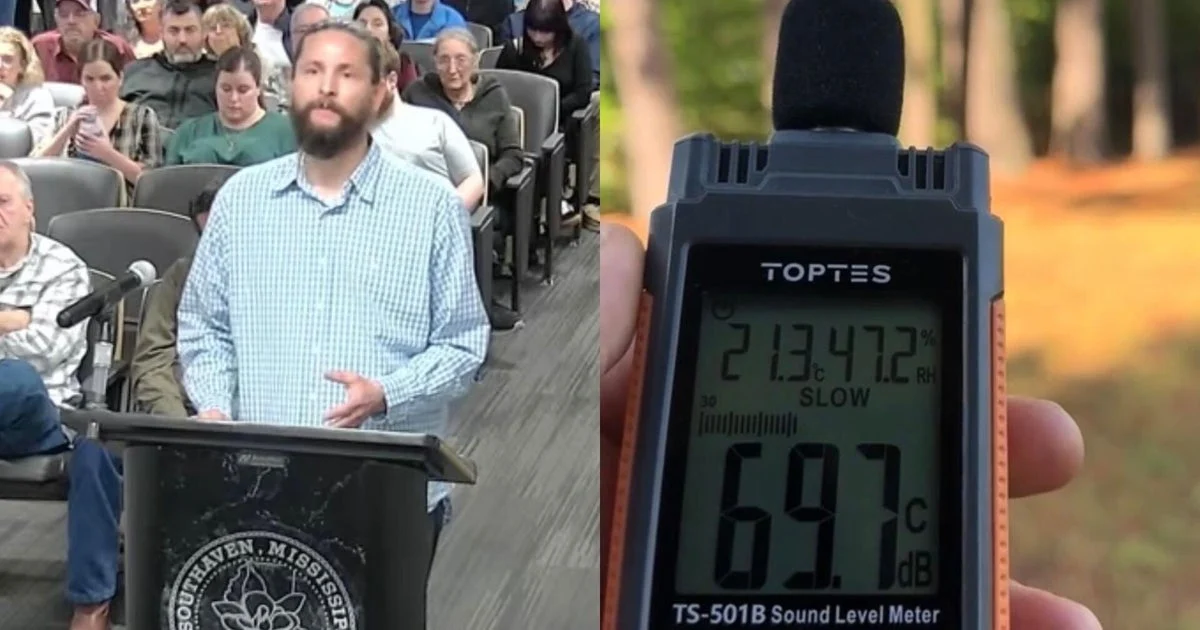
Homeowners in Southaven, Mississippi, have launched a lawsuit against Elon Musk’s artificial intelligence company xAI and its subsidiary, MZX Tech, accusing them of causing severe sleep disruption and health problems due to near-constant noise and vibrations emanating from a data center plant supporting the company’s AI operations. The lawsuit, filed in June 2026, highlights ongoing physical and psychological impacts endured by residents living within a mile of the plant, shedding light on growing national concerns related to data center infrastructure.
What Happened
Jason Haley, a longtime Southaven resident, reports suffering sleepless nights, headaches, and persistent ringing in his ears since the noise from the data center plant began in August 2025. The plant, owned by xAI and operated via MZX Tech, powers xAI’s Colossus AI supercomputers, with operations kicking off in Memphis in late 2024 and expanding rapidly in 2025 and 2026. Residents allege that the “near-constant” high-pitched noise and vibrations have negatively affected their physical and mental well-being, spurring collective community action and legal complaints.
Resident complaints date back to late 2024 when the dormant energy facility was reactivated to support the district’s growing data center footprint. While xAI and local officials acknowledge the noise issue and have attempted mitigation measures—including sound walls and landscaping—these efforts have not had the desired effect, according to affected homeowners.
Key Facts
- The lawsuit names xAI and MZX Tech as defendants, citing continuous noise and vibrations impacting residents’ health.
- The noise reportedly exceeds 60 decibels late into the evening, surpassing World Health Organization nighttime noise guidelines of 40 decibels to prevent health issues.
- Southaven Mayor Darren Musselwhite acknowledges the problem publicly but has reportedly advised affected homeowners to consider selling their properties.
- xAI’s Colossus data center complex is described as “the world’s largest AI supercomputer,” with significant expansion over the past two years.
- The National Association for the Advancement of Colored People (NAACP) has also sued xAI, alleging harmful emissions from gas turbines associated with the facility, further intensifying scrutiny on environmental and health effects.
What This Means
This lawsuit underscores the hidden social and health costs associated with rapidly expanding data center infrastructures crucial to AI and digital services. Though vital to technological advancement, such facilities can profoundly disrupt local communities when environmental and noise regulations fall short or enforcement lags.
The case highlights growing tension between economic development driven by cutting-edge technology projects and residents’ right to quiet, safe living conditions. Persistent noise pollution exceeding recommended thresholds is linked to adverse health outcomes including sleep disturbance, stress, headaches, and cardiovascular risks, placing affected families at physical and psychological risk.
For communities nationwide, this signals a need for more transparent and rigorous impact assessments before approving such developments, as well as ongoing monitoring and mitigation commitments. It also raises questions about how municipal leaders balance economic incentives against public health and resident concerns when large tech companies invest heavily in local infrastructure.
Background
The Southaven plant powers xAI’s AI data centers near the Mississippi-Tennessee border. Since opening in 2024, xAI claims an investment totaling $20 billion into the region. Local opposition has emerged as residents contend with the consequences of infrastructure expansion, including noise and air pollution. The broader trend mirrors other communities across the U.S. where data center noise and environmental issues prompt legal challenges.
Analysis
Medical experts like Dr. Samoon Ahmad of New York University emphasize that environmental noise is not merely an annoyance but has demonstrable physiological impacts. The World Health Organization’s guidelines on nighttime noise serve as benchmarks for protecting public health, yet enforcement and technological mitigation remain out of reach for many communities near major data centers.
While xAI has sought to address concerns with physical barriers and vegetation buffers, the persistence of noise suggests limits to current mitigation techniques. Municipal authorities’ mixed responses—acknowledging concerns yet advising homeowners to sell—reflects the complexity of balancing municipal economic development goals with resident well-being.
What Remains Unclear
The full scope of the health impacts on all residents and the detailed efficacy of xAI’s mitigation efforts have not been independently verified. It is also unclear whether all potentially affected homeowners have been formally notified or engaged in dialogue. Additionally, no publicly available data quantifies the decibel levels around the clock.
What Comes Next
The lawsuit filed by Southaven residents continues to proceed as the community coalition Safe and Sound advocates for better enforcement and remediation. Further legal action, negotiations, or regulatory responses may follow depending on outcomes. Meanwhile, xAI has not publicly commented on the pending litigation.
Sources
This article is based on reporting and publicly available information from the following sources:
Read more US News stories on Goka World News.