
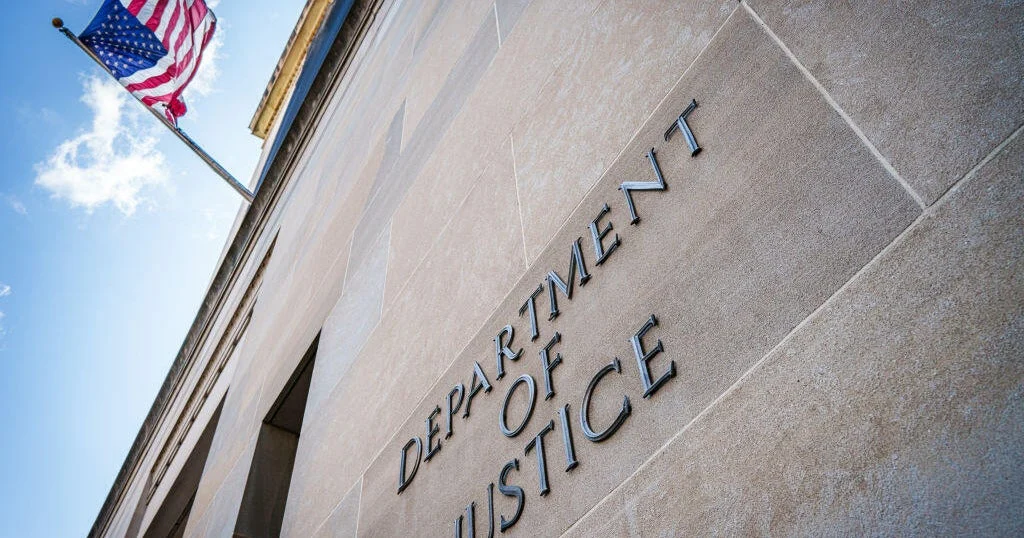
The Justice Department is moving forward with a landmark case to deport Nazira Haji Zada, a 47-year-old Afghan woman living in Fort Worth, Texas, whom prosecutors label an “alien terrorist” tied to a foiled Islamic State-inspired attack planned for Election Day 2024. This proceeding marks the first-ever use of the Alien Terrorist Removal Court since its creation 30 years ago.
What Happened
On Thursday, July 30, 2026, Nazira Haji Zada is scheduled to appear before the Alien Terrorist Removal Court in Washington, D.C., where a judge will hear the Justice Department’s case for her deportation. The government alleges that Zada supported her son Abdullah Haji Zada and son-in-law Nasir Ahmad Tawhedi, who pleaded guilty in federal court last year to gun crimes and terrorism-related offenses linked to procuring weapons for a planned mass shooting targeting U.S. voters.
The plot involved the purchase of two AK-47-style rifles and 500 rounds of ammunition from an undercover FBI agent on October 7, 2024, shortly before the election. At the time of arrest, Abdullah Haji Zada was 17 but faced trial as an adult and received a 15-year prison sentence. Tawhedi, 28, pleaded guilty to conspiracy to provide material support to ISIS and firearm offenses. Zada has not been criminally charged but is accused by the government of aiding in the conspiracy by radicalizing and indoctrinating family members to ISIS ideology.
The Alien Terrorist Removal Court is a secretive judicial body created by Congress in 1996 for cases involving noncitizen terrorists whose classified evidence cannot be publicly disclosed. The court had never convened prior to this case. Zada, a lawful permanent resident (green card holder), will have government-appointed counsel, though they cannot share classified details with her. Federal Judge Joan Ericksen, chief judge of the Alien Terrorist Removal Court, will preside over the removal hearing.
Key Facts
Nazira Haji Zada resides in Fort Worth, Texas, and holds a green card. Her son, Abdullah Haji Zada, and her son-in-law, Nasir Ahmad Tawhedi, were arrested on October 7, 2024, in a federal sting operation. Abdullah pleaded guilty to gun crimes, was sentenced to 15 years, and agreed to deportation following imprisonment. Tawhedi pleaded guilty to terrorism and firearms charges on June 13, 2025.
The Justice Department’s unclassified summary alleges Nazira “pledged loyalty to ISIS” and assisted in indoctrinating her family, including coordinating planned relocation to ISIS-controlled Afghanistan. Her spouse had been granted a green card after serving at Bagram Air Base in Afghanistan from 2009 to 2016 under a program for Afghans assisting U.S. forces.
The Alien Terrorist Removal Court’s proceedings involve the government’s review of classified evidence ex parte and in camera; the accused cannot access or challenge classified material. Public hearings occur only after initial court acceptance of removal applications.
What This Means
This historic case represents the Justice Department’s renewed effort to activate a dormant legal mechanism designed for national security cases that evade traditional deportation processes due to classified evidence. The use of the Alien Terrorist Removal Court underscores the government’s focus on preventing domestic terror threats inspired by extremist groups such as ISIS.
For residents and policymakers, the case highlights the complexities of balancing civil liberties with homeland security in handling lawful permanent residents accused of terrorism ties. It also signals that the federal government might increasingly pursue deportations through secretive channels when public criminal charges are not feasible, raising questions about transparency and due process protections.
This proceeding may set precedent for handling future cases involving alleged terrorists with protected status in the U.S., indicating an expansion in the government’s toolkit to address recognized security risks without public trials.
Background
The Alien Terrorist Removal Court was established by the Illegal Immigration Reform and Immigrant Responsibility Act of 1996 to address cases where classified information restricts traditional deportation procedures. Until July 2026, the court had never convened, due to a lack of suitable cases or prosecutorial attempts. The court’s five judges also serve on the Foreign Intelligence Surveillance Court and are appointed by the Supreme Court Chief Justice.
The DOJ first filed an application for Zada’s removal on July 15, 2026. Previously, her son and son-in-law’s criminal cases were prosecuted in Oklahoma federal court, where they pleaded guilty in mid-2025.
What Remains Unclear
The government has not publicly disclosed the full classified evidence linking Nazira Haji Zada to the terrorism plot. Details regarding her legal representation and defense strategy are not yet available. Motives underlying her alleged support for ISIS remain unconfirmed by authorities.
What Comes Next
The removal hearing scheduled for July 30, 2026, will include a public phase after initial closed-door consideration of classified evidence. The court’s decision could result in deportation proceedings against Zada. Additional hearings or appeals, if any, have not been announced.
Sources
This article is based on reporting and publicly available information from the following sources:
Read more US News stories on Goka World News.