
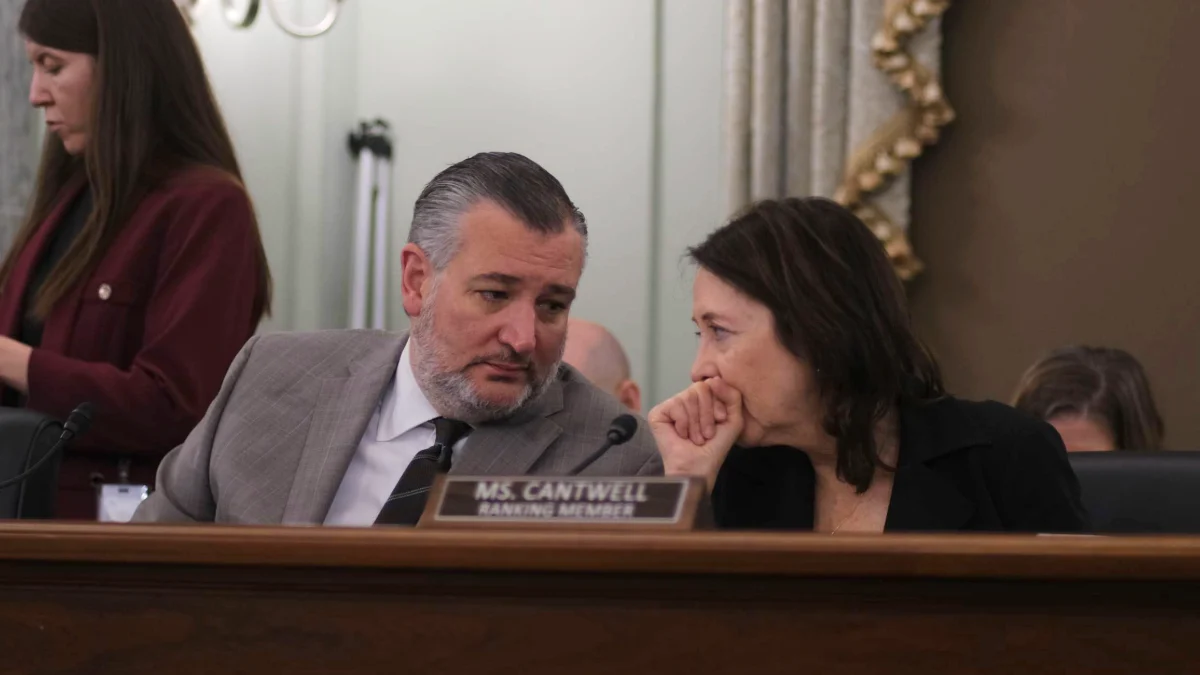
The Senate Commerce Committee moved forward four legislative proposals on August 5 designed to enhance protections for children from harmful online content and to give parents greater control over their minors’ use of social media and AI-enabled technologies. Among the bills is the bipartisan Kids Online Safety Act, which would impose a duty of care on platforms frequently used by children, including social media, messaging apps, and video games.
What Happened
On August 5, 2024, the U.S. Senate Commerce Committee advanced four bills aimed at increasing child online safety. The bipartisan Kids Online Safety Act, the CHATBOT Act, the Youth AI Privacy Act, and the Children’s Artificial Intelligence Toy Safety Act secured committee approval after a markup hearing. A separate bill proposing mandatory age verification for pornography websites failed to advance due to a lack of quorum following a 15-13 vote.
Committee Chairman Ted Cruz (R-Texas) and Ranking Member Maria Cantwell (D-Wash.) led discussions emphasizing the need for stronger oversight of how technology companies design services that could expose children to harm. The bills collectively target platforms like social media, AI chatbots, and AI-driven toys, seeking to require safer default settings, parental consent mechanisms, and restrictions on data use related to minors.
Key Facts
The key pieces of legislation advanced include:
- Kids Online Safety Act: Establishes a duty of care obligating platforms popular with minors to implement safeguards and protective default settings to prevent foreseeable harm. It targets services such as social media platforms, video games, and video streaming services.
- CHATBOT Act: Mandates parental consent before minors can create accounts with AI chatbot providers and requires AI companies to set the highest safety settings by default for those accounts.
- Youth AI Privacy Act: Prohibits targeted advertising to minors via AI chatbots and limits the duration AI companies may retain conversational data from children.
- Children’s Artificial Intelligence Toy Safety Act: Charges the National Academies of Sciences, Engineering, and Medicine with studying the mental, emotional, and social effects of AI-enabled toys and requires regulators, including the Federal Trade Commission (FTC) and Consumer Product Safety Commission (CPSC), to develop a joint action plan.
The package was advanced by the Senate Commerce Committee but must still pass a full Senate vote and face uncertain prospects in the House. The committee deferred some amendments, such as a proposed mental health public-service advertising requirement for social media companies.
What This Means
The advancement of these bills signals a significant legislative push to address online harms to children amidst increasing concern about social media platforms and AI technologies. If enacted, platforms would be legally obligated to adopt “duty of care” practices that could reshape how features like infinite scrolling and targeted advertising are designed.
For families, these measures aim to offer stronger tools for parental oversight and to reduce minors’ exposure to risks such as harmful content, addictive interfaces, and privacy violations. The CHATBOT Act, for example, marks one of the first regulatory efforts to specifically govern AI chatbots used by minors, mandating built-in safety protocols and referral systems for users in crisis.
This legislative activity reflects growing recognition that AI-driven products—ranging from chatbots to connected toys—pose unique challenges that current regulatory frameworks do not fully address, especially regarding children’s mental and emotional wellbeing. Nonetheless, the bills also raise debates about free speech, privacy, and how prescriptive regulatory duties should be.
Background
These bills follow earlier congressional attempts to regulate social media and online harms to minors, including a previous iteration of the Kids Online Safety Act that passed the Senate but stalled in the House. The bills respond to urgent concerns highlighted by families affected by opioid-related deaths linked to social media platforms advertising illicit substances.
Existing toy safety regulations focus mostly on physical hazards, leaving mental and emotional risks—particularly those from AI-enabled toys—largely unregulated, which the Children’s AI Toy Safety Act aims to address.
What Remains Unclear
The bills have yet to be voted on by the full Senate, and their fate in the House remains uncertain following past legislative stalls. Additionally, provisions like mandatory mental health advertising by social media platforms were withdrawn to expedite committee approval but may be revisited later.
It is also unclear how the “duty of care” standards will be precisely defined or enforced, and whether the regulatory approach will effectively balance safety with free expression and privacy concerns raised by advocacy groups.
What Comes Next
The Senate Commerce Committee’s advancement sets the stage for a potential Senate floor vote in the near future. Negotiations with the House are expected to continue, where separate but overlapping child online safety bills are under consideration. Stakeholders will closely watch how these bills evolve during final legislative and regulatory review phases.
Sources
This article is based on reporting and publicly available information from the following sources:
Read more AI Regulation stories on Goka World News.