
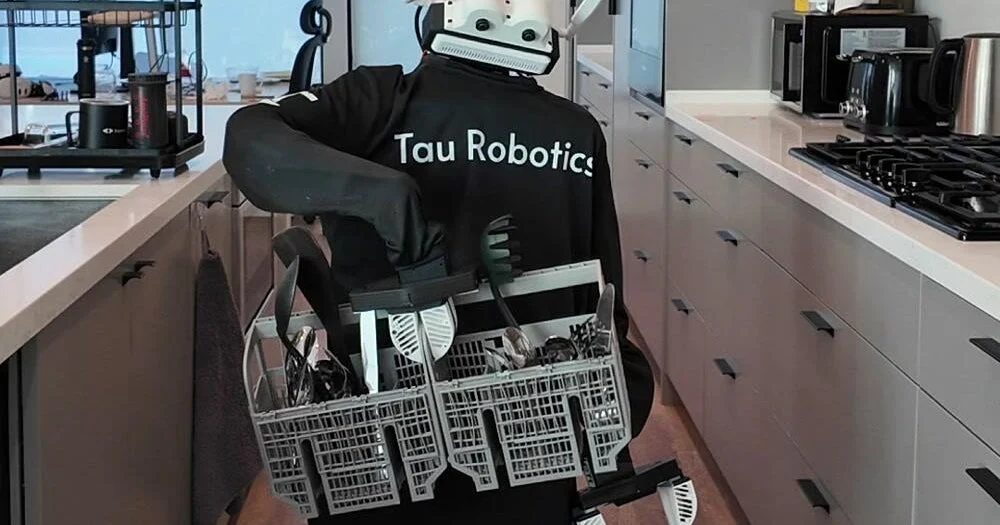
Tau Robotics recently began a pilot program deploying humanoid robots tasked with household chores such as vacuuming and cleaning kitchen counters in select San Francisco homes. Priced at $30 per hour, these AI-powered robots represent an ambitious step in home automation. However, significant safety and privacy challenges remain, as outlined by experts and the company itself, revealing the current technological and cybersecurity limitations of humanoid robots in domestic settings.
What Happened
In August 2026, Tau Robotics introduced a controlled pilot offering humanoid robots for household cleaning to about 1,000 invited San Francisco households. Each robot, costing approximately $50,000 to manufacture and dressed in company-branded black uniforms, performs tasks like vacuuming and trash disposal. Despite their humanoid design and AI capabilities, the robots rely heavily on remote human operators who monitor robot activities through VR goggles that provide a robot’s-eye view of users’ homes.
Tau’s CEO Alexander Koch described the robots as currently unable to fully operate autonomously. They cannot navigate stairs or independently decide cleaning zones; instead, technicians intervene remotely to direct movements and resolve operational issues. The pilot program aims to scale up to 1,000 cleanings per week in San Francisco by 2027 and eventually expand nationwide and internationally.
Key Facts
- The robots are powered by AI trained to initially imitate and eventually surpass human performance in home cleaning tasks.
- Each robot costs roughly $50,000 to make.
- The service is an invite-only pilot targeting 1,000 households in San Francisco.
- Operators remotely supervise robots wearing VR headsets to guide and intervene as needed.
- Robots are outfitted with two cameras for visual processing and video recording used to train AI systems.
- Safety protocols include a technician-activated “safety mode” that shuts down the robot if risks arise.
- The timeframe for robots to operate with greater independence is projected to be around 2028 to 2029.
What This Means
This pilot highlights the current state of humanoid robots as emerging technologies struggling to balance automation benefits with significant operational and cybersecurity risks. Safety concerns are acute; robots’ bulkiness and motorized movements can inadvertently endanger nearby people, especially children, while unplanned movements or attempts to right themselves after falls risk physical harm.
The involvement of human supervisors to remotely control robots underscores today’s technological limitations and the necessity of human oversight for reliable functioning. It also introduces privacy challenges, as robots’ integrated cameras capture video inside private homes. This raises cybersecurity questions about safeguarding sensitive personal data and ensuring that recordings are protected from misuse or unauthorized access.
For consumers, this means the promise of autonomous home-cleaning robots is still years away from mainstream viability. Until technological and security obstacles are addressed, reliance on humanoid robots for household chores remains experimental rather than practical. The service’s invite-only nature and ongoing human monitoring reflect a necessary caution during this nascent phase.
Background
The humanoid robot market is projected to grow substantially, with estimates by Barclays and Morgan Stanley suggesting potential expansions from a $2–3 billion market in 2025 to $200 billion or nearly one billion units by 2050. Yet, the current predominant use remains industrial applications rather than residential. Experts widely agree functional humanoid robots for home applications will take at least five to ten more years to mature.
What Remains Unclear
While Tau Robotics claims full control over its data collection systems, the exact security measures protecting users’ video footage and network data have not been fully disclosed. It is also uncertain how widespread the adoption of these robots will be beyond the pilot or the effectiveness of planned safety protocols as robots scale into more homes and environments.
Sources
This article is based on reporting and publicly available information from the following source:
Read more Cybersecurity stories on Goka World News.