
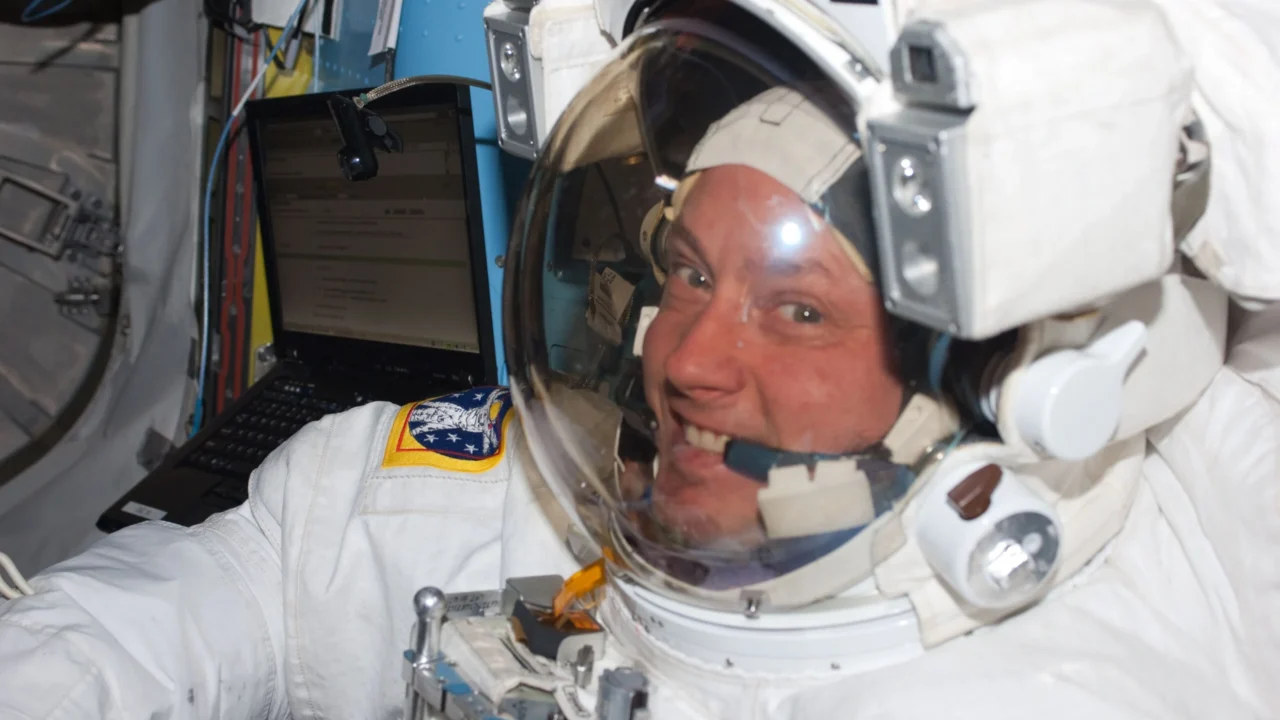
NASA astronaut Mike Fincke has officially retired from the agency after a distinguished 30-year career marked by four space missions, extensive time aboard the International Space Station (ISS), and critical roles in spacecraft development and human spaceflight operations.
What Happened
On Wednesday, NASA announced that Mike Fincke is departing the agency following decades of service. Fincke flew to space four times, accumulating 549 days in orbit and completing nine spacewalks totaling over 48 hours in support of the ISS. His most recent mission was piloting NASA’s SpaceX Crew-11 flight, launched in August 2025, where he served as flight engineer for Expedition 73 and commanded Expedition 74 before returning in January. Fincke first joined NASA’s astronaut corps in 1996 and launched to space in 2004 aboard Soyuz TMA-4 for Expedition 9. Over subsequent missions, including Soyuz TMA-13 in 2008 and the space shuttle Endeavour’s final flight STS-134 in 2011, he contributed significantly to ISS assembly and operations.
Key Facts
- Mike Fincke flew four space missions: two aboard Soyuz spacecraft, one space shuttle mission, and piloted a SpaceX Crew Dragon flight.
- Total time in space: 549 days, ranking him fourth among NASA astronauts in accumulated spaceflight duration.
- Completed nine spacewalks with a combined duration of 48 hours and 37 minutes.
- Most recent mission: SpaceX Crew-11 launched August 2025, returned January 2026, ISS Expeditions 73 and 74.
- First spaceflight: Soyuz TMA-4 in 2004, Expedition 9.
- Other missions include Soyuz TMA-13 (Expedition 18) and STS-134, the final flight of space shuttle Endeavour.
- Served as chief of NASA Astronaut Office’s Commercial Crew Branch, aiding development of crewed spacecraft including Boeing’s Crew Flight Test program.
- Educational background: Bachelor’s degrees from MIT, master’s degrees from Stanford and University of Houston, Clear Lake.
- Retired U.S. Air Force colonel and distinguished graduate of the U.S. Air Force Test Pilot School.
What This Means
Mike Fincke’s retirement marks the close of a significant chapter in NASA’s human spaceflight history. His career bridged the agency’s transition across multiple spacecraft generations—from Russian Soyuz vehicles to the Space Shuttle and now the Commercial Crew Program with SpaceX and Boeing spacecraft. Fincke’s extensive experience in spacewalks and command positions aboard the ISS helped ensure the station’s operational stability and expansion to six-person crews, which increased the station’s scientific output and international collaboration.
Moreover, his leadership in shaping the development and testing of Commercial Crew vehicles directly supported NASA’s goal of restoring American crewed launch capabilities from U.S. soil, reducing reliance on international partners for access to the ISS. For ordinary readers, this progress enhances the continuity of the space station program and accelerates plans to explore the Moon and Mars under NASA’s Artemis initiative, laying groundwork for broader commercial and scientific endeavors in low Earth orbit and beyond.
Background
Fincke’s first spaceflight during Expedition 9 occurred early in the ISS era, helping maintain vital station systems and conducting spacewalks critical to assembly and maintenance. His return on Expedition 18 involved preparing the ISS for expanded crew sizes and capabilities. Participating in Endeavour’s final shuttle mission, he aided installation of the Alpha Magnetic Spectrometer, an essential cosmic ray detector enhancing scientific research aboard the station. His broad expertise extended to ground support roles, including training, mission development, and operational communication, underlining his end-to-end involvement in station life cycle and human spaceflight advancement.
Analysis
NASA Administrator Jared Isaacman acknowledged Fincke’s impact by highlighting his multifaceted contributions as pilot, engineer, astronaut, and mentor, while Vanessa Wyche, director of the Johnson Space Center, noted his “immense impact” and lasting legacy across NASA. Chief of the Astronaut Office Scott Tingle emphasized Fincke’s humility, experience, and focus on mission success, qualities that strengthened NASA’s astronaut corps and spacecraft programs. These endorsements reflect Fincke’s role as a cornerstone figure in shaping how NASA operates today and prepares future explorers.
What Comes Next
While Fincke moves on from NASA, his expressed commitment to supporting future generations positions him as an influential voice in upcoming space exploration efforts. NASA continues ramping up the Artemis program to return humans to the Moon and eventually send crewed missions to Mars. Fincke’s long-standing expertise and mentorship will likely influence training and development pipelines for astronauts and engineers engaged in these ambitious ventures.
Sources
This article is based on reporting and publicly available information from the following sources:
Read more Space & NASA stories on Goka World News.