
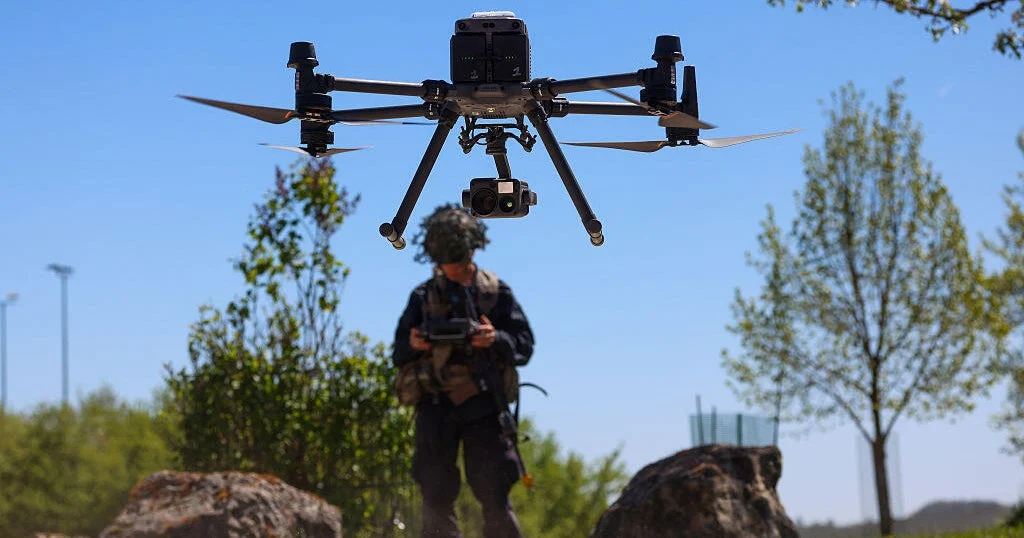
The U.S. Army has announced plans to phase out a specialized drone battalion created to incorporate operational insights from the ongoing war in Ukraine. This move arrives amid shifting leadership priorities and internal tensions within the Army’s senior ranks, signaling a change in the service’s approach to drone warfare and future combat capabilities.
What Happened
The decision affects the Unmanned Assault Battalion, a unit activated last year within the 173rd Airborne Brigade in Europe. Tasked with mastering drone warfare tactics and rapidly deploying to areas requiring drone operations, the battalion was engaged in an ongoing exercise through September 2026. After completing this exercise, the Army plans to transition the unit back to its original function as an airborne infantry battalion, focusing on parachute infantry operations.
The move was confirmed by an Army official to CBS News on August 20, 2026. The battalion was initially championed by former Army Chief of Staff Gen. Randy George and retired Gen. Christopher Donahue, who previously commanded U.S. Army Europe and Africa. Both officers left their positions early, enabling Gen. Christopher LaNeve to rise as the acting Army Chief of Staff and ultimately influence the battalion’s fate.
Key Facts
The Unmanned Assault Battalion was formed under the Army Transformation Initiative announced last year by Gen. Randy George and Army Secretary Dan Driscoll, promoting greater use of unmanned systems in warfare. The battalion’s mission was to apply battlefield insights from the Ukraine conflict where drones have played a significant tactical role.
The Ukraine war has underscored the increasing importance of drones, demonstrated both in Eastern Europe and in Middle East clashes involving attack drones launched by Iran against U.S. installations. The battalion’s current deployment in Europe and its scheduled exercises involved testing these tactical lessons.
Gen. LaNeve, in a policy document called “The Army Azimuth,” emphasized a return to soldier fundamentals alongside integrating defenses against unmanned systems, underscoring a broader recalibration of priorities. Sources describe tension between LaNeve and former senior officers linked to the drone battalion’s creation.
What This Means
The decision to dissolve the drone battalion reflects a pivot in the Army’s doctrinal focus amid differing visions of integrating new technology with traditional combat roles. While drone warfare lessons from Ukraine demonstrated the tactical utility of unmanned systems, the Army’s leadership under LaNeve appears to favor preserving airborne infantry capabilities rather than dedicating entire battalions solely to drones.
This change highlights challenges militaries face in adapting combat forces for emerging technologies during ongoing conflicts. Although drones are increasingly vital on modern battlefields, the Army’s shift suggests a cautious approach, balancing innovation with established combat skills and organizational culture.
The resolution also impacts how the U.S. military internalizes battlefield lessons from Ukraine, offering insight into inter-service debate over future warfare strategies. This recalibration may influence the pace and scope of drone integration in U.S. forces amid evolving threats from peer adversaries developing unmanned capabilities.
Background
The battalion’s creation was part of a broader U.S. military effort to absorb real-time combat lessons from the war in Ukraine, launched after Russia’s 2022 invasion. Early exposure to drone warfare, including the use of unmanned aerial vehicles in intelligence, surveillance, and attack roles, shaped this initiative.
Additionally, the conflict in the Middle East involving Iranian attack drones targeting U.S. bases reinforced concerns about drone threats in various theaters. This context motivated Army leaders like Gen. George and Gen. Donahue to emphasize unmanned systems as central to future conflicts.
What Remains Unclear
The Army has not confirmed specific reasons behind the battalion’s phase-out beyond leadership changes and strategic shifts. The extent to which internal disagreements shaped the decision remains unclear, as does the precise future role of unmanned systems across other Army units.
What Comes Next
The Unmanned Assault Battalion will complete its current exercises through September 2026 before reverting to airborne infantry status. The Army will continue refining its approach to integrating drone capabilities, potentially through other task forces such as the Ukraine Lessons Learned Task Force, which also studies battlefield innovations from Ukraine.
Sources
This article is based on reporting and publicly available information from the following sources:
Read more US News stories on Goka World News.