
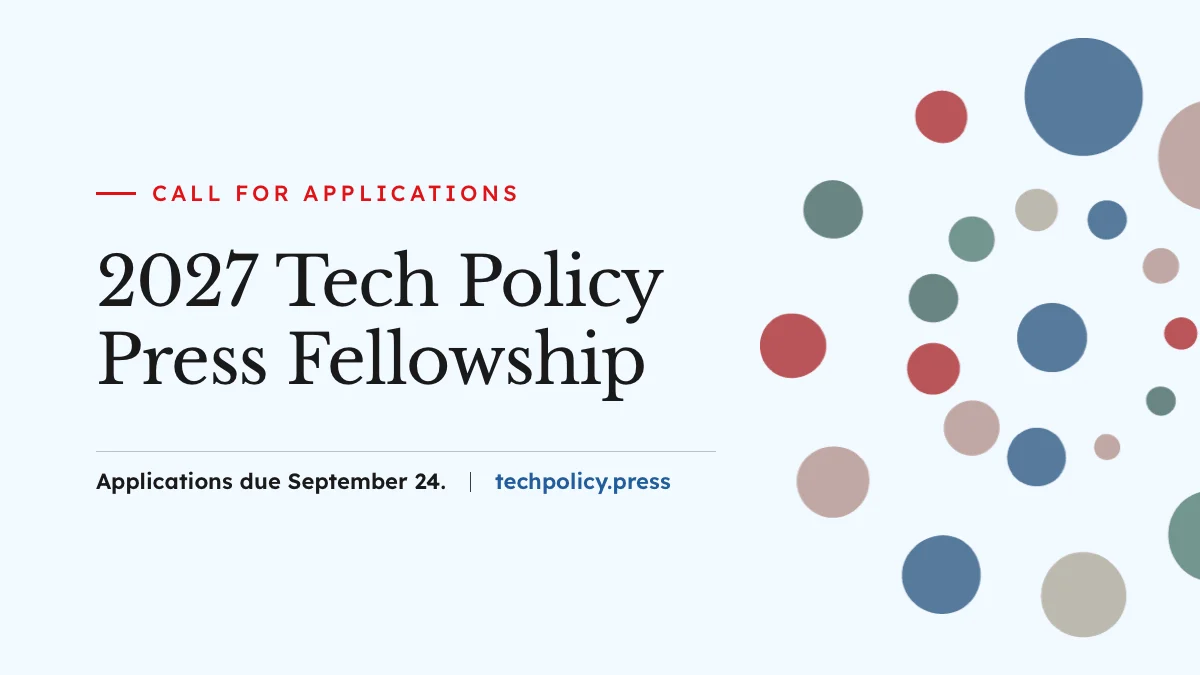
Tech Policy Press has opened applications for its 2027 fellowship program aimed at mid-career journalists, researchers, and policy experts to produce in-depth reporting and policy analysis on the governance of artificial intelligence, technology regulation, and their implications for democracy. The year-long, part-time fellowship offers fellows a $10,000 stipend to develop independent work that informs policymakers and the public.
What Happened
On September 24, 2026, Tech Policy Press will close applications for its 2027 fellowship cohort. Launched in 2023, the program has supported 25 fellows from 11 countries across three previous cohorts who have produced work on vital tech policy issues, including AI governance, digital rights, and corporate influence on state power. The 2027 fellowship, starting in January 2027 and lasting 12 months, will continue this focus with an emphasis on voices from underrepresented communities and regions often excluded from global tech policy debates.
Key Facts
The fellowship supports independent contributions on technology’s intersection with democracy by providing a $10,000 stipend and editorial support over 12 months. Applicants must submit a CV, cover letter, links to prior published work, and references by the September 24, 2026 deadline. Fellows are expected to submit monthly reports or policy analyses, attend cohort meetings, and collaborate with Tech Policy Press staff. Selection notifications will be issued by early December 2026. The program encourages applications from journalists, lawyers, researchers, and policy professionals globally, particularly from the Global Majority and underrepresented media communities.
What This Means
The fellowship represents an important mechanism to deepen and diversify global reporting on AI regulation and broader technology policy, areas increasingly scrutinized by governments and civil society for their societal impact. By supporting fellows worldwide, particularly from marginalized regions, Tech Policy Press aims to amplify underrepresented perspectives in shaping AI governance and technology oversight discourse. This effort could enhance transparency, accountability, and democratic engagement with AI policy as these technologies reshape economies, societies, and political processes. For policymakers and the public, the fellowship’s output may provide nuanced, ground-level insights that highlight local implications of AI laws and regulations, fostering more informed decision-making and debates.
Background
Since its 2023 inception, the Tech Policy Press fellowship has sought to address emergent challenges in tech governance, including AI ethics, digital rights, and state-corporate dynamics. Previous fellows have contributed significant reporting and analysis on these themes, helping illuminate the complex and evolving regulatory landscape surrounding AI and technology. The program’s ongoing commitment to supporting underrepresented voices aligns with wider efforts in the tech policy space to broaden participation and perspective diversity.
What Comes Next
Applicants must complete the online application by September 24, 2026. Tech Policy Press will hold two informational Zoom sessions on September 9 and 16, 2026, to assist prospective applicants. After review, the fellowship selection will be announced in early December 2026, with the cohort officially beginning work in January 2027.
Sources
This article is based on reporting and publicly available information from the following source:
Read more AI Regulation stories on Goka World News.